Race Paddock Equipment: What You Need for a Race Weekend
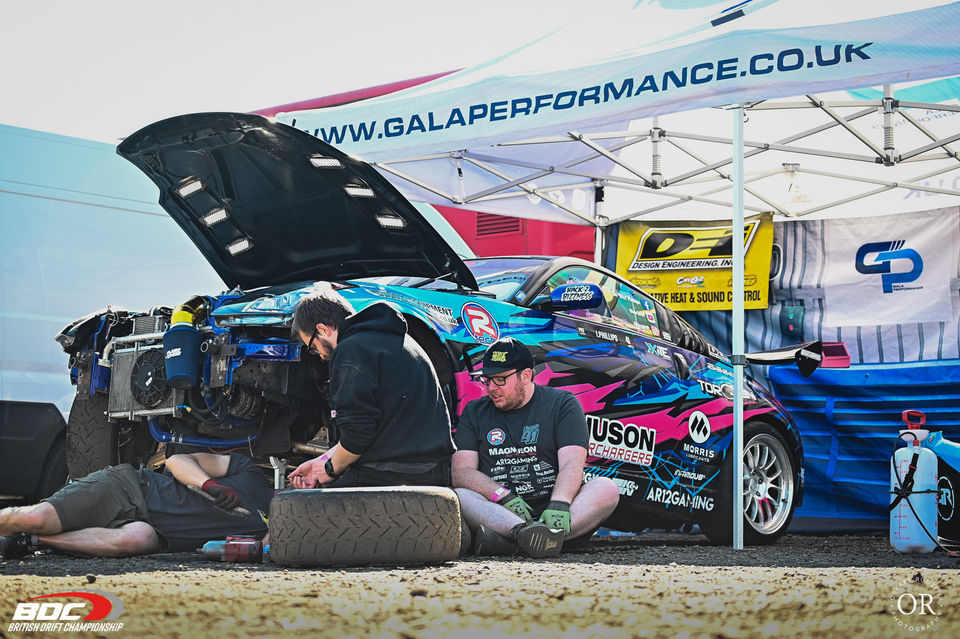
For a race weekend you need a shelter for the car and crew, either a pop up race tent or a freestanding awning, weights or anchors for every leg, and side walls for the weather. Around that, most teams add modular flooring, pit walling or barriers, branding, tables, chairs and storage, and for endurance events a pit perch on the pit wall.
This guide covers what each piece of race paddock equipment does, how to choose between a pop up and a freestanding awning, how to anchor it, what works for each discipline, and the extra kit endurance teams rely on. Not sure what fits your paddock? Request a callback and the team will point you to the right kit.
Race Paddock Equipment Checklist
| Item | What to bring | Why |
|---|---|---|
| Shelter | Pop up race tent for one car or bike, freestanding awning for teams and multi-car setups | A dry work bay for the car, tools, tyres and crew |
| Anchoring | Weights on every leg on hard standing, strap kits and pegs on grass | An unanchored awning is a danger to everyone around you |
| Side walls | Walls for the weather side, printed if you have sponsors | Keeps wind and rain off the work area |
| Flooring | Modular flooring such as Swisstrax | A clean, flat surface that drains and stands up to fuel and oil |
| Walling and barriers | Pit walling or café barriers | Defines your space in a busy paddock |
| Branding | PVC or mesh banners and feather flags | Gives sponsors a clean, visible space in photos and on streams |
| Furniture and storage | Folding tables, chairs and storage for spares and tyres | Keeps the work bay organised |
| Pit lane kit | A pit perch for endurance and multi-driver events | Shelter, power and timing screens on the pit wall |
What Equipment Do You Need in a Race Paddock?
Race paddock equipment is the kit your team needs to work at the circuit: shelter, anchoring, flooring, walling, branding, furniture and pit lane kit. The most efficient teams treat the awning as a complete working environment for the car, the crew and their sponsors.
The typical kit list for a car paddock:
- A pop up race tent or freestanding motorsport awning, with side walls.
- Race tent weights, strap kits and pegs to anchor every leg.
- Swisstrax or other modular flooring for a clean, safe surface.
- Pit walling or café barriers to define the space.
- PVC or mesh branding banners and feather flags.
- Folding tables, chairs and storage for spares and tyres.
- A pit perch for endurance and multi-driver championships.
If you are setting up in a paddock for the first time, start with the awning and its anchoring, then add flooring, branding, furniture and pit lane equipment as the season goes on. To work out how much ground your kit needs, see how to plan your paddock space.
Should You Use a Pop Up Race Tent or a Freestanding Awning?
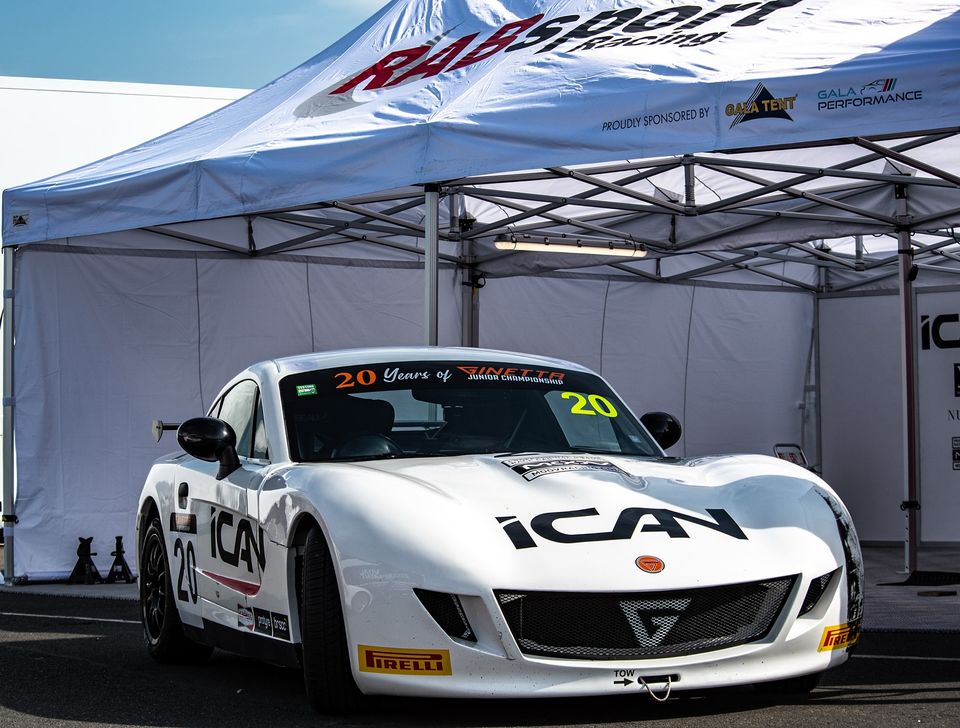
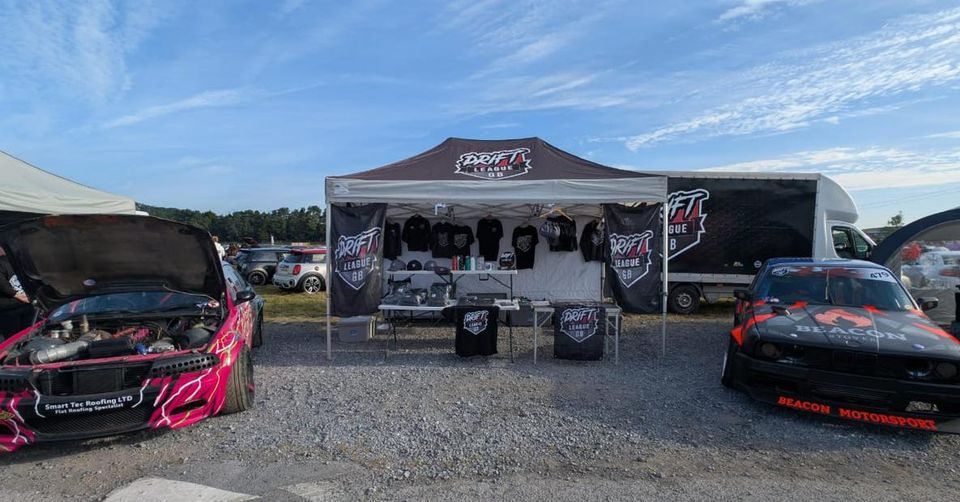
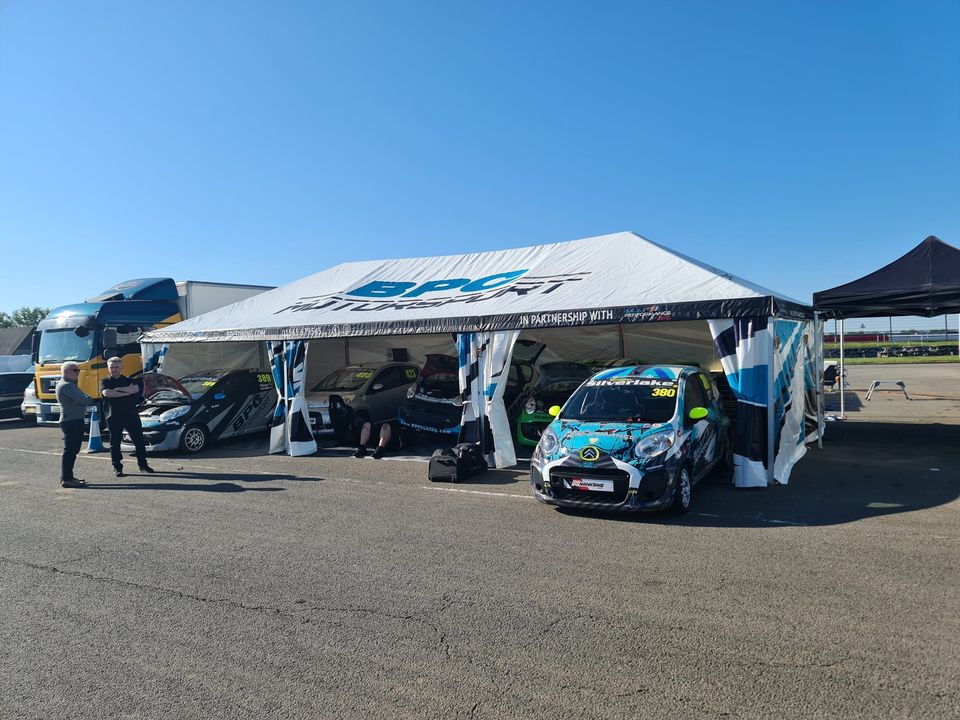
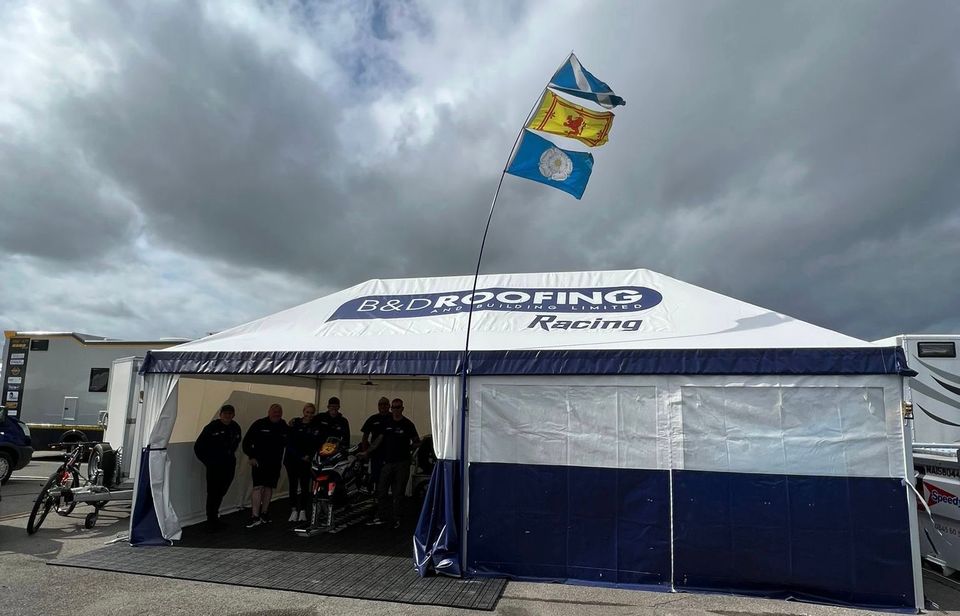
Choose your paddock shelter by series, paddock space and team size. A pop up race tent suits privateers, club racers and track day drivers who need cover for one car fast. A freestanding awning such as the MQ-65 suits teams running two or more cars, hosting sponsors or staying put for several days.
Pop up race tents
A pop up race tent goes from bag to fully erected in minutes with a small crew and gives instant cover in changeable paddock weather. It covers the car, creates a dry work bay and gives sponsors a clean, visible space in every photo and livestream.
- Pro 40: lightweight 40mm aluminium frame in 3m x 3m, 3m x 4.5m and 3m x 6m, for karting, bikes, track days and privateers.
- Pro 50: heavy duty 50mm hexagonal aluminium frame in 3m x 3m up to 4m x 8m.
- Pro 60: the flagship 60mm hexagonal aluminium frame in sizes up to 4m x 10m, plus the 6m x 6m Vantage.
- Pro 50 and Pro 60 canopies are 600D PVC-coated polyester with a 6000mm hydrostatic head, fire retardant and UV protected.
- Optional side walls, and full printing so the tent matches your livery.
Freestanding MQ-65 awnings
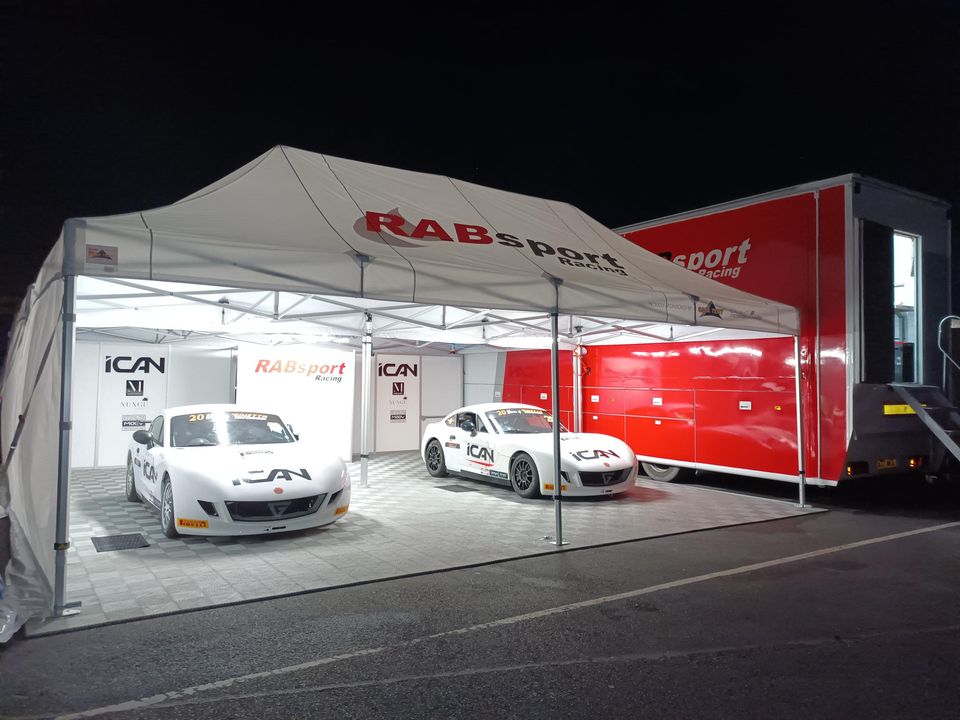
A freestanding awning gives a larger, more controlled space with a semi-permanent feel that still travels from circuit to circuit. It takes longer to build than a pop up and gives you far more room, stability and brand presence.
- 65mm aluminium frame with 650gsm PVC covers that slide into the frame on a beaded edge.
- Clear span with no internal legs, in 4m x 6m, 4m x 8m, 6m x 8m and 6m x 12m.
- Rated to 50 mph plus with 2 to 3 weights per leg.
- Options for windows, hard doors, curtain walls and full printing.
- Room to split the space into work bays, tyre zones and a guest area.
- Suits endurance teams, drift, GT and touring car outfits with two or more cars, hospitality areas and long weekends.
For more detail on the shelter itself, see how to choose a motorsport awning, what size motorsport tent you need and whether an inflatable or pop up race tent suits you better.
What Else Do You Need Besides the Awning?
Once the shelter is sorted, the next pieces of race paddock equipment are flooring, walling and branding. Flooring gives you a clean, safe working surface, walling and barriers mark out your space, and printed walls, banners and flags present your team and sponsors properly.
Flooring
A paddock floor deals with oil, fuel, gravel, rain and mud. Swisstrax modular flooring snaps together without tools, drains itself, resists fuel, oil and race car loads, and instantly lifts the look of an awning or garage.
Walling and barriers
Pit and garage walling or café barriers define your space in a crowded paddock, keep the public out of the work bay and give you another surface to print sponsor branding on.
Branding
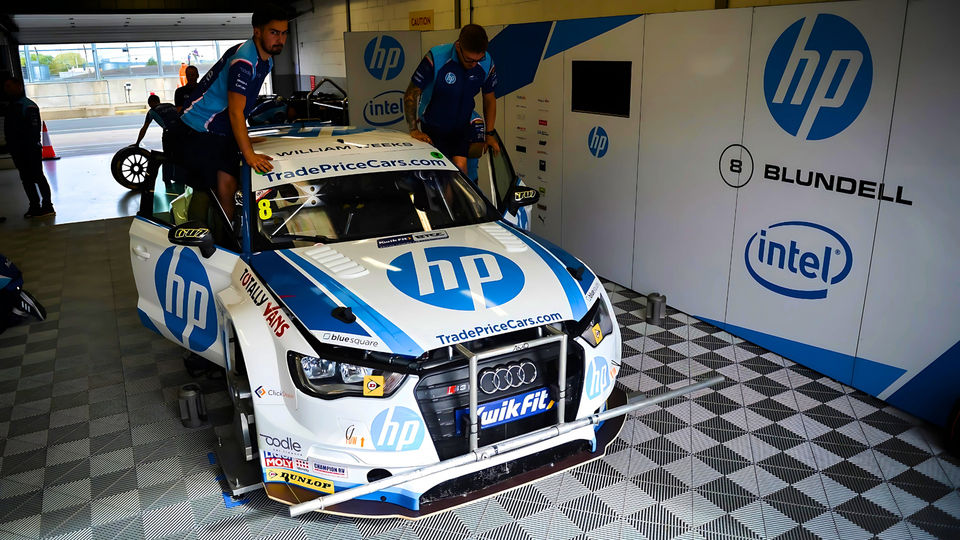
A clean, consistent branded paddock makes a team look professional in person and in every photograph or broadcast shot. Options include custom printed tents and side walls, feather and sail flags and PVC and mesh banners.
How Do You Anchor Race Paddock Equipment?
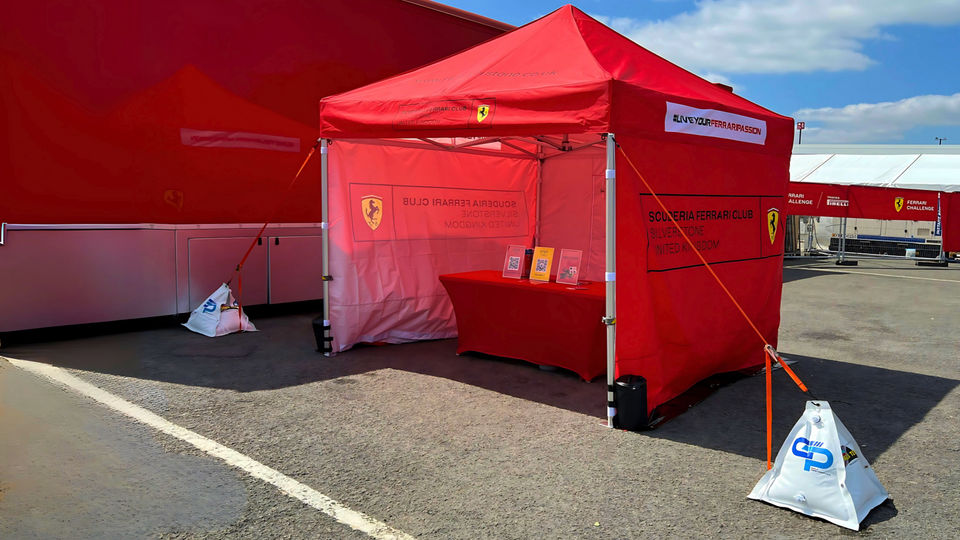
Anchor every leg of your race tent or awning, every time. On hard standing use heavy-duty weights on each leg, around 50kg per leg at an exposed circuit, and on grass use tie-down storm kits and pegs. A well built awning is only safe when it is properly anchored.
Correct anchoring protects your equipment, neighbouring teams and the event itself. The Pro 50 and Pro 60 are rated to 25 to 35 mph only when securely weighted or anchored on every leg, and the MQ-65 is rated to 50 mph plus with 2 to 3 weights per leg. If the wind becomes genuinely dangerous, take the roof down.
Some circuits and organisers set their own rules on ballast for race tents and awnings, so check your championship and circuit regulations before the event.
| Anchoring option | Weight or type | Best for |
|---|---|---|
| Steel cast leg weights | Around 13kg each | Hard standing |
| Water weights | Up to 50kg per leg | Hard standing, extra security |
| Strap kits and pegs | Tie-down storm kits | Grass and softer ground |
| PVC ballast bags | Sandbag style | Flexible placement anywhere |
What Paddock Setup Do You Need for Your Discipline?
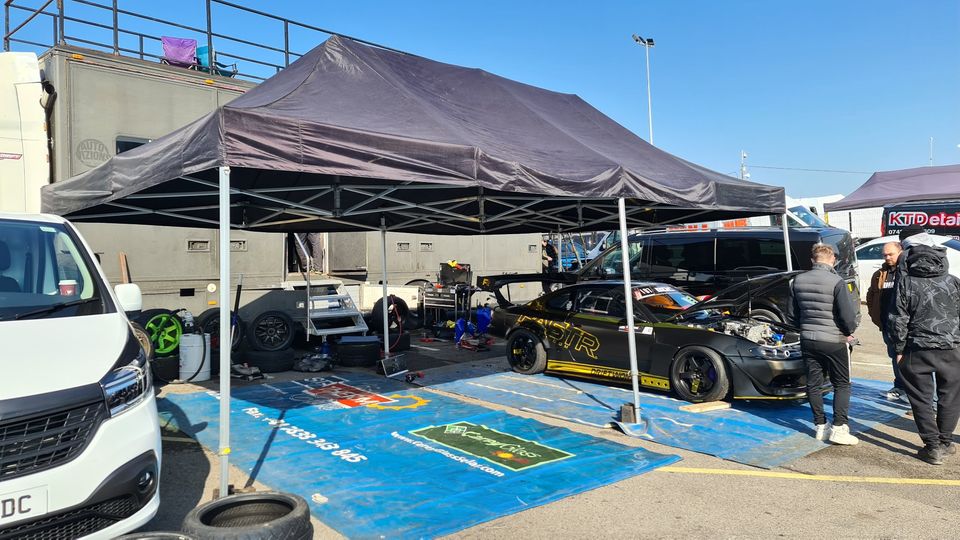
Different types of racing place different demands on your paddock. Karting and track days need compact, quick-to-pitch pop ups, drift and rallycross need strong frames and serious anchorage for exposed or muddy venues, and rally and endurance teams need large awnings with room for several mechanics.
Use this as a starting point, then follow the link for a full setup guide for your discipline. The right setup matches your discipline, team size and paddock footprint.
| Discipline | Popular sizes | Priorities | Setup guide |
|---|---|---|---|
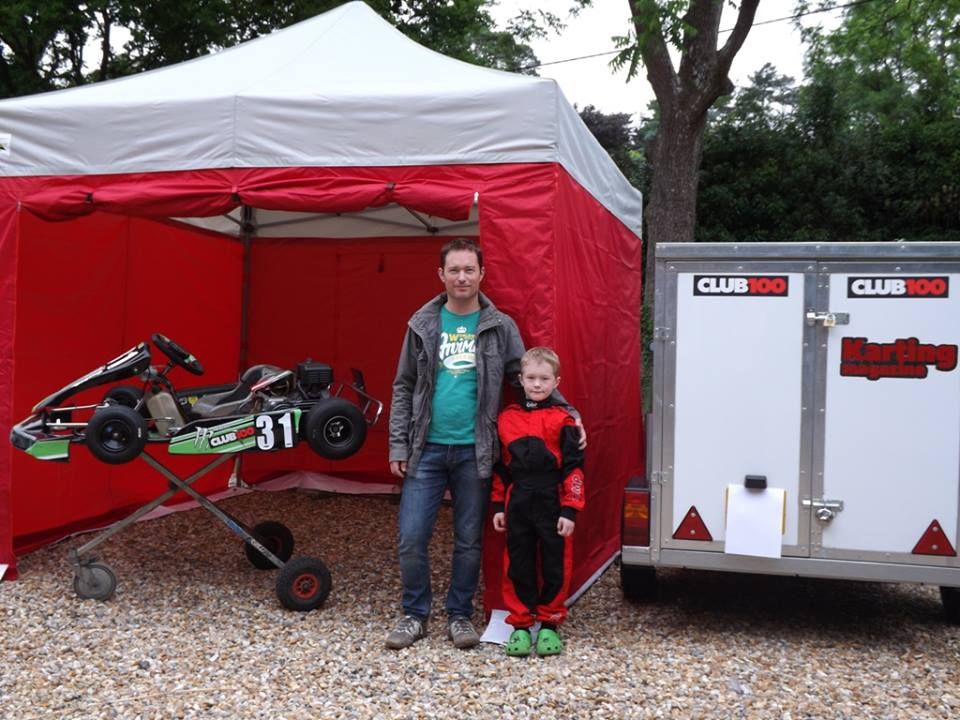
| Karting | 3m x 3m, 3m x 4.5m, 3m x 6m | Quick setup between heats, easy transport in small vans, space for kart, trolley and tyres | Karting paddock guide |
| Track days and club racing | 3m x 4.5m or 3m x 6m pop up | Cover for a single car, tools and tyre racks, compact footprint for busy paddocks | Plan your paddock space |
| Motorcycle racing and track days | 3m x 4.5m pop up, or 3m x 3m if space is tight | Bike on paddock stands, power for tyre warmers, a dry spot for leathers and helmet | Motorcycle paddock guide |
| Motocross | 3m x 3m for one rider, 3m x 4.5m for a second bike | Heavy duty frame for grass fields, matting, no power or water on site | Motocross paddock guide |
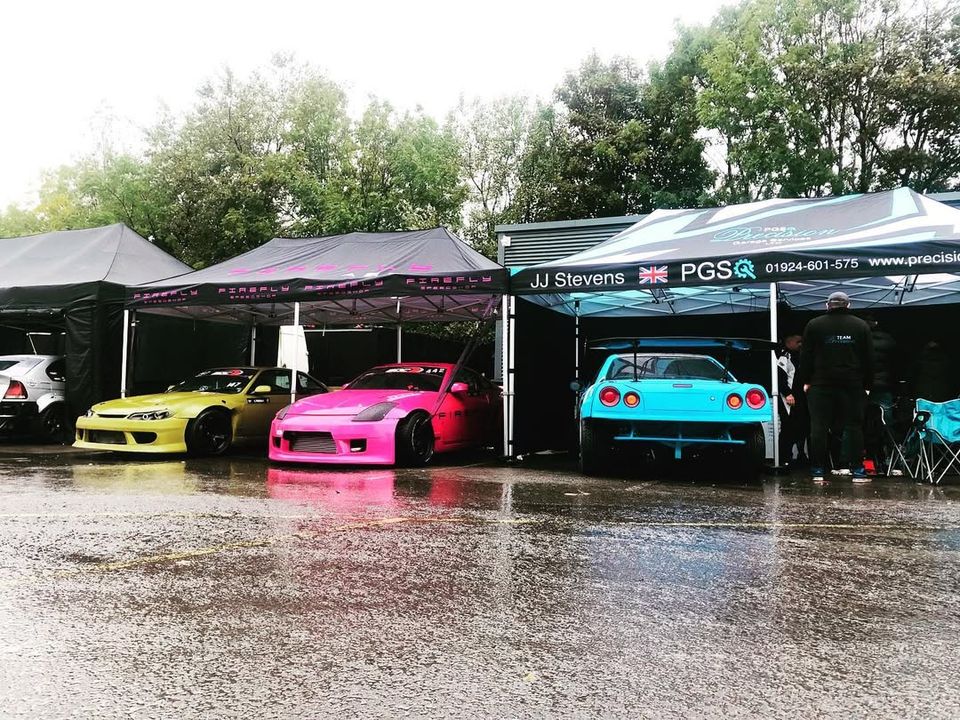
| Drift | 3m x 6m or 4m x 8m pop up | Strong frames and anchorage for exposed venues, bold printing to match the livery, space for wheels and tyre machines | Drifting paddock guide |
| Rally and rallycross | 3m x 6m and up, 4m x 8m or larger freestanding awnings for service areas | Uneven or muddy ground, full side walls, clear access on all sides, room for tools, spares and mechanics | Rallycross paddock guide |
| Hillclimb and sprint | 3m x 3m, or 3m x 4.5m for working room and spares | Heavy duty frame for rough ground, self-sufficient for one long day | Hillclimb and sprint paddock guide |
| Endurance | Large pop ups up to 6m x 6m or an MQ-65 awning, plus a pit perch | Several days on site, work bays, hospitality and a pit wall base | Endurance section below |
What Paddock Equipment Do Endurance Racing Teams Need?
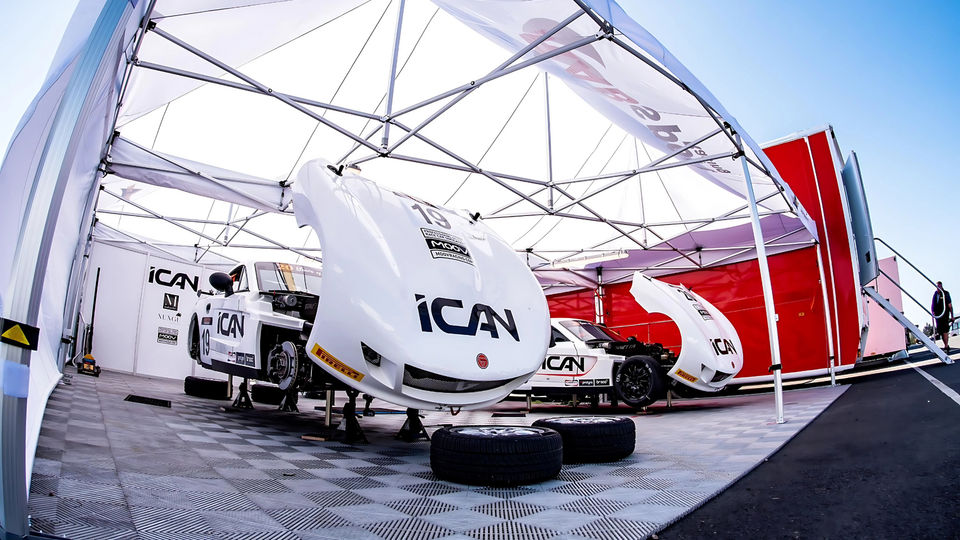
Endurance teams need the same core race paddock equipment built to last a 6, 12 or 24 hour race: a heavy duty awning, printed walls and branding, modular flooring, a pit perch for the pit wall, and proper ballast and anchorage. Every piece has to keep working through the night and in all weathers.
Heavy duty awnings
The awning protects cars, tools, tyres and crew from sun, wind and rain, and has to go up quickly even with a small crew or a late night setup. For a 24 hour race, a strong, stable awning is as important as a good set of wets. Heavy duty Pro 50 and Pro 60 pop ups run up to the 6m x 6m Vantage, the MQ-65 freestanding awning goes up to 6m x 12m, and every canopy and wall can be printed for team and sponsor visibility.
Printed walls and branding
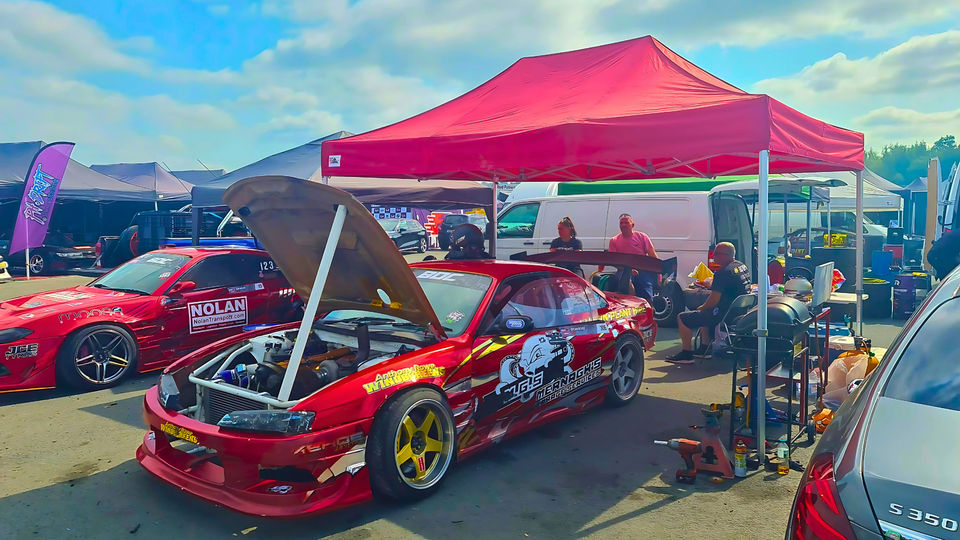
Sponsor exposure is a big part of endurance racing. Custom printed gazebo walls, feather and sail flags and PVC and mesh paddock banners give you:
- Full colour dye-sublimation print for crisp logos and photography.
- Sponsor backdrops for interviews and social content.
- Interchangeable walls, so you can swap partners between events.
- One consistent look from pit lane to hospitality area.
Swisstrax flooring
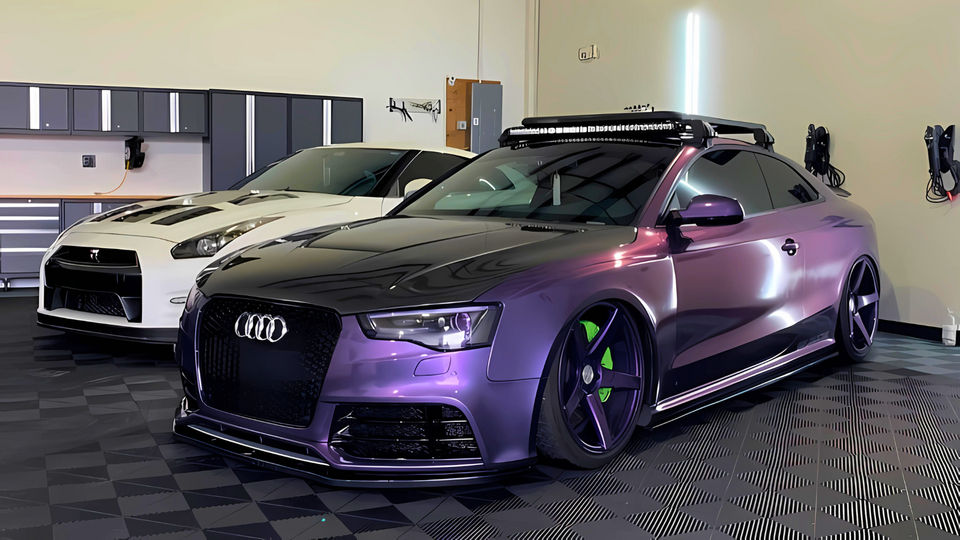
Endurance racing means long hours with oil, fuel, gravel, rain and mud underfoot. When you are double stinting and changing tyres all night, a clean, flat working surface makes a real difference. Swisstrax tiles snap together with no tools, drain spills and rain, resist fuels, oils and race car loads, and lift the look of the awning or garage.
Pit Perch for tight pit lanes
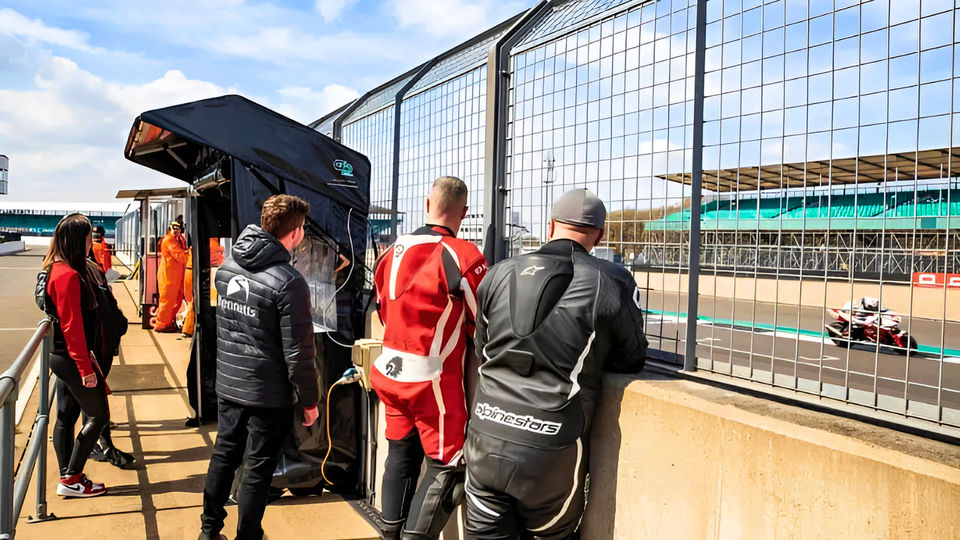
Endurance pit lanes are busy, tight and heavily controlled, a standard pop up tent usually will not fit, and traditional fixed pit perches are often expensive and over-engineered for club and semi-pro teams. The Gala Performance Pop Up Pit Perch was built for that gap:
- 500gsm black PVC covers that can be printed with team branding.
- Built on a Pro 40 style framework for stability and quick setup.
- Integrated LED strip lighting and power outputs for timing and radios.
- Heavy duty internal table with monitor mounts for timing screens.
- Pockets for number boards and signalling equipment.
- Designed to fit within typical pit lane width restrictions.
- Side panels that remove or roll up for fast access.
Ballast and anchorage
Endurance events run in all weathers and the awning stays up for days, so treat ballast and anchorage as essential kit. Use the options in the anchoring section above, weight every leg, and check your championship regulations for any ballast requirements.
What Paddock Equipment Should You Buy First?
Buy the shelter and the weights first, then flooring, then branding, furniture and pit lane equipment as the season goes on. That order gets you racing in a safe, dry work bay from the first round and builds a full paddock package over time.
- A pop up race tent or freestanding awning sized for your series, paddock space and team size.
- Weights, strap kits and pegs for every leg.
- Side walls for the weather side.
- Modular flooring for the work bay.
- Branding: printed walls, banners and flags, plus pit walling or café barriers.
- Tables, chairs and storage for spares and tyres.
- A pit perch if you move into endurance or multi-driver racing.
To keep the shelter in good condition between rounds, see how to clean and maintain a race tent. For anything else, call the team on 01709 803 457 or request a callback.
Race Paddock Equipment FAQs
What equipment do you need in a race paddock?
How do I choose a race awning?
What size awning do I need for a race paddock?
How much weight do you need on a race tent leg?
What paddock equipment do endurance racing teams need?
What is a pit perch?
Do you need flooring in a race paddock?
More Paddock Guides
Paddock guides by discipline