How to Set Up a Drifting Paddock
To set up a drifting paddock, put up a heavy duty awning of at least 3m x 4.5m, anchor every leg, then lay out a covered tyre store, a work area big enough to jack the car and swap wheels, and a shaded spot to cool down. For a competition or a busy public event, add team branding and cafe barriers to keep spectators back from the car.
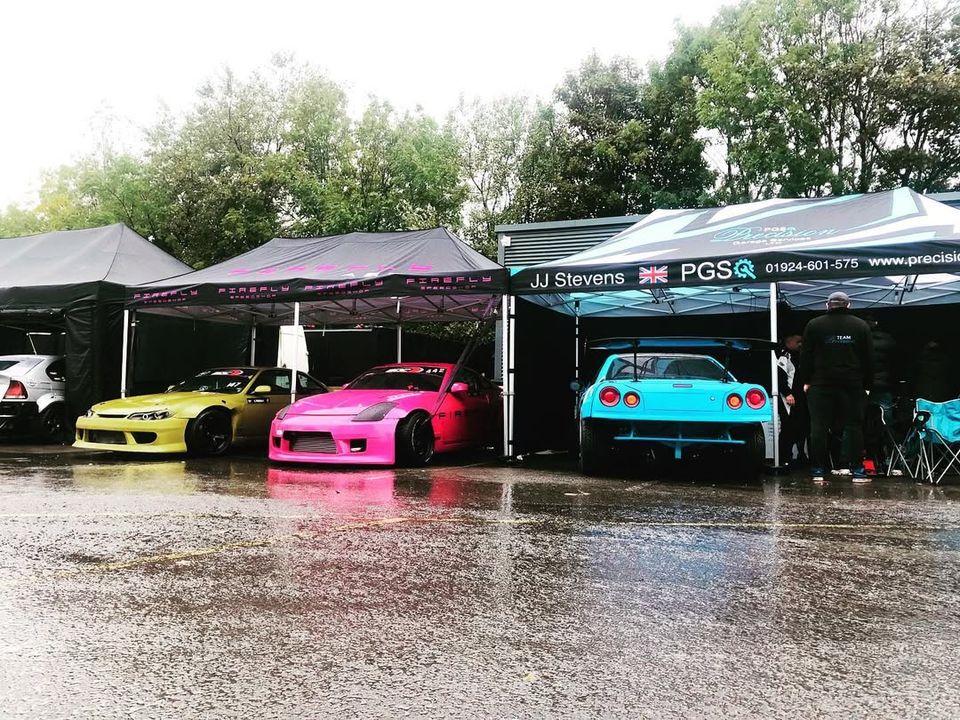
A drift paddock has three jobs that other disciplines rarely ask for at once. It stores a stack of spare tyres, gives you a proper covered workshop for a car that takes a beating every session, and sits in a crowd-facing paddock where your setup is on show. This guide takes you through the layout, the kit and the step by step setup for a practice day or a competition weekend. Want help choosing kit? Talk to the team.
Drift Paddock Setup Checklist
| Item | What you need | Why |
|---|---|---|
| Tent size | Solo driver: 3m x 4.5m minimum. Team or several cars: 6m of frontage or more | Room for the car, a work area and a stack of spare tyres |
| Frame | Heavy duty: Pro 50 or Pro 60 pop up, or an MQ-65 awning | Survives a season of fast set-ups and pack-downs in busy paddocks |
| Tyres | Two or three spare rear sets per event, more with big power or lots of sessions | Running out of rubber ends your day |
| Wheel changes | Jack, axle stands and a torque wrench, plus a tyre cart or tidy stack | Fast, safe tyre swaps between runs |
| Spares | Tie rods, arms, bushings, fluids and cooling parts | Drift cars break things every event |
| Anchoring | Weights on every leg, around 50kg per leg, plus pegs and guy ropes | A loaded awning in a packed paddock must not move |
| Crowd and branding | Branded tent, banners and flags, cafe barriers | Drift paddocks are open to the public and on camera |
What Makes a Drift Paddock Different?
A drift paddock has to handle far more tyres, far more trackside repairs and far more public attention than most motorsport paddocks. Plan for all three from the start and the rest of the setup falls into place.
- Tyres, and lots of them. Drifting wears out rear tyres fast. A drifter can get through two or three rear sets in a single event, so tyre storage is the first thing your paddock has to solve.
- A car that takes a beating. Constant sideways driving is hard on tie rods, arms, bushings, diffs and cooling, so expect to be working on the car between sessions. You need a genuine covered workspace.
- Crowds and cameras. Drift events draw public crowds, photographers and livestreams, and fans walk the paddock. Your pitch is on show all day, which matters for your team and your sponsors.
How Do You Set Up a Drift Paddock Step by Step?
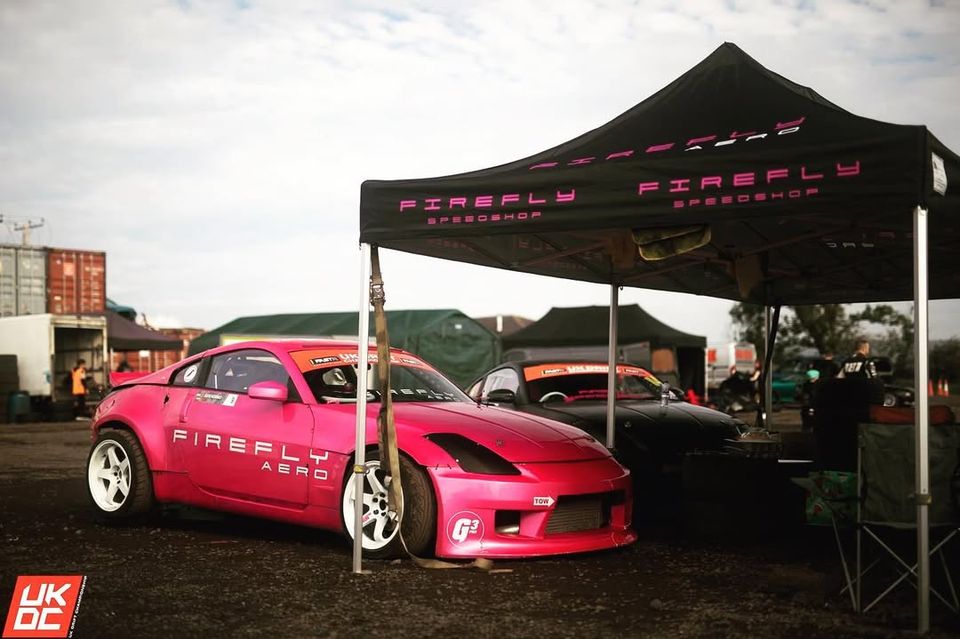
Set up a drift paddock in this order: pitch and anchor the awning, set out the tyre store, clear a wheel change area, lay out tools and spares, add a cool-down spot, then frame the pitch for the crowd. Anchoring comes before anything goes under the roof.
- Arrive early, find your pitch and park tight and tidy so there is room for the rigs around you.
- Put the awning up and weight every leg with race tent weights before any kit goes under it.
- Set out the tyre store under cover, stacked or on a rolling tyre cart, close to where the car will sit.
- Clear a work area with enough room to jack the car, set it on axle stands and torque the wheels up safely.
- Lay out tools, spares and fluids so the common drift breakages can be fixed fast.
- Set up a shaded, sheltered spot with water so the driver can cool down and rehydrate between runs.
- Frame the pitch with printed banners, flags and cafe barriers to keep spectators a safe distance from the car.
- Check the weights, pegs and guy ropes again whenever the weather turns.
The plan in this section is one example for a solo driver. Every paddock is different, so use our motorsport tent size guide to check the size against your own car and kit.
How Many Tyres Do You Need for a Drift Day, and Where Do You Store Them?
Plan on two or three spare rear sets per drift event, and more if you run big power or a lot of sessions. Store them under cover, stacked or on a rolling tyre cart, close to the car so a wheel change is quick.
Nothing shapes a drift paddock more than tyres, because running out of rubber ends your day. Most drivers bring more than they think they need, and that volume of wheels and tyres has to live somewhere dry, organised and easy to reach between runs.
Storing spare tyres
- Keep spare wheels stacked or on a rolling tyre cart, under cover and out of the walkway.
- Keep them close to the car, so nobody is hunting through a heap mid-session.
- Plan the layout so tyres, tools and the car all fit under or beside your awning without blocking your neighbours.
Changing wheels safely
- Bring a jack, axle stands and a torque wrench.
- Leave space to work all the way round the car.
- Torque every wheel before the car goes back out.
Tyre storage is why drifters usually want a bigger footprint than bike or single-seater racers. You are carrying a workshop full of rubber as well as the car. Our motorsport tent size guide shows how much space common setups take.
What Size Awning Do You Need for Drifting?
For a solo drift driver, a 3m x 4.5m heavy duty awning is a sensible minimum, with room for a work area, tyres and kit and the car parked alongside. A team running several cars, or carrying a lot of spares, needs 6m of frontage or more.
A drift car runs at the limit, so tie rods, arms, bushings and the odd cooling problem get fixed trackside all day. Your awning is where that work happens, so treat it as a covered workshop.
- Pop up race tents: the Pro 50 (50mm hexagonal aluminium) comes in 3m x 3m, 3m x 4.5m, 3m x 6m, 4m x 6m and 4m x 8m. The Pro 60 (60mm hexagonal aluminium) comes in 3m x 3m, 3m x 6m, 4m x 8m and 4m x 10m, plus the 6m x 6m Vantage.
- MQ-65 heavy duty motorsport awnings: a 65mm aluminium clear span frame with no internal legs, in 4m x 6m, 4m x 8m, 6m x 8m and 6m x 12m, for teams that want a bigger base.
- Pro 50 and Pro 60 canopies are 600D PVC-coated polyester with a 6000mm hydrostatic head, fire retardant and UV protected.
Pick a heavy duty frame. A leisure gazebo will not last a season of fast set-ups and pack-downs in busy paddocks. The lightweight Pro 40 is built for karting, bikes, track days and privateers.
How Do You Brand a Drift Pit and Keep Spectators Back?
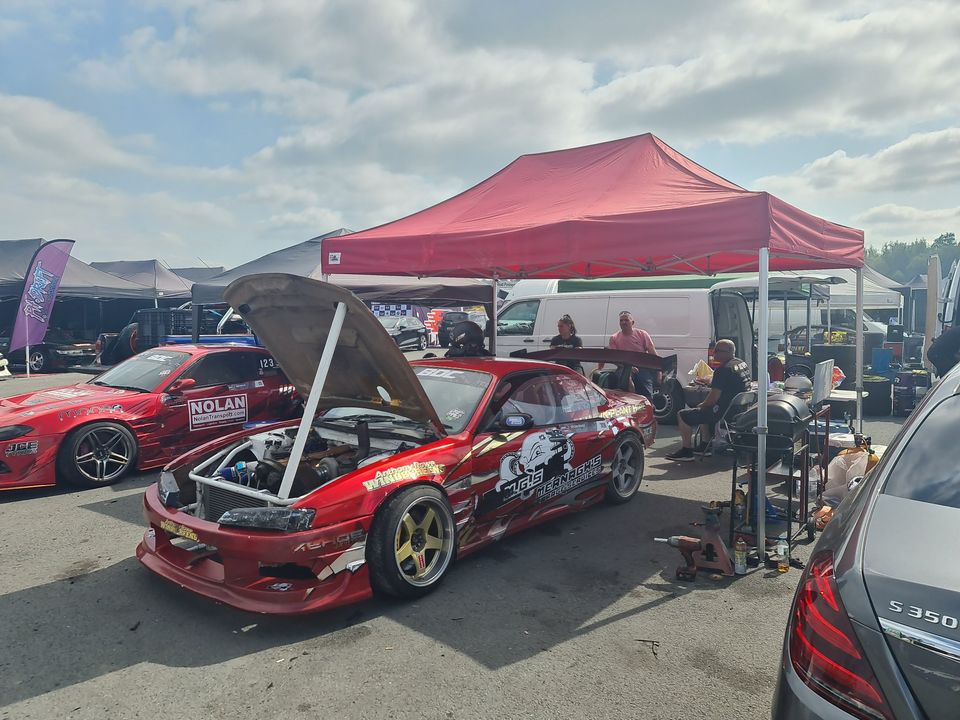
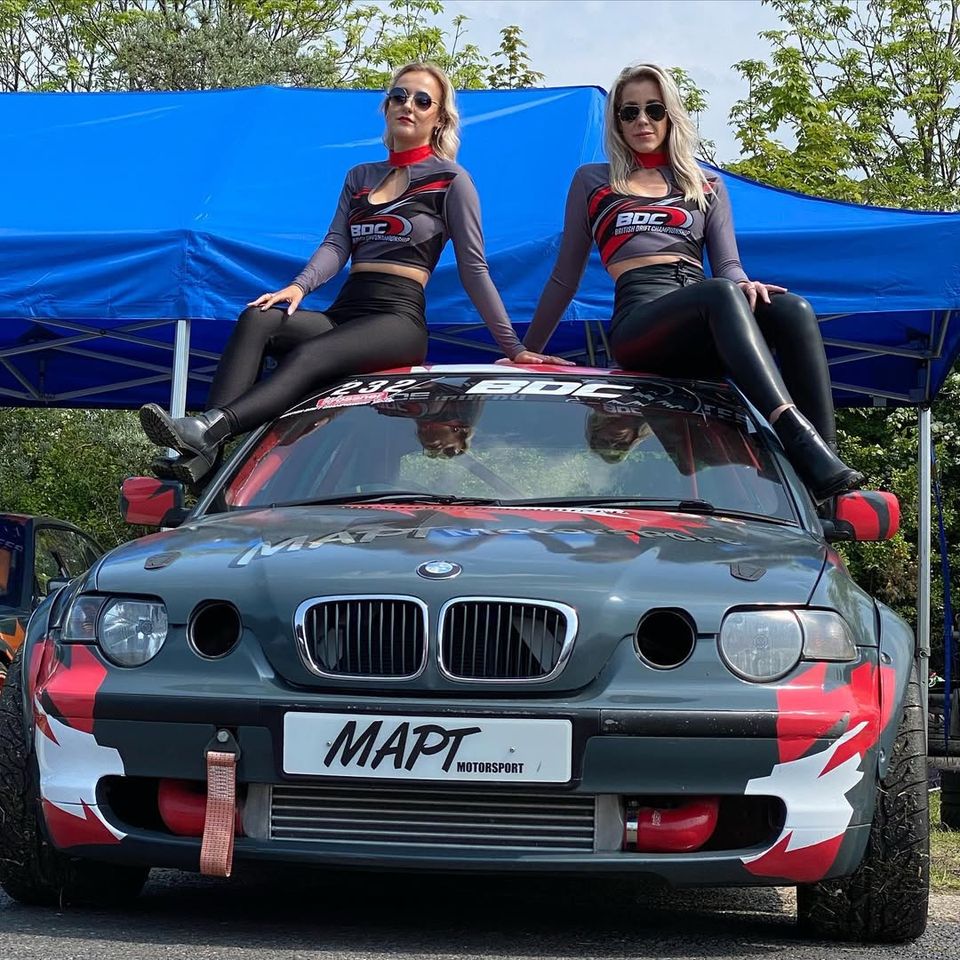
Brand a drift pit with a custom printed tent in team colours and sponsor logos, framed with printed banners and flags. Keep spectators back with cafe barriers, which hold the public a safe distance from a hot car and spinning wheels while still letting them see the action.
Drift events draw engaged crowds, photographers and livestreams, and the paddock is part of the show. Fans walk the pits and your setup ends up in the background of photos and clips all day. For a team chasing sponsors, that visibility is worth using.
- A branded motorsport tent carries team colours and sponsor logos on custom printed canopies and side walls.
- Printed banners and printed flags frame the space and mark your pitch from a distance.
- Cafe barriers keep the public back from the work area and can carry team branding too.
How Do You Anchor a Drift Paddock Awning and Stay Cool?
Weight every leg with proper race tent weights, around 50kg per leg at an exposed circuit, and add pegs and guy ropes wherever the ground allows. Build a shaded, sheltered spot into the layout so the driver can cool down and rehydrate between runs.
Anchoring
- Weight every leg, every time, with race tent weights.
- On soft ground, use tie-down storm kits, pegs and guy ropes.
- On hard standing, use heavy duty weights on every leg.
- The Pro 50 and Pro 60 are rated to 25 to 35 mph only when every leg is securely weighted or anchored. The MQ-65 is rated to 50 mph plus with 2 to 3 weights per leg.
Heat and shelter
- Drifting is physical, hot work, so the driver needs shade between runs.
- Keep water and a seat in the shaded corner, away from the work area.
- Side walls give shelter from wind and rain on poor days.
An awning loaded with expensive kit in a packed paddock is the last thing you want taking off in a gust. A loose awning puts every car and person around you at risk, so over-anchor.
How Is a Drift Practice Day Paddock Different From Competition?
At a drift practice or track day you usually sign an event waiver on the day, and the paddock is relaxed and social. Competition needs a valid motorsport licence and a car that passes scrutineering, in a busier paddock where presentation counts.
Practice and track days
- Sign the event waiver on the day.
- Get there early, and park tight and tidy to leave room for other rigs.
- Expect a social paddock where drivers often lend a hand or share a canopy.
- First event? Read our first track day guide.
Competition
- Hold a valid motorsport licence for the series you enter.
- Prepare the car for scrutineering.
- Expect a busier, more professional paddock, where a branded, well organised base reflects on the team.
- Getting licensed? Read our racing licence guide.
Licence, scrutineering and paddock rules vary between clubs and championships, from grassroots series to national level. Check the regulations for your own event before you travel.
What Do You Need for a Drift Paddock?
The drift paddock essentials are a heavy duty awning big enough to work under, plenty of spare tyres and somewhere to store them, wheel change kit, spares and fluids, and weights for every leg. For competition, add team branding and crowd barriers.
- Branded motorsport tents: team colours and sponsor branding for the crowd and the cameras.
- Heavy duty motorsport awnings and pop up race tents: a covered workshop with room for the car, tyres and repairs.
- Race tent weights: anchor every leg, every time.
- Cafe barriers, printed banners and flags: hold the crowd back and frame your pit.
- Jack, axle stands, torque wrench, tyre cart, spares and fluids.
Not sure what suits your setup? Tell us about your car and your events and the team will talk it through.
Drift Paddock FAQs
What do you need for a drift paddock?
How many tyres do you need for a drift day?
What size awning do you need for drifting?
Do you need a licence to go drifting?
How do you keep spectators back in a drift paddock?
How do you stop your paddock awning blowing away?
More Paddock Guides
- How to set up a motorcycle paddock
- How to set up a hillclimb and sprint paddock
- How to set up a rallycross paddock
- How to set up a karting paddock
- How to set up a motocross paddock
- How to plan your paddock space
Getting started in motorsport