How to Clean and Maintain a Race Tent
To maintain a race tent, hand wash the canopy with warm water and mild soap, dry it completely before it goes in the bag, and check the frame, joints and fixings every time you put it up. Reproof the seams and fabric at the start of each season, and fix small tears and bent parts as soon as you find them.
A race tent is a working tool that takes far more punishment than a garden gazebo, and a little regular care keeps it waterproof, catches small faults before they become expensive, and protects what you have spent on your paddock setup. This guide covers the routine after every race weekend, cleaning, drying and storage, repairs, frame checks, end of season care and when a canopy or part is due for replacement. Need parts or advice? Talk to the team.
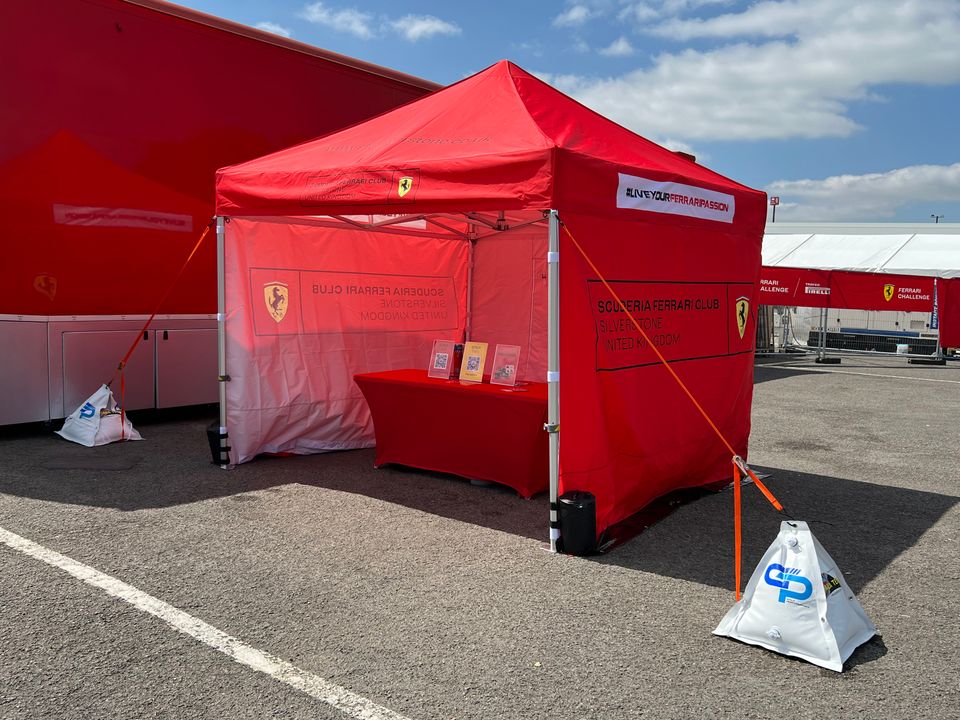
Race Tent Maintenance Schedule
| Job | When | Why |
|---|---|---|
| Brush off, check for damage, dry fully | After every event | Stops dirt setting in and mildew starting |
| Hand wash canopy and wipe frame | Light clean after each event, deep clean once or twice a season | Dirt, sap and tyre residue break down the coating |
| Seal seams and reproof fabric | Start of the season and after any heavy wash | Seams are the first place water gets in |
| Check joints, legs and fixings | Every set-up and pack-down | Catches a crack or bend before it fails in wind |
| Full inspection, repairs and parts order | End of the season | Gets the tent ready before the next first round |
What Should I Do With My Race Tent After a Race Weekend?
After every race weekend, take the canopy off the frame, brush off loose dirt, check the canopy and frame for damage, and make sure everything is bone dry before it is stored. Those four habits prevent most of the damage a race tent ever suffers.
Work through this list at pack-down and again when you get home:
- Remove the side walls and canopy from the frame before the tent goes in the van or trailer. Most transit tears happen when the cover is left on and flaps or catches on the way home.
- Brush off loose mud, grass and grit, and wipe off bird droppings and tree sap straight away, before they set into the fabric.
- Look over the canopy for tears, worn corners and lifted seams, and note anything that needs a patch.
- Check every leg, joint and fixing for bends, cracks or missing pieces as the frame folds.
- If anything went away wet, open it up at home within a day and dry it fully, frame included.
- Count your weights, pegs and straps back into the van so nothing is missing at the next round.
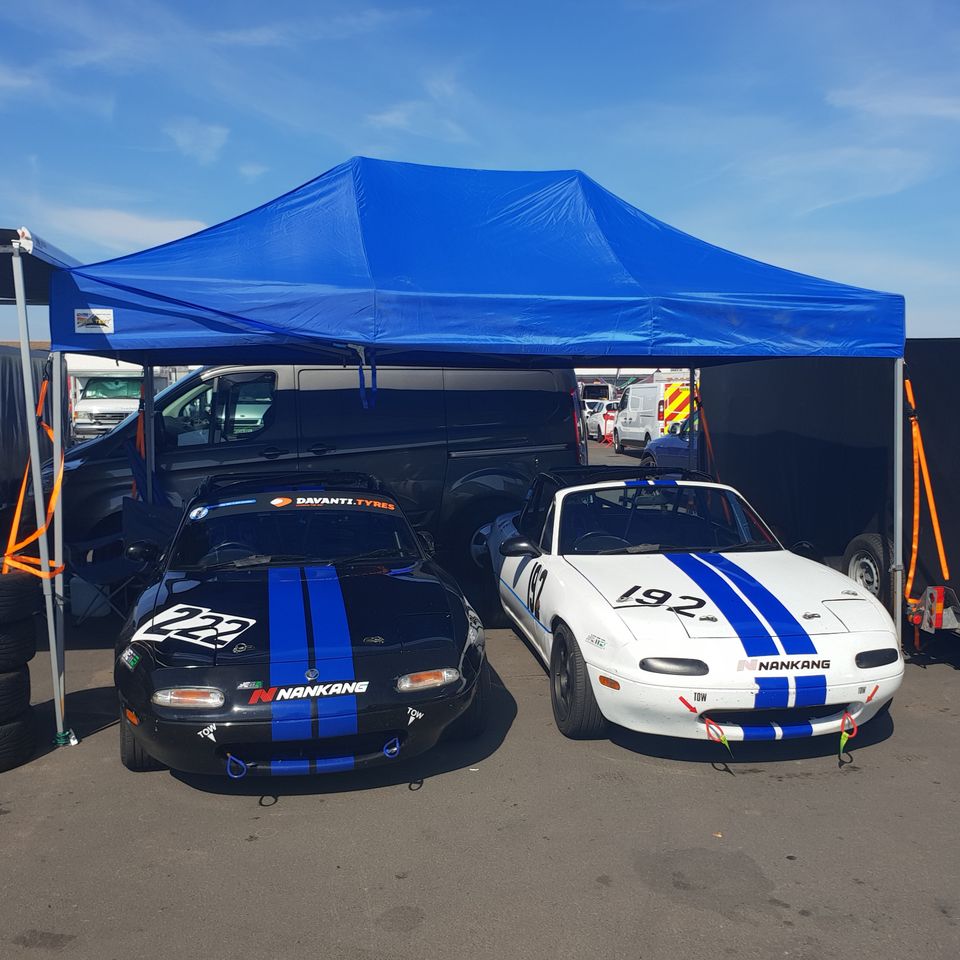
How Do You Clean a Race Tent Canopy and Frame?
Clean a race tent canopy by hand with warm water, a mild soap and a soft brush or sponge, then rinse with clean water and let it air dry completely. Never use a pressure washer, bleach or harsh chemicals, because they strip the waterproof coating and weaken the seams.
Cleaning the canopy and walls
- Put the tent up, or lay the canopy flat on a clean surface.
- Brush off dry dirt first so you are not grinding it into the fabric.
- Wash with warm water and mild soap using a soft brush or sponge, working from the top down.
- For mildew spots, use a little white vinegar in warm water, then rinse well.
- Rinse every panel thoroughly with clean water so no soap is left on the coating.
- Leave it to air dry completely before folding.
Cleaning the frame
Wipe the legs and trusses with warm soapy water and a cloth, paying attention to the sliders, joints and leg extensions where grit collects. Rinse and dry the frame before folding it. On an MQ-65 awning, keep the channels clean so the beaded cover edge slides into the frame freely.
A light clean after each event and a deeper clean once or twice a season is all most race tents need.
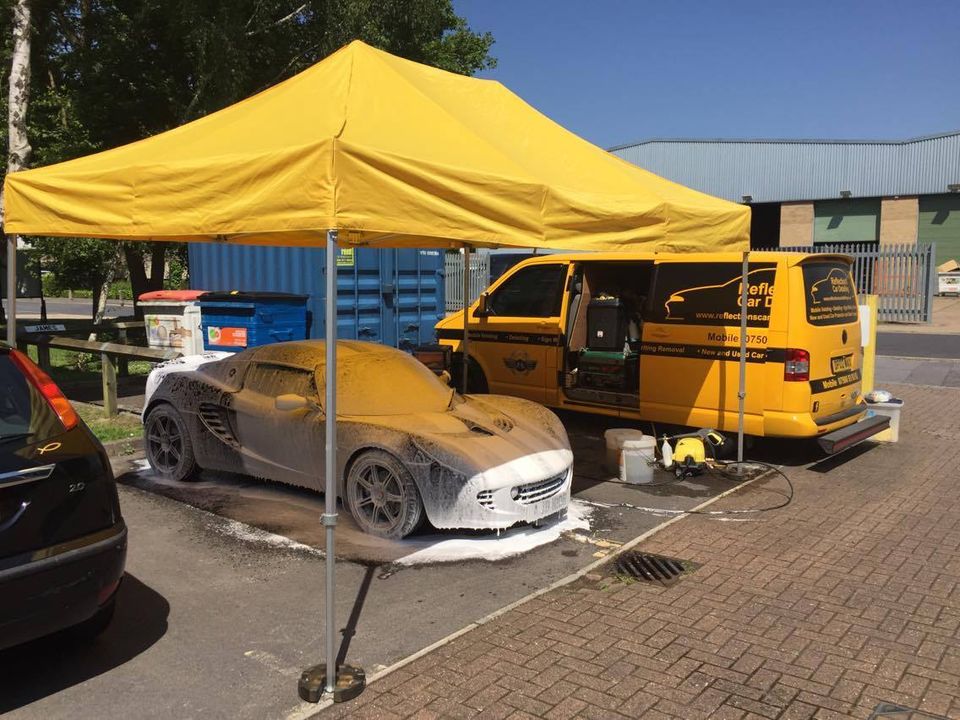
How Do I Stop Mildew on a Race Tent?
You stop mildew by never packing a race tent away wet. Damp fabric stored without airflow grows mould and mildew within days, even when the surface looks dry, and once it takes hold it stains permanently and rots the coating.
After a wet event, follow this routine as soon as you are home:
- Set the tent up in a garage, unit or garden, or hang the canopy and walls somewhere with good airflow.
- Leave it until it is bone dry, including the seams, corners and valance, where water sits longest.
- Dry the frame too, especially joints and leg sections.
- Clean the cover before it goes in the bag, because trapped dirt causes permanent staining.
- Store the tent in its bag in a cool, dry place, off a damp floor.
If you have to pack up wet at the circuit, treat it as temporary. Get it out of the bag and dried within a day.
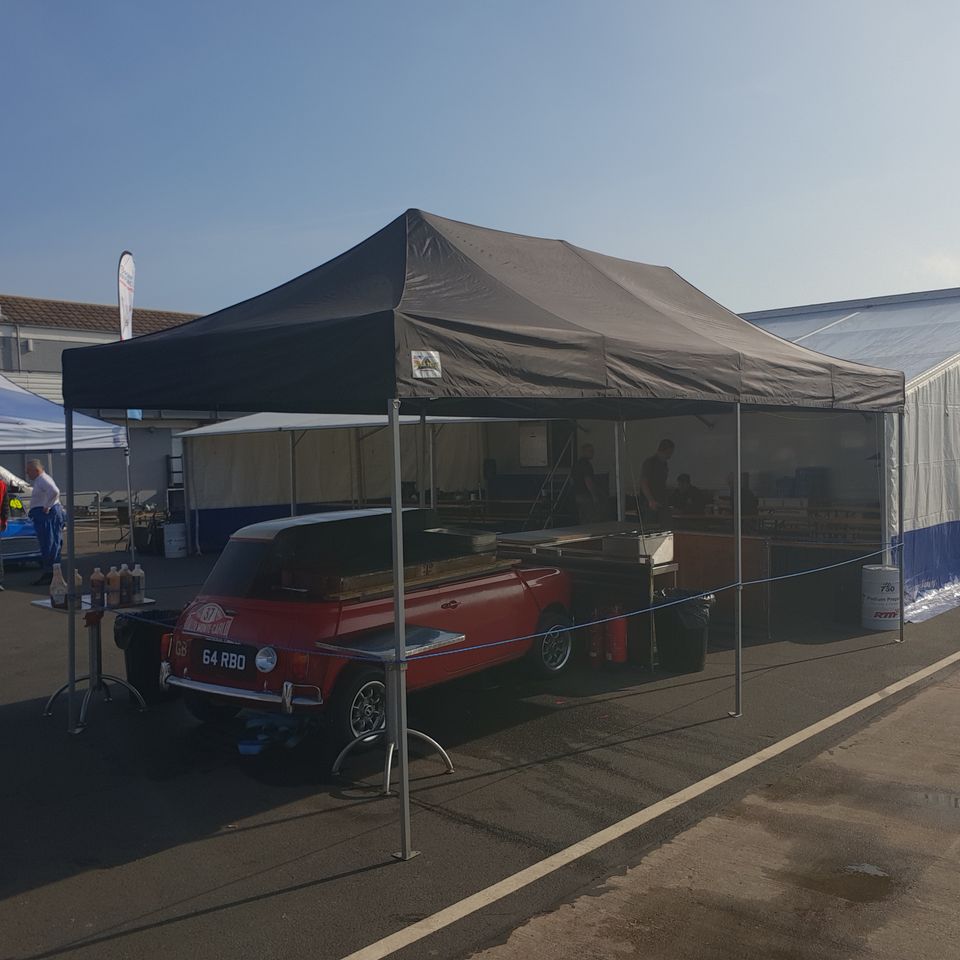
How Do You Repair a Torn Race Tent Canopy?
Repair a small tear in a race tent canopy with a gazebo repair patch or tent repair tape cut large enough to overlap the damage on all sides. Caught early, most small rips are a five-minute fix and rarely need a whole new canopy.
Patching a tear
- Trim any loose threads around the tear.
- Clean around the damage. A wipe of rubbing alcohol helps the patch bond.
- Cut the patch or tape so it overlaps the tear on every side.
- Press it on firmly. On a high-stress area such as a corner, patch both the inside and outside.
- Let it bond fully and test it before the next event.
Reproofing seams and fabric
- Clean and dry the cover first, because any treatment only bonds to clean fabric.
- Run an outdoor seam sealer along the stitching lines, the most common leak points, and let it cure.
- Apply an outdoor fabric waterproofing spray with UV resistance, coating evenly.
- Let it dry, then add a second coat.
- Drip water on the surface to test. It should bead and run off.
Pro 50 and Pro 60 canopies are 600D PVC-coated polyester with a 6000mm hydrostatic head, so they are waterproof from new. Seasons of UV, flexing and washing gradually wear the coating, and wetting through or drips at the stitching tell you it is time to reproof.
How Do I Check a Race Tent Frame, Joints and Fixings?
Check a race tent frame every time you put it up and take it down. Look for bent or dented legs, cracked or loose joints, worn inserts, and leg extensions or sliders that stick, and replace any damaged part before the tent goes up in wind.
Run through these checks as the frame opens:
- Legs. Sight down each leg for bends or dents, and check the extensions slide and lock at every height.
- Joints. Look for cracks, splits or play in the joints and trusses. The Pro 50 uses profile aluminium joints with hammer-tested nylon inserts, and the Pro 60 uses double-reinforced truss joints.
- Peak. On a Pro 60, check the external peak-pole spring tensions the canopy properly.
- Feet and fixings. Make sure feet, pins and connectors are all present and secure.
- Anchoring kit. Check straps, pegs and storm kits for fraying or wear.
Wind is what turns a small fault into a broken frame. Weight every leg with race tent weights, around 50kg per leg at an exposed circuit, and add guy ropes, heavy-duty pegs or tie-down storm kits wherever the ground allows. Gazebo strength bars brace the frame across its span and cut the flex that fatigues joints. The Pro 50 and Pro 60 are rated to 25 to 35 mph only when every leg is securely weighted or anchored. If the wind becomes genuinely dangerous, take the roof down.
How Should I Look After a Race Tent Over the Winter?
At the end of the season, give the race tent a deep clean, dry it completely, inspect every part, make any repairs, and store it clean and dry in its bag in a cool, dry place. Order replacement parts over the winter so the tent is ready for the first round.
- Put the tent up and give the canopy, walls and frame a full deep clean.
- Dry everything completely, then leave it a little longer.
- Inspect the canopy seams, corners and valance, and the frame joints, legs and feet, as set out above.
- Patch any tears and replace damaged legs, panels or connectors.
- Seal the seams and reproof the fabric, or plan to do it at the start of the season.
- Check your weights, pegs, straps and storage bag.
- Pack it into its bag and store it somewhere cool and dry, off the floor.
- Before the first event, put it up once at home to check it is complete and working.
When Should I Replace a Race Tent Canopy or Part?
Replace a race tent canopy when it still leaks after the seams are sealed and the fabric is reproofed, when a tear is too large or too close to a corner to patch, or when mildew has stained and rotted the coating. Replace a frame part when a leg is bent, a joint is cracked, or a foot or connector is missing.
| What you find | What to do | What you need |
|---|---|---|
| Small tear or hole away from a corner | Patch it | Repair patch or tent repair tape |
| Drips at the stitching, fabric wetting through | Seal seams and reproof | Seam sealer and waterproofing spray |
| Still leaking after reproofing | Replace the canopy or panel | Replacement cover or panel |
| Large split, or tear at a high-stress corner | Replace the canopy or panel | Replacement cover or panel |
| Permanent mildew staining and a breaking-down coating | Replace the canopy | Replacement cover |
| Bent leg, cracked joint, missing foot or connector | Replace the part | Individual spare part |
One breakage rarely means a new tent. You can order individual gazebo spare parts, including replacement covers, roof and side panels, legs, feet and connectors, and get the structure back to full strength for a fraction of the cost of a new one. Fix small damage the moment you spot it, because a frayed seam or a hairline crack only gets worse in a paddock.
If the whole tent is beyond saving, or you want a step up, compare the pop up race tent range and the MQ-65 heavy duty motorsport awnings, and check the motorsport tent size guide before you buy.
What Kit Do I Need to Maintain a Race Tent?
To keep a race tent in race condition you need repair patches and care products, access to spare parts, proper leg weights and, on exposed sites, strength bars. Gala Performance supplies all four for its structures.
- Maintenance and repair: repair patches and care products to fix tears and keep the cover sound.
- Gazebo spare parts: replacement covers, legs, panels and connectors, so one breakage never means a new tent.
- Race tent weights: the single most important upgrade for surviving a windy paddock.
- Strengthening equipment: strength bars that brace the frame against gusts.
Not sure what your setup needs? Tell us which tent you have and the team will help you sort it.

Race Tent Maintenance FAQs
How do you clean a race tent?
Can I pressure wash a gazebo canopy?
How do you get mildew off a race tent?
How do you waterproof a race tent?
How do you repair a torn gazebo canopy?
How do you stop a race tent blowing away?
Can you replace parts of a race tent?
Keep Your Race Tent Ready for Every Round
Tell us which tent you have and what has worn or broken. The team will point you to the right parts, patches, weights or strength bars.