How to Get a UK Racing Licence (and What It Costs)
If you want to go circuit racing in the UK, you need a competition licence from Motorsport UK. The good news: it is more straightforward and more affordable than most people think. For a driver under 60, the whole process costs roughly £360 to £425 and takes about three to four weeks. Here is exactly what a racing licence is, the steps to get one, what each part costs, and what happens once you are licensed.
What Is a Racing Licence, and Do You Need One?
A racing licence is a competition licence issued by Motorsport UK, the national governing body for the sport (you may still see it called by its old name, the MSA). You need one to enter any Motorsport UK-regulated event — circuit racing, sprints, hill climbs and more. No licence, no grid slot, so it is the first box to tick.
For UK club circuit racing, the licence you are after is the entry-level Race Club licence (you will see it referred to in older guides as Race Inter Club or National B). It is the minimum needed to line up in most club championships, and it is where every racer starts before working up the grades. A track day, by contrast, needs no licence at all — but the moment you want to race wheel to wheel, you need one.
What Does a Racing Licence Cost?
This is the question everyone asks first, so here is the honest breakdown for a first-time circuit racing licence (Race Club), as of 2026:
- Go Racing starter pack — around £115. Bought from Motorsport UK, this is your official starting point, and crucially it already includes your first year's licence fee.
- ARDS test — around £245 to £310. The on-track assessment, priced by the circuit or school and by whether you use their car or your own. Standalone tests generally land between £200 and £400.
- Vision test — free to around £50. Under 60, it is a simple self-declared eye test, no GP needed. 60 or over, you need a full GP medical (the same standard as an HGV licence), usually about £50.
All in, a driver under 60 is looking at roughly £360 to £425 to get on the grid. Fees change year to year, so always check the Motorsport UK website for the current figures before you budget.
The Step-by-Step Process
From a standing start, getting your Race Club licence breaks down into four steps:
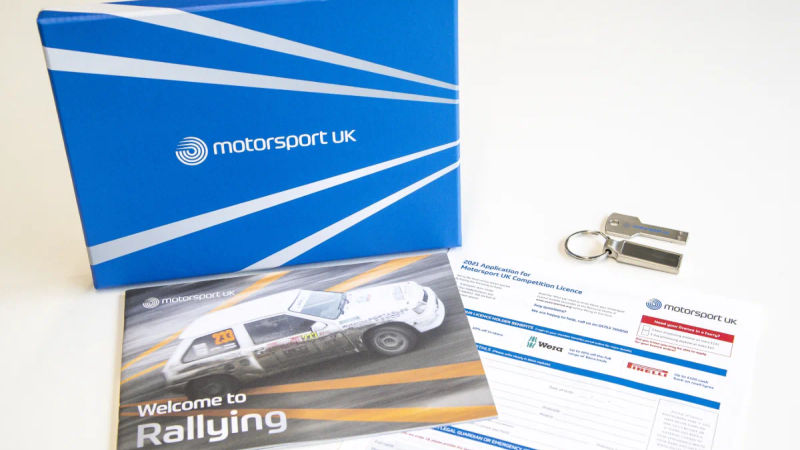
- Buy the Go Racing starter pack from Motorsport UK. It contains your competition licence application form, a guidance booklet, and links to the digital Yearbook and the official Go Racing film. Watch the film properly — the written test comes straight out of it.
- Do your vision test (or medical). Under 60, a self-declared eye test on the application form is enough. 60 or over, book a GP medical. Get this done before you apply.
- Book and pass the ARDS test at one of the 13 Motorsport UK-accredited racing schools. A half-day written and on-track assessment (more on this below).
- Send your application to Motorsport UK. Once your examiner has stamped your form, post it off and your Race Club licence drops through the letterbox a few days later. You are cleared to race.
Start to finish, most people are licensed within three to four weeks.

The ARDS Test Explained
The ARDS test — officially the Novice Driver Training Course — is run by the Association of Racing Driver Schools and is the part that puts people off unnecessarily. It is a half day, and it comes in two parts:
- A written test on flags, safety and general racing knowledge, all drawn from the Go Racing material and the Motorsport UK Yearbook (the Blue Book). The flag section must be answered perfectly, so learn your flags.
- An on-track assessment of around 20 minutes, where an instructor rides with you and checks you can drive safely, hold a line and stay aware of other cars. It is not a speed test — it is a safety test.
You will need a full UK road driving licence to take it, and you can use a school car or your own. There are 13 accredited schools, including circuits you may already know from our guides — Oulton Park, Thruxton, Croft, Silverstone, Donington Park, Brands Hatch, Cadwell Park, Snetterton and Knockhill among them.
Licence Grades and Moving Up
The Race Club licence is the entry grade, but it is not the only one. The ladder runs Clubman, then Race Club, then National, then International, and you climb it by earning experience rather than buying it.
To upgrade from Race Club to a National licence, you need to complete a set number of races and collect upgrade signatures for clean, incident-free driving. When you first start, you will also run a novice cross on the back of your car so other drivers know you are still learning. There is no upper age limit on a race licence, and drivers aged 14 to 17 can race with a guardian countersigning the application. In short: everyone starts at Race Club, and where you go from there is up to you.

Licensed? Now Kit Out Your Paddock
Once the licence is sorted and you have entered your first race, you will need somewhere to work from at the circuit. Gala Performance builds motorsport structures in Britain, and we race ourselves, so the range is designed around real paddocks.
- Pop up race tents — quick to pitch, easy to store, and the natural starting point for a first-season racer.
- Heavy-duty awnings — clear-span working space for when you and the car need proper cover.
- Marquee and gazebo weights — because a paddock structure is only as good as what is holding it down.
Not sure what you need for your first meeting? Request a callback and we will talk it through.
How much does a UK racing licence cost?
How do I get a racing licence in the UK?
What is the ARDS test?
Do I need a medical to get a race licence?
How long does it take to get a racing licence?
What licence do I need for UK circuit racing?
ARDS Test Circuits
Kitting Out the Paddock