How to Set Up a Rallycross Paddock
To set up a rallycross paddock, pitch a heavy duty awning with full side walls on the firmest, best-draining ground you can find, and weight every leg because pegs pull out of soft, muddy ground. Lay matting or boards inside, and organise the bay so the car can be jacked up, checked and repaired quickly between heats.
Rallycross is wheel-to-wheel racing on a mix of tarmac and gravel, usually over a full weekend, so your paddock is a camp, a workshop and a mud barrier all at once. This guide covers what the paddock is like, which tent to bring, how to set it up step by step, anchoring on wet ground and laying out the pit for fast turnarounds. Getting into rallycross? Talk to the team.
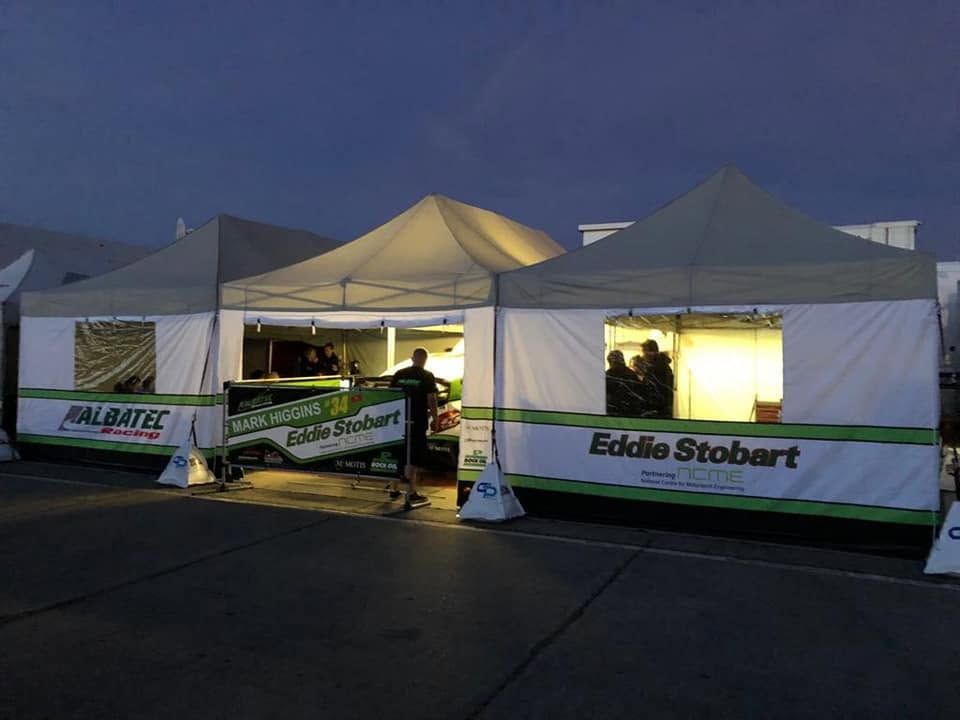
Rallycross Paddock Setup Checklist
| Item | What to bring | Why |
|---|---|---|
| Structure | Heavy duty: an MQ-65 freestanding awning or a Pro 50 or Pro 60 pop up | Two days of wind, rain and mud |
| Size | 3m x 4.5m or 3m x 6m as a starting point for one car, tools and spares | Room to jack the car and work round it |
| Walls | Full side walls on every exposed side | Keeps wind, rain and flying gravel out |
| Anchoring | Weights on every leg, pegs and guy ropes as backup | Pegs pull out of soft, wet ground |
| Floor | Ground matting or boards inside the awning | A clean, solid footing to work on |
| Pit kit | Jack, tools and spares laid out to hand, plus camping kit | Quick turnarounds between heats |
What Is a Rallycross Paddock Like?
A rallycross paddock is usually a weekend camp on grass or hardcore that turns to mud quickly in the wet. Most competitors stay on site, the cars come back from every session covered in gravel and dirt, and the running order keeps you busy from first practice to the finals.
What rallycross is
Rallycross is wheel-to-wheel racing on a mixed-surface circuit, part tarmac and part loose gravel, typically around a 60/40 split. Several cars race at once over short, flat-out heats of about three minutes, and each driver must take the joker lap, a longer alternative route, once per race. The sport began at Lydden Hill in Kent in 1967, and the calendar has taken in the FIA World Rallycross Championship and the British Rallycross Championship.
Why it shapes your setup
- It is a weekend. Many meetings run over two days, so most competitors camp. The bigger circuits have showers, food and toilets, but your setup still has to work morning and night.
- It is dirty. The loose sections throw gravel and mud everywhere, the cars often need a jet-wash between sessions, and the ground churns up fast in wet weather.
- It is busy. A typical round packs in practice, timed qualifying heats, semi-finals and finals, so the car comes back to the pit many times.

What Tent Do You Need for a Rallycross Weekend?
For a rallycross weekend you need a genuinely heavy duty structure with full side walls: a Pro 50 or Pro 60 pop up, or an MQ-65 heavy duty motorsport awning for a bigger team base. Two days of wind, rain and mud will finish off a leisure gazebo by Saturday lunchtime.
| Your setup | Size to start from | Frame |
|---|---|---|
| One car, tools and spares | 3m x 4.5m or 3m x 6m pop up | Pro 50 (both sizes) or Pro 60 (3m x 6m) |
| One car plus a living or changing area | 4m x 6m or 4m x 8m pop up, or an MQ-65 | Pro 50 (4m x 6m, 4m x 8m), Pro 60 (4m x 8m) or MQ-65 |
| Team base for a full season | MQ-65 freestanding awning, 4x6 to 6x12 | MQ-65 |
| Extra cover for tyres or a second work area | 3m x 3m pop up | Pro 50 or Pro 60 |
Heavy duty pop ups
The Pro 50 and Pro 60 pop up race tents use 50mm and 60mm hexagonal aluminium frames with 600D PVC-coated polyester canopies rated to a 6000mm hydrostatic head. They go up in minutes and are rated to 25 to 35 mph when every leg is securely weighted or anchored. The Pro 60 is the UK's only 60mm pop up.
MQ-65 freestanding awnings
The MQ-65 is a clear-span frame in 65mm aluminium with 650gsm PVC covers, made to order in 4x6, 4x8, 6x8 and 6x12. With 2 to 3 weights per leg it is rated to 50 mph plus, and hard doors, windows and curtain walls turn it into an enclosed base for the weekend.
Fit full walls on every side you can. An enclosed bay keeps wind, rain and flying gravel off the car, and gives you somewhere dry to work and to change. Check the motorsport tent size guide before you buy, and see how to choose a motorsport awning for the full comparison.
How Do You Set Up a Rallycross Paddock?
Set up a rallycross paddock in this order: pick firm, well-drained ground, put the frame up, weight every leg, fit the walls, lay the floor, then organise the work area. Doing it in this order means the structure is secure before the weather or the first session arrives.
- Pick your pitch. Choose the firmest, best-draining ground available, and read the slope so water runs away from your working area.
- Put the frame up and position it with the open side away from the prevailing wind.
- Weight every leg straight away with race tent weights, then add pegs and guy ropes where the ground will hold them.
- Fit the side walls, leaving the side you drive in through open.
- Lay ground matting or boards inside so you and the car have a clean, solid footing.
- Mark out jack space round the car, and set tools and spares on one side where they are in reach.
- Set up the living area and camping kit away from the work space, then do a final check of weights and walls before first practice.
How Do You Anchor an Awning on Muddy Ground?
On muddy ground, use race tent weights on every leg as your main anchor and treat pegs and guy ropes as backup, because pegs pull out of soft, wet ground easily. Weight down hard whatever the forecast.
Rallycross paddocks are usually grass or hardcore, and both turn to mud quickly once the rain arrives and the vans start moving. A few habits keep you secure and keep the mud outside:
- Weight every leg, every time. The Pro 50 and Pro 60 wind rating of 25 to 35 mph only applies when every leg is securely weighted or anchored.
- On an MQ-65, use 2 to 3 weights per leg. That is what its 50 mph plus rating is based on.
- Use tie-down storm kits where the ground is soft enough to take them, as well as the weights.
- Pitch high. The firmest, best-draining spot is worth walking further for.
- Lay matting or boards inside, so nobody tracks mud through the base all weekend.
Mud and grit are hard on a canopy, so clean and dry it properly once you are home. Our race tent cleaning and maintenance guide covers the routine.
How Should You Lay Out a Rallycross Pit for Quick Turnarounds?
Lay out a rallycross pit with clear space to jack the car up, tools and spares organised within reach, and a clean, dry area to work in. The cycle of race, return, check, repair and race again often leaves only a short window between sessions.
Contact and mechanical damage are common on a rough mixed surface, so plan for repairs as well as routine checks:
- Leave enough room round the car to get it up on a jack and work on any corner.
- Keep the spares you are most likely to need on one side, sorted so anyone in the team can find them.
- Keep the floor clear of tools and kit between sessions so the car can come straight in.
- Agree a between-heats checklist so the same jobs get done every time the car comes back.
- Plan where the car gets jet-washed, away from the work area and the walls.
The teams that keep a clean, dry, well-drilled pit running are the ones still on form on Sunday afternoon. A covered, walled workspace is what makes that possible.

Is Rallycross Good for Beginners?
Yes. Rallycross is one of the more welcoming disciplines for newcomers, with short races, mixed grids, grassroots classes and an open paddock where fans and teams mix freely. To compete you need a competition licence and a car built to your class regulations.
Licence and eligibility rules are set by Motorsport UK and the individual championships and clubs, so always check the current regulations for the series you plan to enter.
Where to begin
Our get into motorsport guides cover the options across disciplines.
Getting licensed
The racing licence guide explains how to get a competition licence.
Budget
The low cost racing guide looks at keeping your spend under control.
What Kit Do You Need for a Rallycross Paddock?
For a rallycross paddock you need a heavy duty awning with side walls, weights for every leg, ground matting or boards, tools and spares for quick repairs, and camping kit for a two-day stay. Plan for mud and a jet-wash throughout the weekend.
- Heavy duty motorsport awnings: a weatherproof, enclosable base built for a two-day weekend.
- Race tent weights: your main anchor when pegs pull out of soft, muddy ground.
- Pop up race tents: quick extra cover for tyres, kit or a second work area.
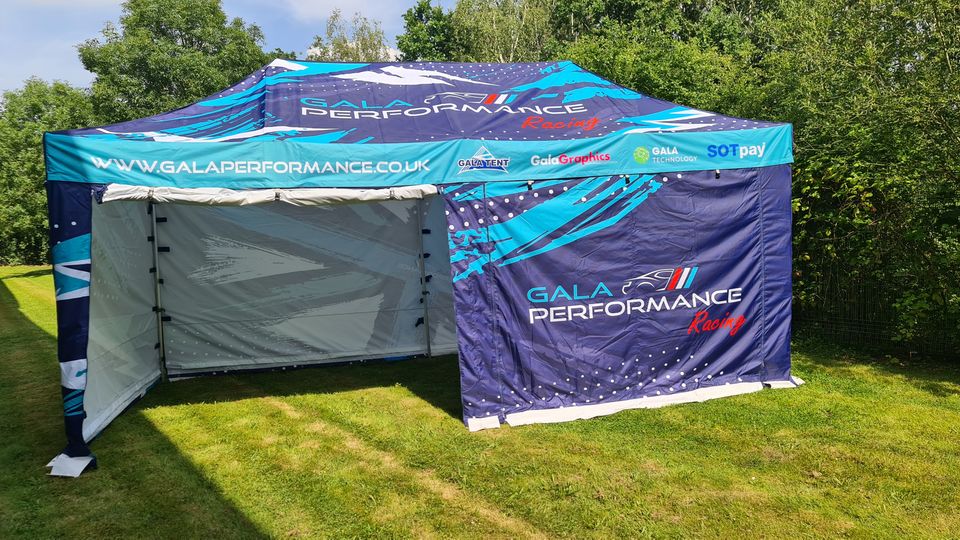
- Branded motorsport tents: printed canopies and walls in your livery for rallycross's crowd-facing paddocks.
Gala Performance builds motorsport structures in Britain for exactly this kind of wet, muddy, hard-working weekend. Not sure what suits your setup? Request a callback and we will talk it through.

Rallycross Paddock FAQs
What is rallycross?
Is a rallycross event one day or a weekend?
What do you need for a rallycross paddock?
How do you anchor an awning on muddy ground?
What size awning do I need for rallycross?
What surface is rallycross raced on?
Is rallycross good for beginners?
More Paddock Setup Guides