How to Keep Your Race Team Cool in Hot Weather
To keep a race team cool in hot weather, put up proper shade before the sun gets high, set the tent so air can move through it, keep water within reach all day, and give the driver or rider a shaded cool-down area between sessions. Keep tyres, fuel and electronics out of direct sun, and plan the heavy work for the cooler ends of the day.
Direct sun, hot tarmac, engine heat, racewear and long hours outdoors add up fast on a summer race weekend. Heat drains mechanics, blunts a driver's concentration, and is hard on equipment. This guide covers shade, airflow, hydration and the signs of heat illness, cooling the driver, protecting kit, scheduling and a hot weather kit list. Prepping for a summer round? Talk to the team and we will point you to the right kit.
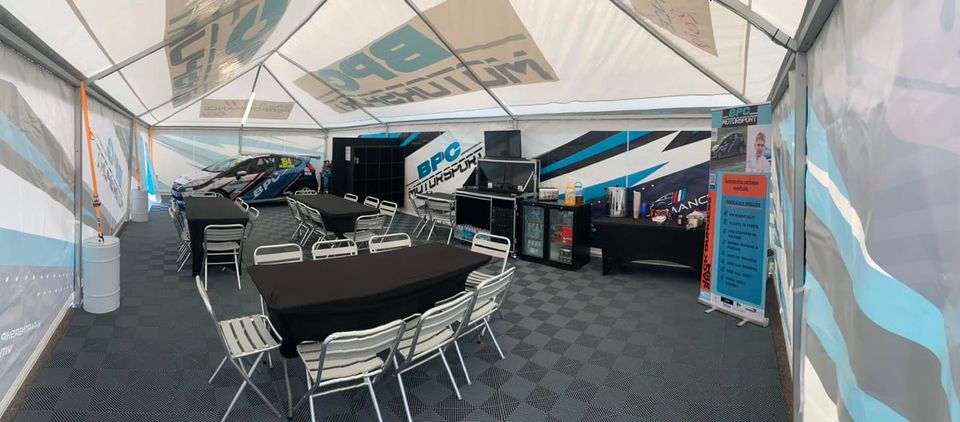
Hot Weather Paddock Plan
| Area | What to do | Kit |
|---|---|---|
| Shade | A tent big enough for the car, the crew and a seated cool-down area | Size guide, pop up or MQ-65 |
| Airflow | Sides open on the breeze side, back wall on the sun side, clutter cleared | Half walls and window walls |
| Hydration | Water within reach of every work area, drinks before people feel thirsty | Water containers, cool box, cups |
| Driver or rider | Suit top down, helmet off and straight into the shade between sessions | Seat, fan, wet towels, drinks |
| Kit | Tyres, fuel, electronics and adhesives kept out of direct sun | Covered storage area, fuel kept apart |
| Ground | Off the hot tarmac where the crew stands and works | Modular flooring |
| Timing | Heavy jobs early and late, breaks rotated through the hottest hours | A simple day plan |
Why Is Heat a Problem at a Race Meeting?
A paddock stacks up several heat sources at once, and the crew and driver are exposed to them for a long day with little escape. Without a plan, heat wears people down, affects concentration and puts equipment at risk.
On a summer race weekend a team is typically dealing with:
- Direct sunlight with little natural shade
- Hot asphalt and concrete underfoot
- Heat from race engines and brakes
- Enclosed garages and awnings with limited airflow
- Large crowds around the paddock
- Protective racewear and heavy team clothing
- Long working hours outdoors, often across several sessions
Left unmanaged, that heat affects driver concentration, crew wellbeing, equipment reliability, hospitality comfort and the smooth running of the whole race day. Mechanics working continuously through the day feel it first.
How Do You Set Up Shade in a Hot Paddock?
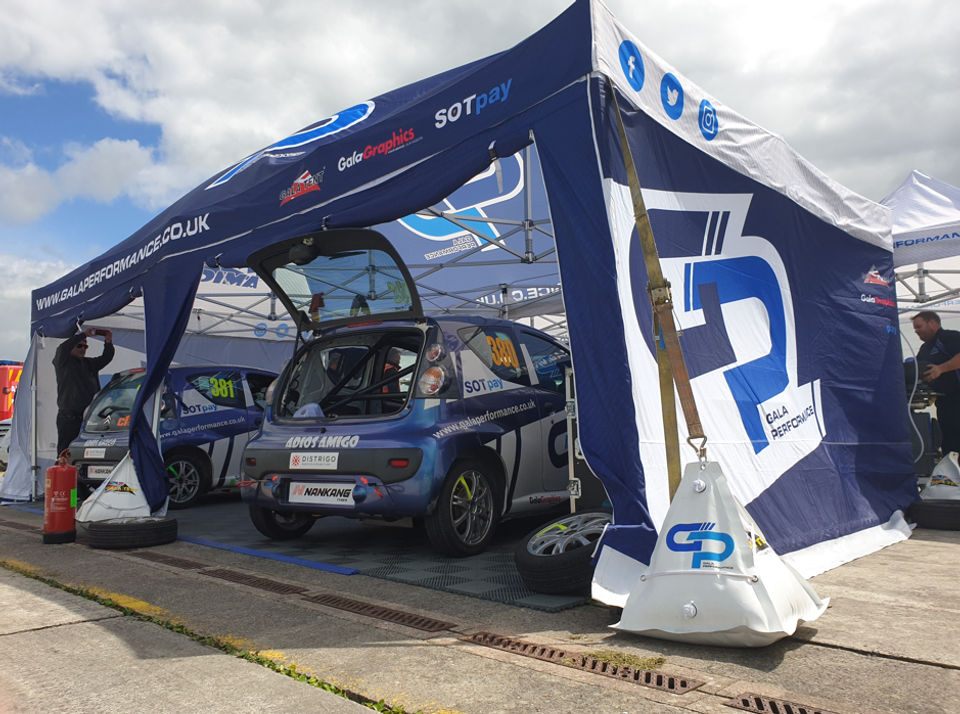
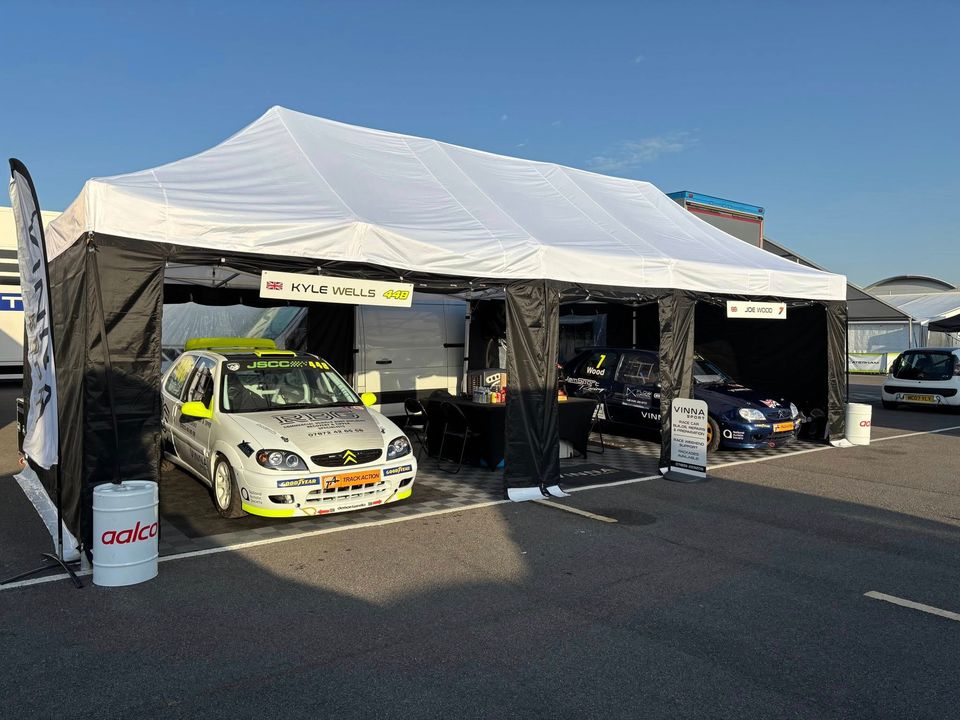
Set up a race tent large enough to shade the car, the people working on it and a seated rest area, and get it up before the sun is at its height. Shade is the single most effective way to cut heat exposure in the paddock.
Setting up for shade, step by step
- Size the tent for people as well as the car. A tent that only just covers the car leaves the crew standing in the sun, so allow room for a cool-down area with seating. The motorsport tent size guide shows what fits under each size.
- Check where the sun will be through the afternoon, when the paddock is usually hottest, and set the tent so its closed side faces the sun.
- Point the open front towards the prevailing breeze where the plot allows, so air can move through the tent.
- Use a back wall or side wall on the sun side to block low sun and glare, and leave the other sides open.
- Weight or anchor every leg before the walls go on. Side walls catch wind, and race tent weights on every leg are needed every time.
- Mark out separate shaded zones for vehicle preparation, tyres and technical kit, engineering chat, and any sponsor or guest seating.
What the canopy does
Pro 50 and Pro 60 pop up race tents have 600D PVC-coated polyester canopies that are UV protected and fire retardant. MQ-65 heavy duty awnings use 650gsm PVC covers that are fire retardant, with clear span inside and no internal legs, which suits a bigger team base or a shared hospitality area. For multi-day summer events, a larger awning lets you build a proper shaded base with room for everyone.
Should Race Tent Sides Be Open or Closed in Hot Weather?
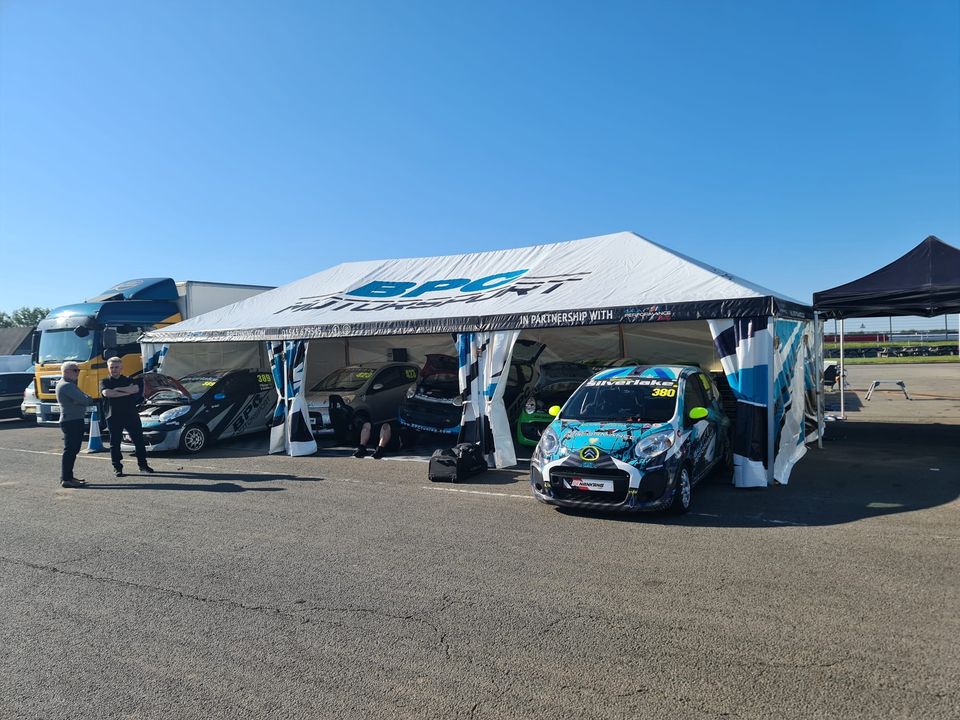
In hot weather, keep the sides open wherever you can and close only the wall that faces the sun. A fully enclosed tent traps heat quickly and becomes uncomfortable to work in.
Ways teams get air moving through the paddock:
- Open side walls on the breeze side, and roll or remove walls that are not blocking sun.
- Position the tent to catch natural wind.
- Keep the layout open, with wider access space between the car, the tent and equipment.
- Clear clutter from around the working area so air is not blocked.
- Run cooling fans in the cool-down area if you have power.
- Use half walls or window walls where you want some screening without closing the tent up completely.
Good airflow reduces heat build-up and makes the working area feel noticeably more comfortable. If the wind picks up, check your anchoring before you open or close walls, because walls change how the tent loads in a gust.
How Do You Keep a Race Team Hydrated and Spot Heat Illness?
Make water easy to reach all day, encourage everyone to drink regularly before they feel thirsty, and build shaded breaks into the schedule. Everyone in the team should know the general signs of heat exhaustion and who to call at the circuit if someone is unwell.
Hydration habits
- Put drinks within reach of every working area, so nobody has to leave the car to find water.
- Drink regularly through the day, with extra attention during long sessions, endurance events and multi-session weekends.
- Replace salts as well as water on long, hot days, using sports drinks or food as you normally would.
- Schedule shaded breaks and cool-down periods, and make sure they actually happen.
- Keep an eye on each other, especially crew working in racewear or heavy team clothing.
Signs to watch for
Heat exhaustion commonly shows as a headache, dizziness, feeling sick, heavy sweating, cramps and intense thirst. If someone shows these signs, get them into the shade, help them cool down and get them drinking water.
If someone becomes confused, collapses, or does not improve after cooling down, treat it as an emergency. Alert the circuit medical team or call 999 straight away.
This is general guidance only. For the full list of symptoms and what to do, see the NHS guide to heat exhaustion and heatstroke, and find out where the circuit medical centre is when you sign on.
How Do You Keep a Driver or Rider Cool Between Sessions?
Get the driver or rider out of the sun and out of the top half of their kit as soon as they are back in the paddock, then sit them in a dedicated shaded cool-down area with drinks and moving air. Racewear holds heat, so the time between sessions is when they recover.
A cool-down routine after each session
- Helmet and gloves off as soon as it is safe, and straight into the shade.
- Unzip the suit and drop the top half, or swap to a dry top, while they are off track.
- Sit them down in the cool-down area, out of the way of the work on the car.
- Hand them a drink straight away and keep it topped up.
- Use a fan, wet towels or cool water on the neck and wrists to help them cool.
- Debrief in the shade, and only suit up fully when the next session is called.
Setting up the cool-down area
Give it the coolest corner of the tent, on the side away from the sun, with lightweight seating, a cool box of drinks and a fan if you have power. Keep it clear of tools and tyres so it stays usable all day. Check your club or championship regulations for what must be worn in the assembly area and pit lane.
How Do You Protect Tyres, Fuel and Electronics From Heat?
Keep heat-sensitive kit in a shaded, covered storage area out of direct sun all day, and store fuel apart from the working and rest areas. Equipment left in the sun is at risk of overheating and wears out sooner.
Kit commonly affected by prolonged heat and sun:
- Tyres. Store them in the shade and keep them covered until they are needed.
- Fuel containers. Keep them shaded, sealed and well away from the cool-down area and any ignition source, and follow the circuit's rules on fuel storage.
- Electronics and data equipment. Keep laptops, loggers, radios and chargers out of direct sun and off hot surfaces.
- Tools. Metal tools left in the sun get too hot to handle, so keep them in a covered tool store.
- Adhesives and fluids. Store them in the shade with lids on.
- Printed branding materials. Banners and flags last longer when they are not left baking all weekend.
A shelter with a UV protected canopy cuts direct exposure and gives you more controlled storage. That means better organisation, safer storage, less risk of overheating and longer life for your kit.
How Should You Lay Out the Paddock in Hot Weather?
Lay the paddock out with open space, shaded zones for each job and something better than bare tarmac underfoot. Hot weather exposes a cramped, cluttered paddock very quickly.
Flooring
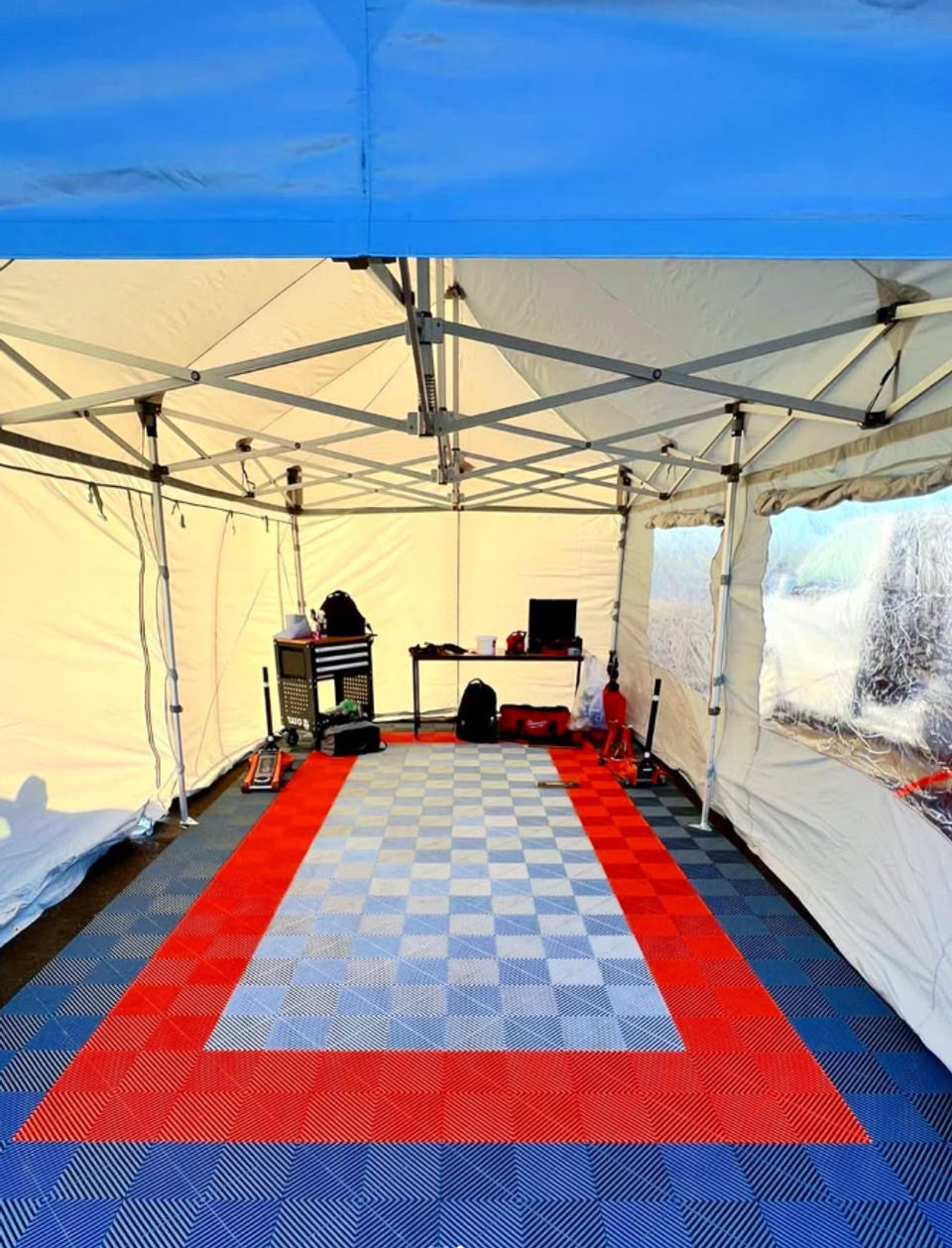
Bare tarmac and concrete absorb heat through the day and make a working area feel even hotter. Many teams lay modular flooring to reduce direct contact with hot ground. It also gives cleaner walkways, better grip and drainage, more comfortable standing areas and a more professional pit presentation. Swisstrax tiles snap together and can be laid inside a race awning.
Layout
- Keep wide, clear access between the car, the tent and equipment so people can move and air can flow.
- Give each job its own shaded zone: car preparation, tyres, technical kit and rest.
- Keep loose equipment stowed so the working area stays clear and safe.
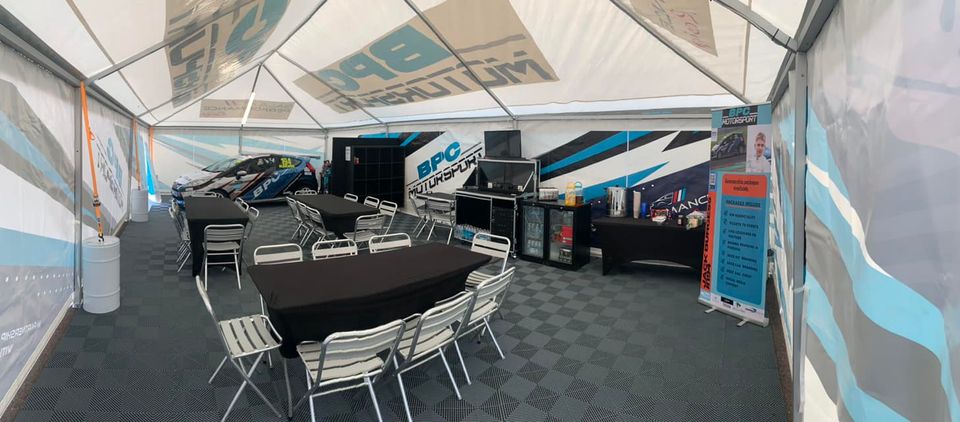
- Give guests, sponsors and media a shaded seating area with open airflow and a cooler floor, away from the work. A branded motorsport tent or printed side walls make it look the part for sponsors.
A well-organised paddock lets the team move efficiently, reduces stress, improves safety and keeps the working area cleaner.
How Should You Plan a Hot Race Day?
Do the physical work in the cooler early morning and evening, keep the hottest part of the day for essential jobs only, and rotate the crew so everyone gets a proper break in the shade. A simple plan for the day stops heat catching the team out.
- Arrive and put the tent up early, before the sun is high, and get the shade and walls set before unloading everything else.
- Do as much preparation as possible the evening before or first thing in the morning.
- Look at the timetable and plan breaks around sessions, with the longest rests in the hottest hours.
- Rotate jobs so the same person is not always working in the sun.
- Keep the driver or rider in the shade until their session is called.
- Leave the heavy pack-down jobs until the heat has eased, if the circuit timetable allows.
Endurance events and race weekends with several sessions across long summer days need this most, because tiredness and dehydration build up over the event.
What Kit Do You Need for a Hot Race Weekend?
For a hot race weekend you need proper shade, weights for every leg, walls you can open or close, plenty of water, seating and a fan for a cool-down area, and somewhere shaded to store kit. Get it ready before the season starts so you are not caught out by the first hot round.
- Pop up race tents or a larger MQ-65 awning, sized with the size guide. Inflatable shelters are another option.
- Race tent weights or tie-down kits for every leg.
- Side walls, half walls or window walls, and branded side walls for a team or sponsor setup.
- Pit Perch, a compact pop up shelter built for pit wall crews at endurance races.
- Modular flooring to get the crew off hot tarmac.
- Cooling fans and a power source.
- A hydration station: water containers, a cool box, sports drinks and cups.
- Lightweight seating for the cool-down and guest areas.
- Covered tool and equipment storage.
- Wet towels, sun cream and hats for the crew.
Not sure what suits your setup? Tell us your discipline and the size of your crew and the team will talk it through.

Hot Weather Paddock FAQs
How do race teams stay cool during summer events?
Why are race awnings important in hot weather?
Should race tent sides be open or closed in hot weather?
What are the signs of heat exhaustion at a race meeting?
Does modular flooring help during hot weather?
How do motorsport teams protect equipment from heat?
More Paddock Guides
Planning the space or setting up for a particular discipline? Every paddock guide follows the same format.