Rallycross Paddock Guide: Setting Up for a Mixed-Surface Weekend
Rallycross is motorsport at its rawest — wheel-to-wheel racing on a mix of tarmac and gravel, short, sharp and usually run over a full weekend. That combination shapes everything about your paddock: you are camping for two days, the ground and the cars are caked in mud, and you are turning the car round between dozens of three-minute heats. Your setup has to be a weatherproof, hard-wearing basecamp that copes with all of it. This guide covers how to build one. Getting into rallycross? Request a callback and we will point you to the right kit.

What Is Rallycross?
Rallycross is wheel-to-wheel racing on a mixed-surface circuit — part tarmac, part loose gravel, typically around a 60/40 split. Up to eight cars race at once over short, flat-out heats lasting no more than about three minutes, with a compulsory joker lap, a longer alternative route each driver must take once per race. It is fast, physical and unpredictable, and it is widely rated one of the most accessible and exciting ways into motorsport.
The sport was born at Lydden Hill in Kent in 1967 and the circuit remains its spiritual home, alongside a calendar that has taken in the FIA World Rallycross Championship and the British Rallycross Championship. A typical British round packs in a huge amount of running — a practice session, three timed qualifying heats, then semi-finals and finals — so an event can feature 60 or more separate races across the weekend. That relentless, short-race format is exactly what your paddock has to keep up with.

What a Rallycross Paddock Is Like
Two things define a rallycross paddock, and both are the opposite of a tidy tarmac circuit. First, it is a weekend: British Championship events run over at least two days, so most competitors camp in the paddock. The bigger circuits have showers, food and toilets, but you are still living on site, which means your setup has to work morning, night and everything in between.
Second, it is dirty. The loose sections throw gravel and mud everywhere, the cars come back filthy and often need a jet-wash between sessions, and the ground itself churns up quickly in wet weather. So your base is not just a shelter — it is a mud-proof, weatherproof home for the weekend that has to keep you, your kit and your workspace as clean and dry as possible in conditions doing their best to prevent it.
Your Weatherproof Weekend Basecamp
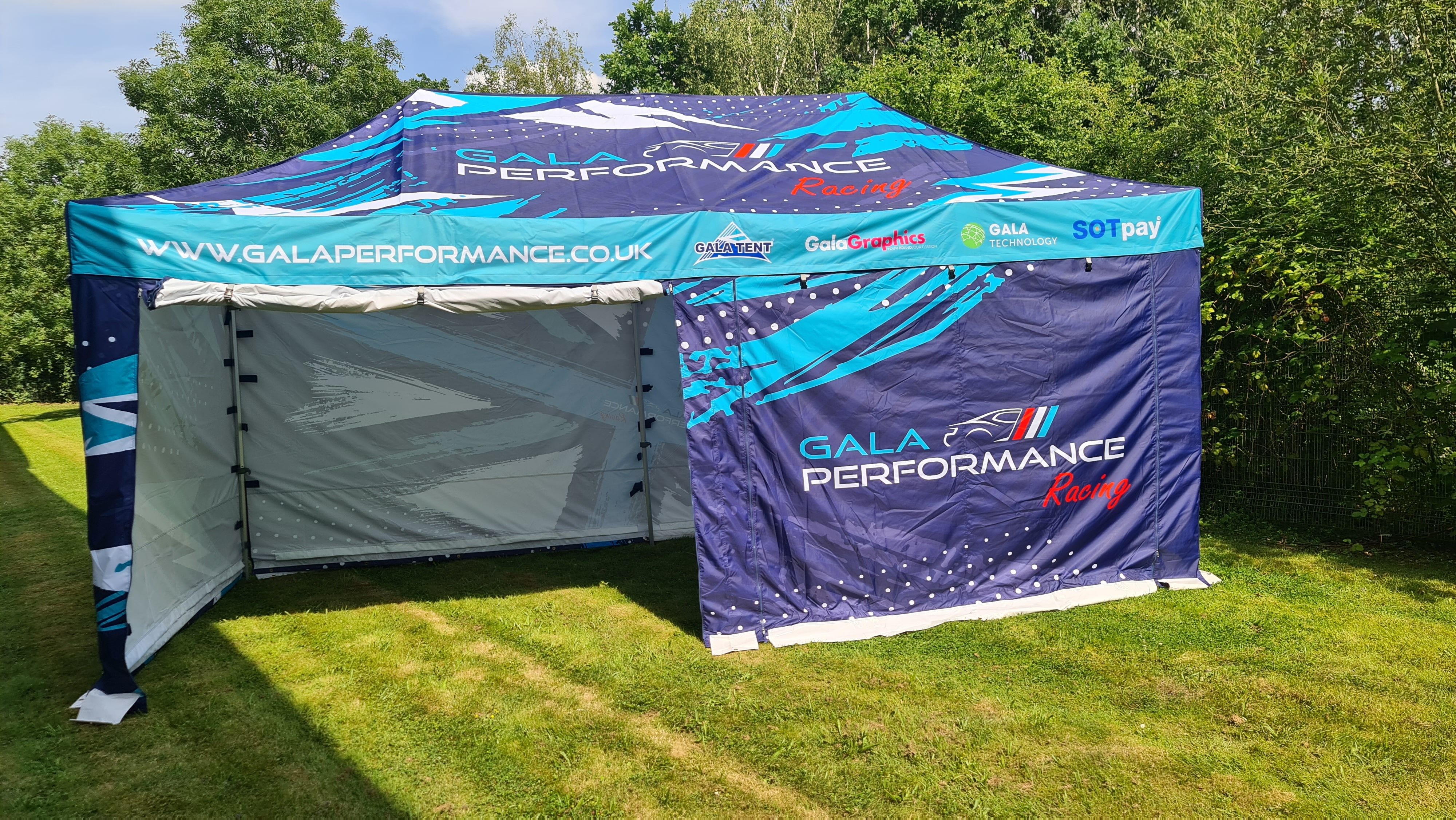
Because you are there for two days in tough conditions, rallycross rewards a proper, robust structure over a quick pop-up. A heavy-duty motorsport awning gives you the weatherproof, hard-wearing base the weekend demands.
- Fit solid sides. Full walls turn your awning into an enclosed bay that keeps wind, rain and flying gravel out, and gives you somewhere dry to work and to change.
- Size up for the weekend. A 3m x 4.5m or 6m awning gives room for the car, tools, spares and a living area. Use our size guide to choose.
- Go genuinely heavy-duty. Two days of wind, rain and mud will finish off a leisure gazebo by Saturday lunchtime.
Dealing with Mud and Churned Ground
Rallycross paddocks are usually grass or hardcore that turns to mud fast, and that changes how you anchor. Pegs and guy ropes help, but in soft, wet ground pegs pull out easily — so marquee and gazebo weights on every leg become your primary defence rather than a backup. Weight down hard, whatever the forecast.
A couple of habits keep the mud at bay. Pick your pitch on the firmest, best-draining ground you can find, and think about the slope so water runs away from your working area, not into it. Ground matting or boards inside the awning give you a clean, solid footing to work on and stop everything, and everyone, tracking mud through your base all weekend. It is a small effort that pays off every time you step in out of the rain.

Built for Fast Turnarounds
With practice, three heats, semis and finals crammed into a weekend, rallycross is a relentless cycle of race, return, check, repair, race again — often with only a short window between sessions. Add the constant risk of contact and mechanical damage on a rough surface, and your paddock has to be set up for speed and repairs, not just shelter.
Lay out your bay so the essentials are to hand: room to get the car up on a jack, tools and spares organised and reachable, and a clear space to work rather than tripping over kit. The teams that keep turning a clean, dry, well-drilled pit around are the ones still running strong on Sunday afternoon while others are chasing their tails in the mud. A proper covered workspace is what makes that possible.
Getting Started in Rallycross
Rallycross is one of the most welcoming disciplines for newcomers. The racing is short and the grids are mixed, there are classes and championships aimed squarely at grassroots budgets, and the paddock has an open, friendly, all-access atmosphere where fans and teams mix freely. To go racing you will need a Motorsport UK competition licence and a car built to the relevant class regulations.
If you are working out where to begin, our get into motorsport guides cover the options, the racing licence guide explains getting licensed, and the low cost racing guide looks at keeping the budget in check.
Kitting Out Your Rallycross Paddock
Gala Performance builds motorsport structures in Britain, and we race ourselves, so the range is built for exactly the kind of wet, muddy, hard-working weekend rallycross throws at you.
- Heavy-duty awnings — the rallycross essential: a weatherproof, enclosable basecamp built to survive a two-day weekend.
- Marquee and gazebo weights — your primary anchor when pegs pull straight out of soft, muddy ground.
- Pop up race tents — quick extra cover for tyres, kit or a second work area.
- Branded motorsport tents — make the most of rallycross's all-access, crowd-facing paddocks.
Not sure what suits your setup? Request a callback and we will talk it through.
What is rallycross?
Is a rallycross event one day or a weekend?
What do you need for a rallycross paddock?
How do you anchor an awning on muddy ground?
What surface is rallycross raced on?
Is rallycross good for beginners?