Hillclimb and Sprint Paddock Guide: Setting Up for a Speed Event
Hillclimbs and sprints — known together as speed events — are the friendliest, most accessible rung of motorsport: one car, the clock, and a ribbon of tarmac. But the paddock is nothing like a race weekend. You are there for a single day of short runs, often at a rural venue with no power or water, unloading onto a grass field. That means your setup has to go up fast, pack down fast, and stand on its own. This guide covers exactly how to set up a hillclimb or sprint paddock. New to speed events? Request a callback and we will point you to the right kit.
What Are Hillclimbs and Sprints?
Speed events are the collective name for hillclimbing and sprinting, and they share one defining feature: it is just you against the clock, with no other cars on the course. In a hillclimb, you launch from a standing start and race up a ribbon of tarmac to a finish line higher than the start — the start and finish do not join up like a circuit. A sprint is the same idea on a flatter, generally longer course, often an airfield or a section of race circuit, sometimes with cones that carry penalties if you clip them.
Many competitors do both. Venues range from historic permanent hillclimbs like Shelsley Walsh — the world's oldest motorsport venue, in continuous use since 1905 — and Prescott, Harewood, Loton Park and Gurston Down, to sprint courses at airfields and circuits. A typical day is two practice runs in the morning and two timed runs in the afternoon, with cars returning to the paddock in batches between runs. The entry list can be anything from road cars and novices to full single-seaters, which is a big part of the appeal.
What a Speed Event Paddock Is Like
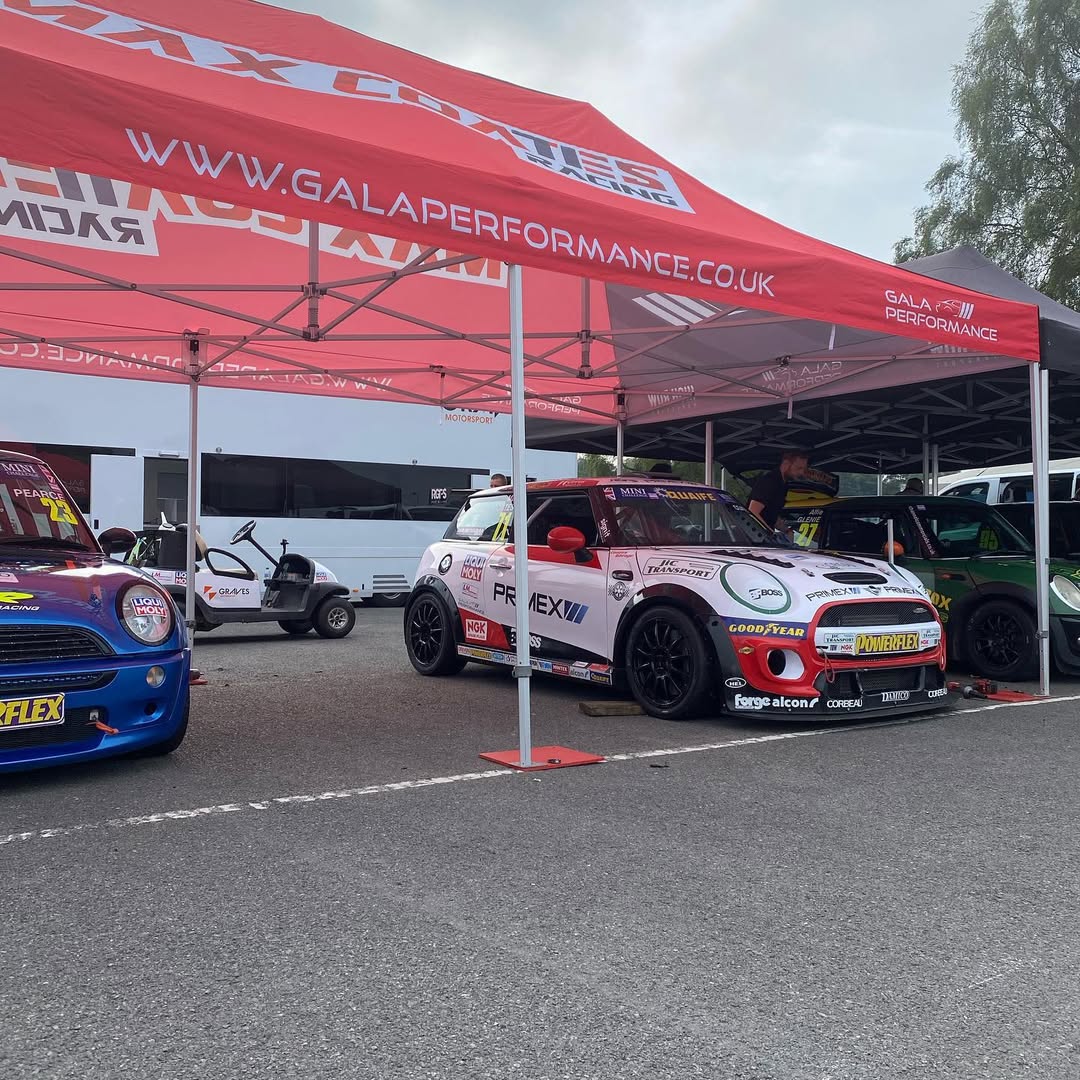
This is where speed events differ most from circuit racing. Hillclimb and sprint paddocks tend to be tight, rural and basic. Many venues have no paddock power and no water, space is often a grass field, and at somewhere like Shelsley Walsh you unload in a field and drive only the competition car into the paddock proper. Scrutineering usually comes to you — you stay with your car in your bay and the scrutineers work their way round.
The upshot is that you need to be self-sufficient and light. You are not building a weekend basecamp; you are setting up a compact, tidy space for one long day, on ground that is rarely flat or hard. Pack what you need, keep it organised, and be ready to strike it all quickly at the end — because plenty of competitors simply drive their car home afterwards.
Fast Up, Fast Down: Choosing Your Setup
For a single-day event where you might be driving home tired at the end, the priority is a shelter that pitches and packs in minutes. This is where a pop up race tent earns its place — a heavy-duty pop-up frame goes up in a couple of minutes, needs no tools, and folds straight back down when you are done.
- A 3m x 3m covers a single car's worth of kit and gives you shelter; 3m x 4.5m adds room to work and store spares.
- Go heavy-duty, not leisure. A speed-event season of quick pitches on rough ground will destroy a garden gazebo.
- If you campaign a championship and travel with a trailer, a heavy-duty awning gives you a more permanent, all-weather base.
Our race tent size guide helps you match the size to your car and kit.
Anchoring on Grass and Slope
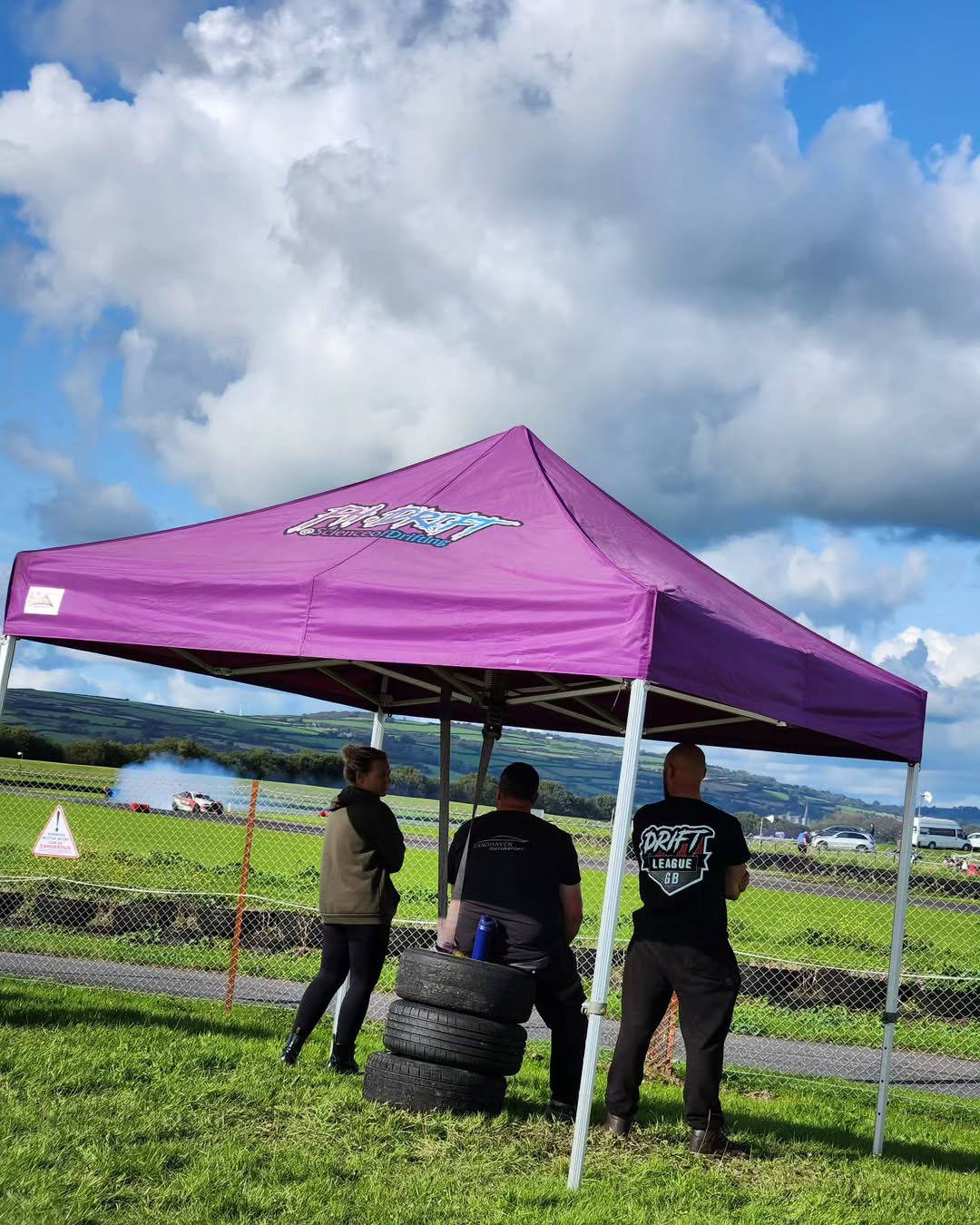
Because speed-event paddocks are so often grass fields on or near a hill, anchoring needs a bit more thought than on hard standing. Grass lets you use long, heavy-duty pegs and guy ropes, which are your first line of defence — but pegs alone can pull out of soft or wet ground, so back them up with weight.
Add proper marquee and gazebo weights on every leg, and pick your pitch with the slope in mind so the structure sits square and water runs away from your working area rather than through it. It only takes one gust across an exposed hillside to flip an unanchored gazebo into someone else's car, so treat anchoring as non-negotiable even for a short day.
A Long Day of Short Runs
Here is the quirk of speed events: your actual time on the course adds up to a couple of minutes across the whole day, but you are there from early morning to late afternoon. That means a lot of waiting — checking the car, watching other classes, and sheltering from whatever the weather does on an exposed hillside.
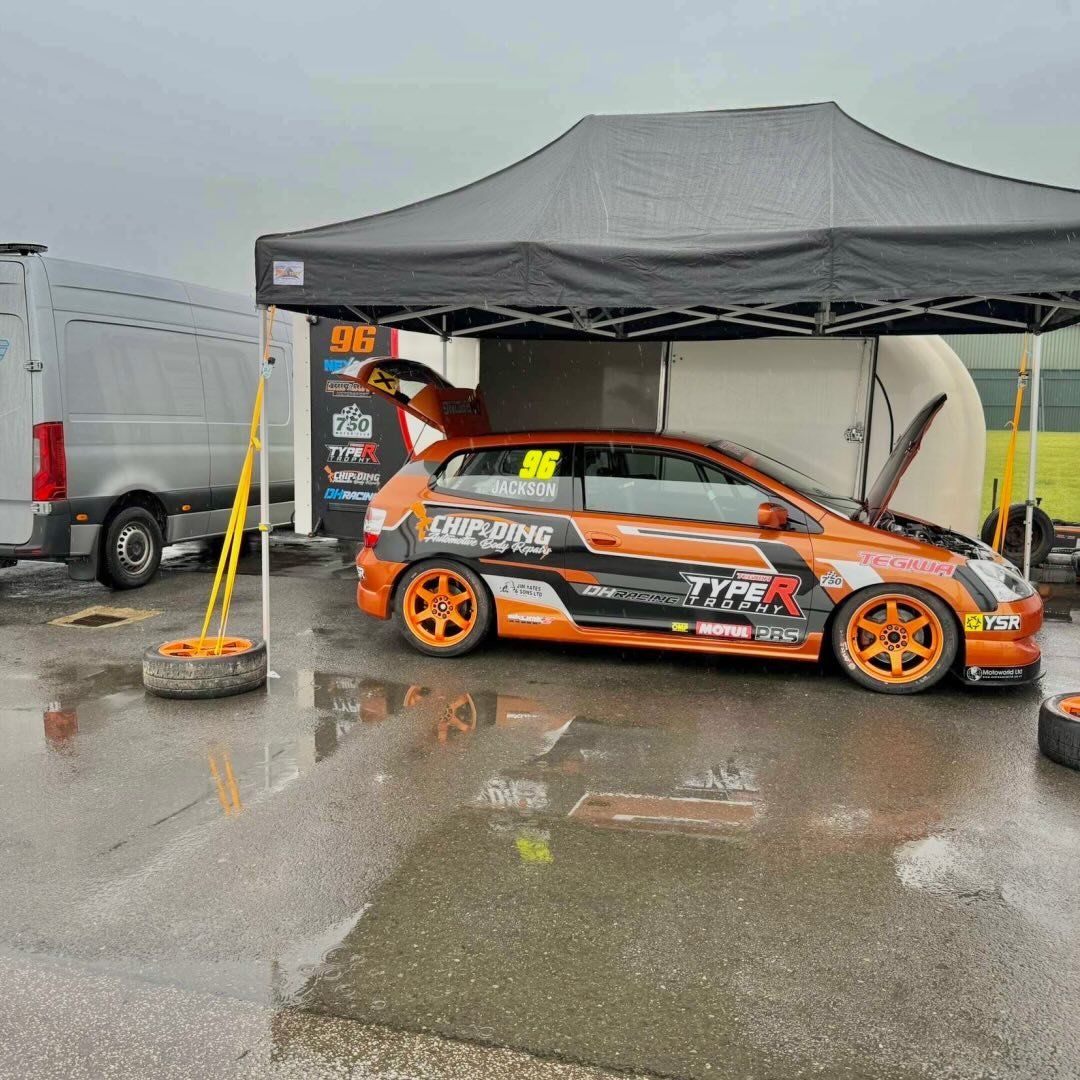
So build a spot you can actually spend the day in. Somewhere dry to sit, keep your kit and paperwork out of the rain, do quick checks between runs, and brew up. With no paddock power at many venues, bring your own if you need it. Get the base comfortable and you will drive better for it — a warm, dry, organised competitor makes fewer mistakes on the start line than a cold, soggy, flustered one.
Getting Started in Speed Events
Hillclimbs and sprints are widely seen as the best way into competitive motorsport, and for good reason. There are no wheel-to-wheel nerves, classes to suit almost any car from a road-going hatchback to a purpose-built single-seater, and a paddock famous for being friendly and welcoming to newcomers. To compete you will need a Motorsport UK licence — an entry-level Interclub licence covers most speed events, and no formal training course is required, though many venues run driving schools if you want one.
If you are weighing up where to start, our get into motorsport guides walk through the options, our racing licence guide covers getting licensed, and the low cost racing guide shows how affordable speed events can be.
Kitting Out Your Speed Event Paddock
Gala Performance builds motorsport structures in Britain, and we race ourselves, so the range suits the travel-light, quick-pitch life of speed events.
- Pop up race tents — the speed-event hero: up in minutes, no tools, folds away for the drive home. 3m x 3m and 3m x 4.5m.
- Marquee and gazebo weights — essential backup for pegs on grass and exposed hillsides.
- Heavy-duty awnings — a sturdier all-weather base for championship regulars running a trailer.
- Branded motorsport tents — for series regulars who want to fly their and their sponsors' colours.
Not sure what suits your setup? Request a callback and we will talk it through.
What is the difference between a hillclimb and a sprint?
What licence do you need for hillclimbing or sprinting?
What do you need to bring to a hillclimb or sprint?
What size awning do you need for a speed event?
Do hillclimb venues have power in the paddock?
Are hillclimbs and sprints good for beginners?