Drifting Paddock Setup: The Complete Guide for Drivers and Teams
A drift paddock is its own beast. You go through tyres like nothing else in motorsport, your car takes a beating every session, and you are doing it all in a busy, crowd-facing paddock where presentation counts. That means your setup has to do three jobs at once: store a stack of spare tyres, give you a proper space to work, and look the part for the fans, cameras and sponsors. This guide covers exactly how to set up a drift paddock for a track day or a competition weekend. Setting up your drift base? Request a callback and we will point you to the right kit.
What Makes a Drift Paddock Different?
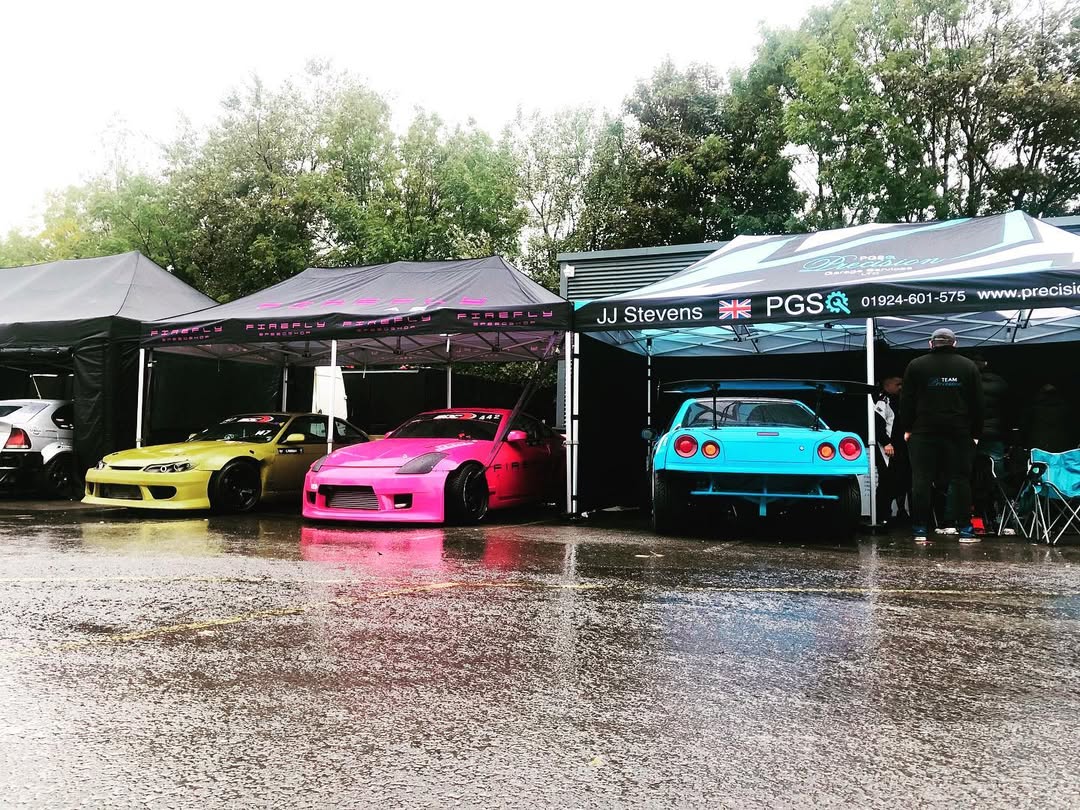
Set a drift paddock next to a circuit racing one and the differences jump out. A drift setup has to cope with three things other disciplines do not, all at once:
- Tyres, and lots of them. Drifting destroys rear tyres. Where a circuit racer might run one set all weekend, a drifter can get through two or three rear sets in a single event — so tyre storage is the first thing your paddock has to solve.
- A car that takes a beating. Constant sideways abuse is hard on tie rods, arms, diffs and cooling, so you will be wrenching between sessions far more than most. You need a genuine workspace, not just shade.
- Crowds and cameras. Drifting is a spectacle. Events pull big public crowds and plenty of media, so your paddock is on show — and a sharp, branded setup does real work for your team and sponsors.
Get those three sorted and the rest falls into place. Here is how.
Tyres: Storage, Space and Staying in the Game
Nothing shapes a drift paddock more than tyres. Running out of rubber ends your day, so most drivers bring far more than they think they need — two or three spare rear sets per event is normal, more if you are running big power or a lot of sessions.
That volume of wheels and tyres has to live somewhere dry, organised and easy to grab between runs:
- Keep your spare wheels stacked or on a rolling tyre cart, under cover and out of the way, so a tyre change is fast and you are not hunting through a heap.
- Give yourself room to swap wheels safely — a jack, jack stands and a torque wrench, with space to work around the car.
- Plan the layout so tyres, tools and the car all fit under or beside your awning without blocking your neighbours.
This is why drifters tend to want a bigger footprint than the bike or single-seater crowd — you are storing a workshop's worth of rubber as well as the car.
Your Awning Is Your Workshop
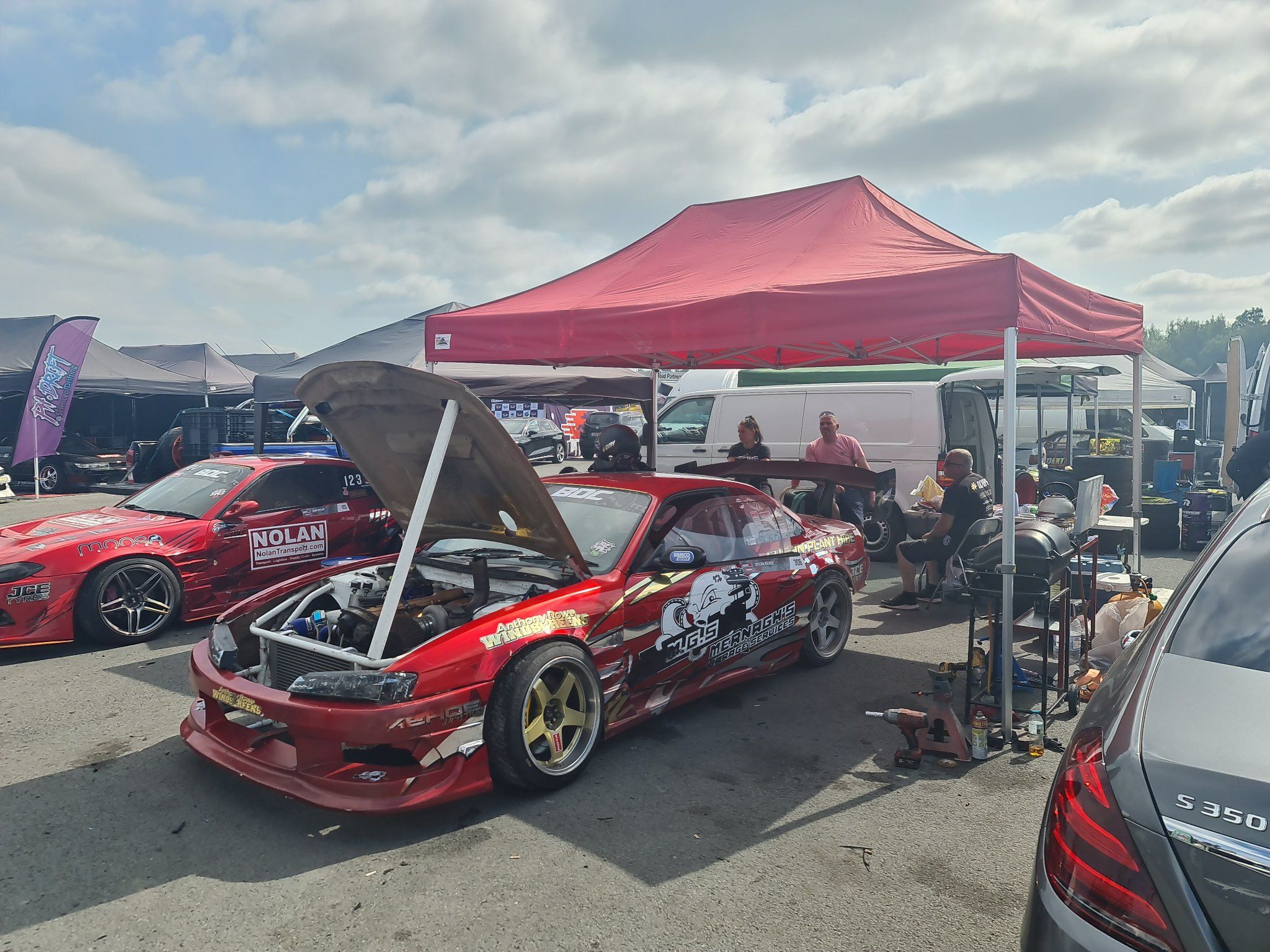
Because a drift car lives at the ragged edge, things break — tie rods, arms, bushings, the odd cooling issue — and you will be fixing them trackside all day. Your awning is where that work happens, so it needs to be a proper covered workspace rather than a bit of shade.
For a solo driver, a 3m x 4.5m heavy-duty awning is a sensible minimum: room for a work area, your tyres and kit, with the car alongside. A team running multiple cars, or carrying a lot of spares, will want 6m of frontage or more to lay out a proper bay. Whatever the size, go heavy-duty — a leisure gazebo will not survive a season of being thrown up and packed down in busy paddocks. Our heavy-duty motorsport awnings and pop up race tents are built for exactly this, and our race tent size guide helps you pick.
Looking the Part: Branding and the Crowd
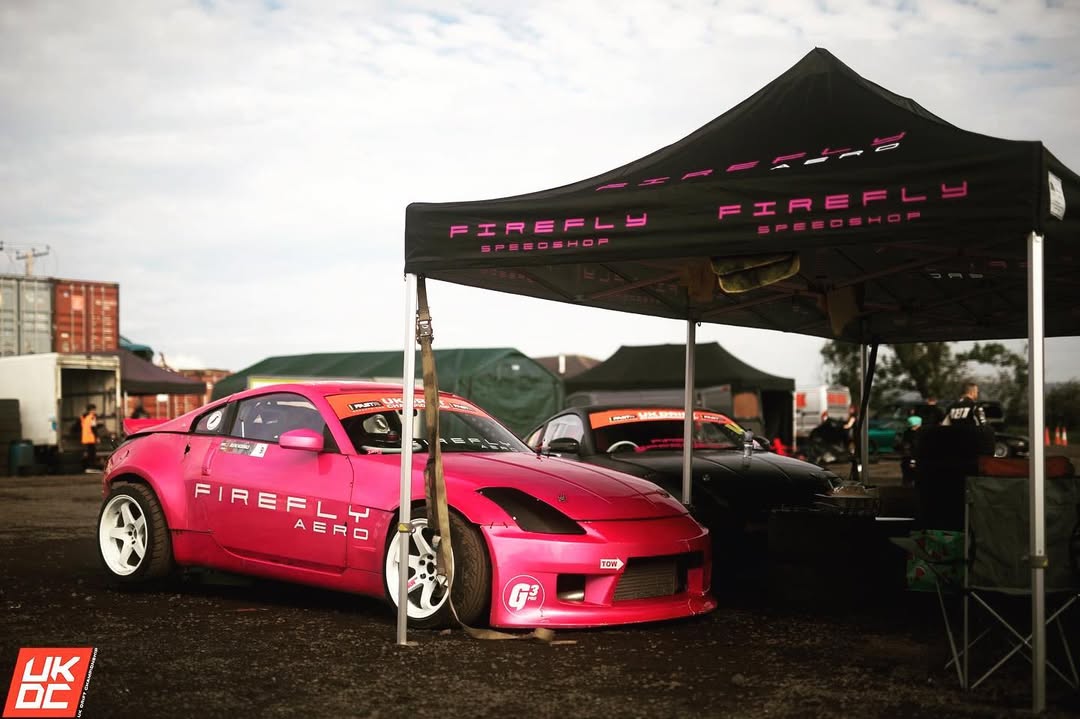
Drifting is the most spectator-friendly motorsport there is. Events draw big, engaged crowds, photographers and livestreams, and the paddock is part of the show — fans wander the pits, and your setup is a backdrop in hundreds of photos and clips. For a team chasing sponsors, that visibility is gold, and a plain white gazebo throws it away.
A branded motorsport tent turns your pitch into a statement — team colours, sponsor logos and a look that matches the aggression of the cars. Back it up with printed banners and flags to frame the space. And because drift paddocks are so open to the public, cafe barriers are worth having to keep spectators a safe distance back from a hot car and spinning wheels while still letting them get close to the action.
Anchoring, Weather and Keeping Cool
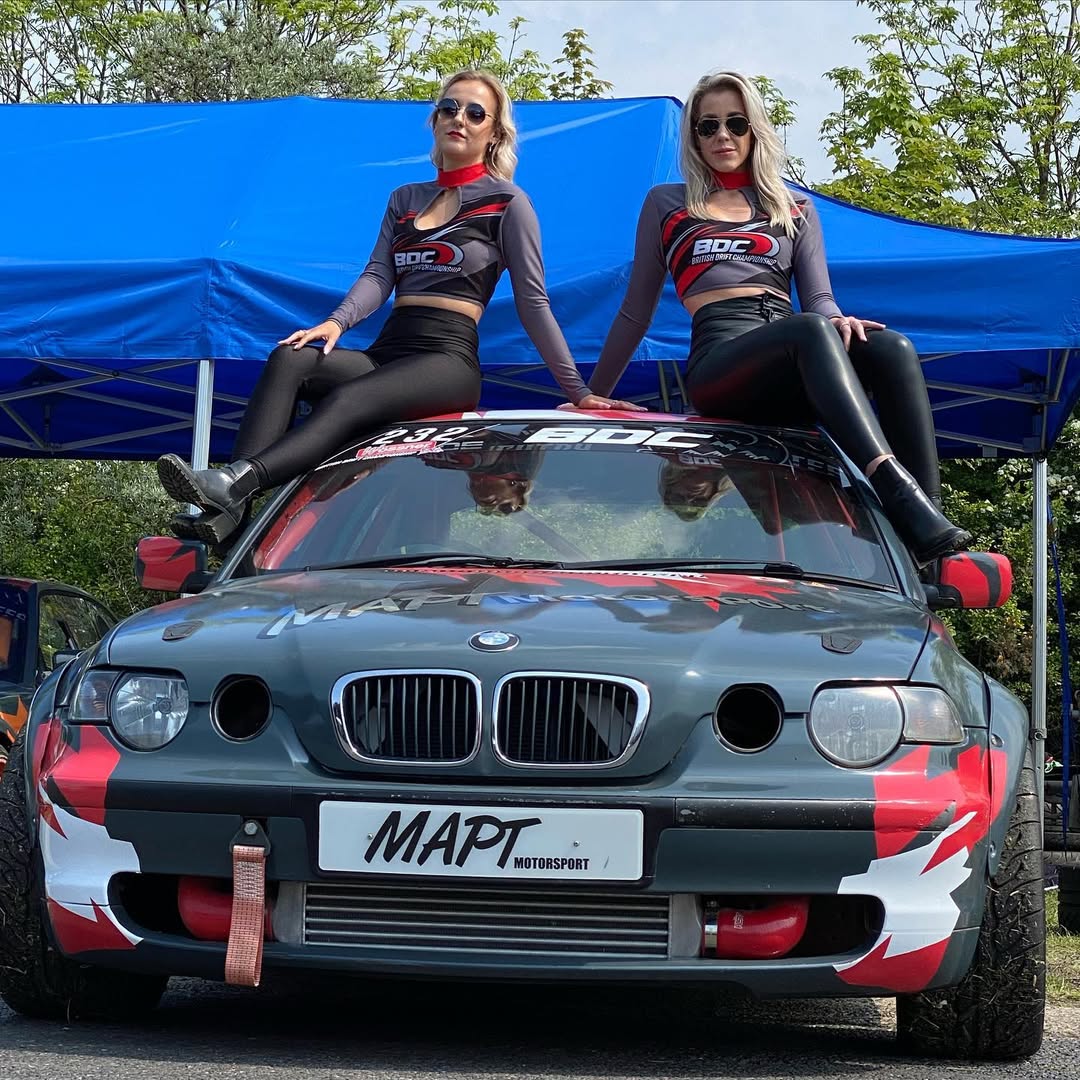
A few practical points round out the setup. Drifting is physical, hot work — you will want a shaded, sheltered spot to cool down, rehydrate and gather yourself between runs, so build somewhere comfortable into your layout, not just a work bay.
And whatever the weather, anchor properly. An awning loaded with expensive kit and parked in a packed paddock is the last thing you want taking off in a gust, and a loose gazebo is a danger to every car and person around you. Weight every leg with proper marquee and gazebo weights — around 50kg per leg is a sensible target — and add pegs and guy ropes where the ground allows.
Practice Days vs Competition
For a practice or track day, entry is straightforward — you will usually sign an event waiver on the day, and the paddock is relaxed and social. Get there early, park tight and tidy to leave room for other rigs, and you will find the drift community famously willing to lend a hand or share a canopy. If it is your first event, our first track day guide covers the basics.
Stepping up to competition — grassroots series through to the likes of Drift Masters — means a valid motorsport licence, tighter scrutineering and a busier, more professional paddock where presentation really counts. That is the point where a properly branded, well-organised base stops being a nice-to-have and starts being part of how you are judged. Our racing licence guide covers getting licensed.
Kitting Out Your Drift Paddock
Gala Performance builds motorsport structures in Britain, and we race ourselves, so the range is built for exactly this kind of hard-working, high-visibility paddock.
- Branded motorsport tents — the drift essential: team colours and sponsor branding that look the part for the crowd and the cameras.
- Heavy-duty awnings — a proper covered workshop with room for the car, tyres and repairs.
- Marquee and gazebo weights — anchor every leg, every time.
- Cafe barriers and printed products — hold the crowd back safely and frame your pit in team branding.
Not sure what suits your setup? Request a callback and we will talk it through.
What do you need for a drift paddock?
How many tyres do you need for a drift day?
What size awning do you need for drifting?
Do you need a licence to go drifting?
How do you keep spectators back in a drift paddock?
How do you stop your paddock awning blowing away?