Motorcycle Paddock Setup: The Complete Guide for Track Days and Racing
A good motorcycle paddock is compact, weatherproof and organised — somewhere to shelter the bike, warm your tyres, keep your kit dry and get yourself ready between sessions. Bikes need less space than cars, but more specific kit: an awning, paddock stands, tyre warmers and power. This guide covers exactly what you need, what size awning to choose, and how to set it all up for a track day or a race weekend. Kitting out a bike paddock? Request a callback and we will point you to the right kit.
What Does a Motorcycle Paddock Need?
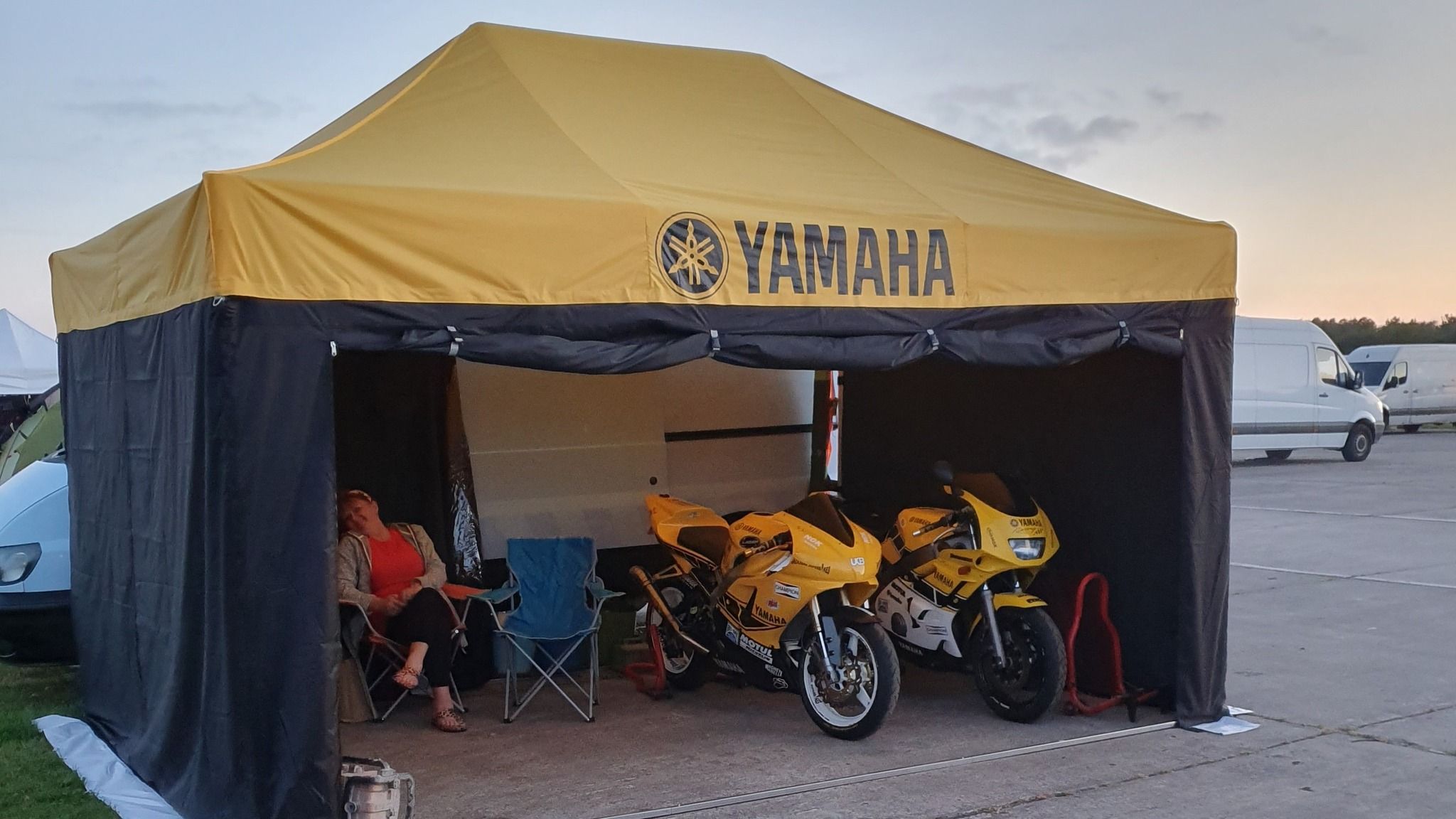
A motorcycle paddock has a different job to a car one. A bike takes up far less room, but the work you do around it is more involved and more weather-sensitive, so the space has to be set up properly. At a minimum, a bike paddock needs:
- An awning or race tent to shelter the bike, your kit and yourself between sessions.
- Front and rear paddock stands to lift the bike for tyre warmers, chain and general work.
- Tyre warmers if you are running track or race rubber, plus a power source to run them.
- Weights or anchors to hold the awning down in wind.
- Tools, a tyre pressure gauge, fuel can and funnel, and somewhere dry to keep your leathers and helmet.
Get those basics right and everything else — timing your sessions, warming your tyres, staying dry — becomes far easier. The rest of this guide works through each one.
What Size Awning Do You Need for a Motorbike?
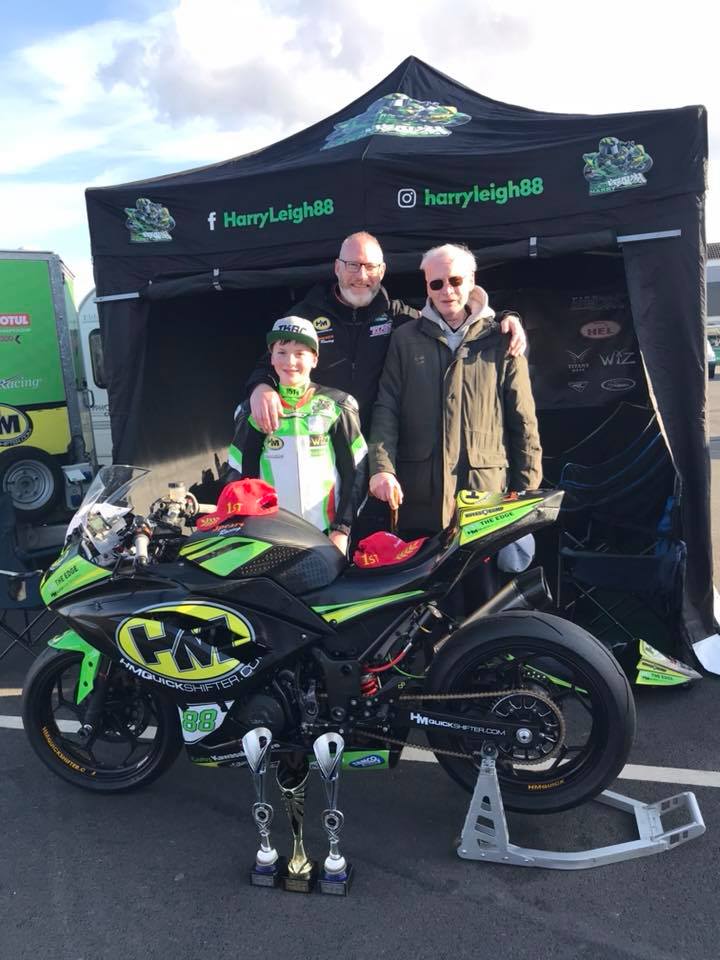
This is the question we get asked most, and the good news is that bikes do not need a big structure. For most riders, a 3m x 4.5m pop up awning is the sweet spot: it sits neatly behind a van and gives you enough covered space for the bike, both paddock stands and your kit, with room to work. If you are travelling light or space is tight, a 3m x 3m will still cover a single bike and stands comfortably.
Step up to a larger freestanding awning only if you are running two or more bikes, carrying spare wheels and a lot of gear, or setting up as a race team that needs a proper working bay and somewhere for the crew. Our motorcycle race tents and pop up race tents are built for exactly this — heavy-duty frames that go up in minutes and stand up to a full season of paddock use, rather than leisure gazebos that fold at the first gust.
Paddock Stands, Tyre Warmers and Power
This is the part that makes a bike paddock different from a car one, and it is worth getting right.
Paddock stands. A rear paddock stand is invaluable for chain work, cleaning and keeping the bike upright in a busy pit lane. If you are running tyre warmers you also need a front stand — either an under-fork stand or, best of all, a headstock stand that lifts the bike by the bottom of the triple clamp and leaves the front wheel completely free. If you have a single-sided swingarm, such as some Ducati and Honda models, you will need a single-sided rear stand.
Tyre warmers. Warmers bring your tyres up to their operating window before you leave the paddock, which improves grip and confidence and cuts the risk of a cold-tyre crash. As a rule of thumb, heat them for around 45 minutes at 80°C, then set your pressures while the tyres are hot. You will need the bike up on both stands to fit them.
Power. Tyre warmers need electricity — either a paddock hook-up or a generator. Plan where your bike sits so the cable reaches, and check the ground: paddock stands have no brakes, so you want firm, level footing. On grass, stand your stands on boards so they do not sink.
Keeping the Bike, Your Kit and Yourself Dry
On a bike, weather protection matters more than it does with a car, because so much of your day happens out of the saddle. Wet leathers are miserable to put back on, a soaked helmet liner is worse, and tyre warmers need to stay dry and powered to do their job. Your awning is what makes all of that possible.
Set up to keep everything under cover: the bike and stands in the middle, your kit and a chair to one side, and the warmers running out of the rain. A structure with solid sides or a half-wall makes a real difference on a cold or wet day, giving you a sheltered spot to get changed and to warm up between sessions. Down south you might set up for shade; in the UK you set up to stay warm and dry, whatever the forecast said when you left home.
Anchoring: How to Stop Your Awning Blowing Away
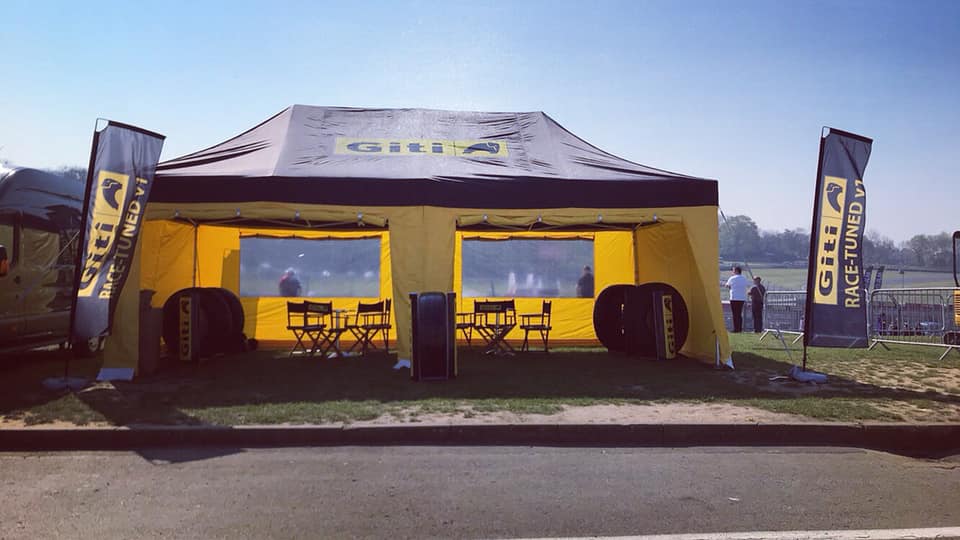
A lightweight bike paddock feels tidy right up until the wind picks up, and an unweighted awning is the single most common thing to go wrong in a paddock. Always anchor every leg. On hard standing, use weights — around 50kg per leg is a sensible target for a heavy-duty awning at an exposed circuit — and add guy ropes and pegs where you can. On grass, peg down hard and still add weight.
It is not just about your own kit. An awning that takes off in a gust is a danger to every bike, rider and car around you, so over-anchoring is simply good paddock manners. Our marquee and gazebo weights are made for the job and worth carrying as standard.
Track Days vs Racing
For a track day, you need a road licence (DVLA) or a race licence to take part, and the paddock is relaxed — get there early, find a spot with power nearby, and set up in good time. If it is your first one, our first track day guide walks through how the day runs.
Club and national racing is a step up. You will need an ACU competition licence to race, the paddock is busier and tighter, and presentation starts to matter — sponsors, teams and fans all notice a sharp setup. That is where a branded motorsport tent earns its keep, turning your pitch into a professional-looking base that does your team and your backers justice. If you are chasing a licence, our racing licence guide covers the process.
Kitting Out Your Bike Paddock
Gala Performance builds motorsport structures in Britain, and we race ourselves, so the range is designed around real paddocks — bikes included.
- Motorcycle race tents — sized and built for bike paddocks, with room for the bike, stands and kit.
- Pop up race tents — heavy-duty 3m x 3m and 3m x 4.5m awnings that go up in minutes. The rider's sweet spot.
- Marquee and gazebo weights — anchor every leg, every time. Not optional at an exposed circuit.
- Branded motorsport tents — for race teams who want a paddock base that looks the part.
Not sure what suits your setup? Request a callback and we will talk it through.
What size awning do I need for a motorbike?
What do I need to set up a motorcycle paddock?
Do I need tyre warmers for a track day?
Do I need power in the paddock?
How do I stop my paddock awning blowing away?
Do you need a licence for a motorbike track day?