Motocross Paddock Setup: The Complete Pit Guide for Race Day
Motocross is a world of its own — dirt, mud, two-stroke haze and a paddock full of families from first thing in the morning. Setting up an MX pit is nothing like a tarmac paddock: your gazebo is base camp for the whole day, the bike and everything on it ends up filthy, and there is rarely power or hard standing in sight. This guide covers exactly how to set up a motocross pit for a practice day or a race meeting. Kitting out your pit? Request a callback and we will point you to the right kit.
What Makes a Motocross Pit Different?
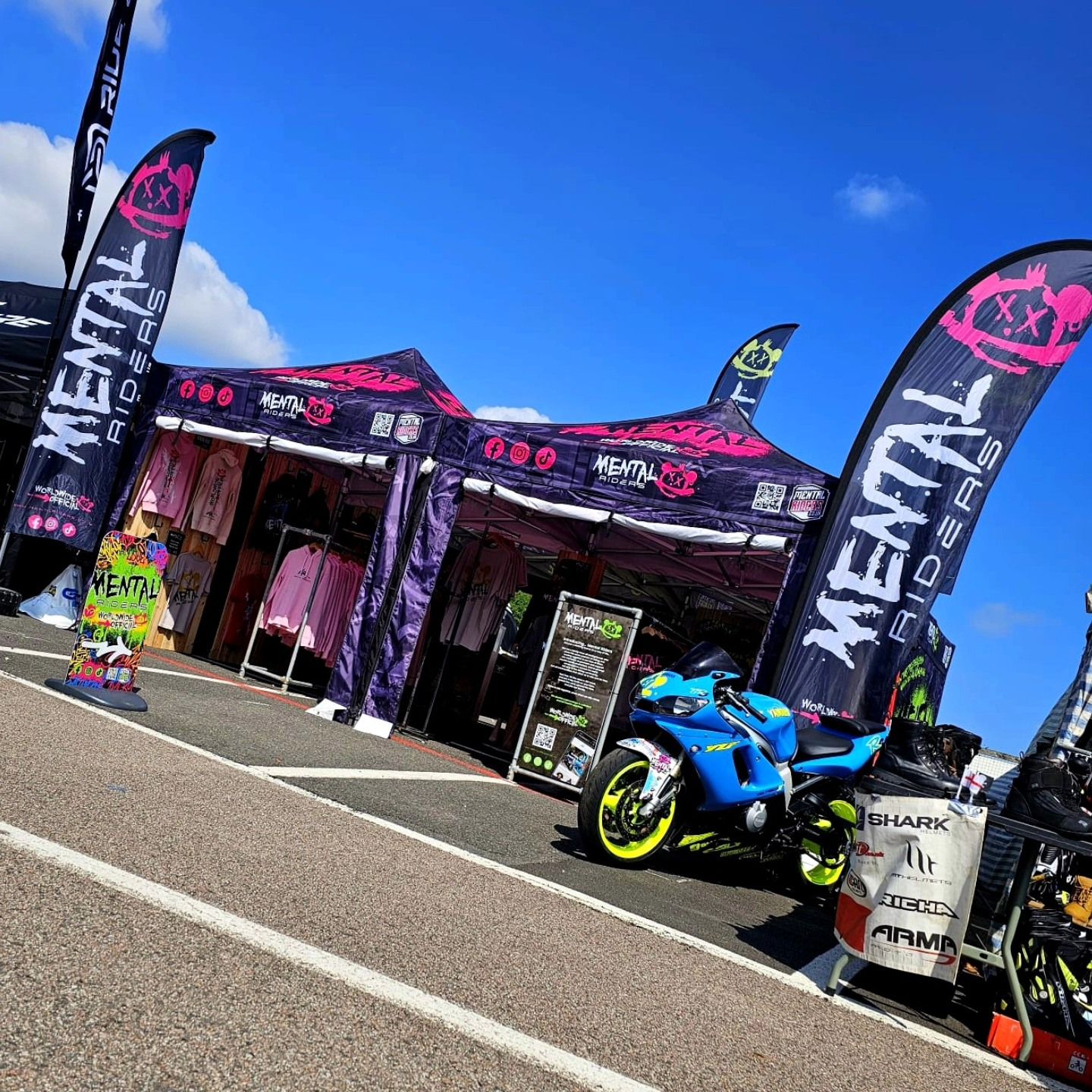
If you have come from road racing or track days, an MX paddock will feel like another planet. Three things shape how you set up, and all three are different from tarmac motorsport:
- It is dirt, and it gets everywhere. Bikes come back from every moto caked in mud or covered in dust, and you will be jet-washing between sessions. Your setup has to cope with mess, not avoid it.
- It is a family day. Youth classes start from tiny automatics, so MX paddocks are full of parents and kids from dawn. Your gazebo is base camp, workshop and rest stop all in one.
- It is basic. Most tracks are grass fields with no power and no water. You bring everything, pitch on soft ground, and stand on your own two feet all day.
Get those three sorted and the rest follows. Here is how.
Your Pit Gazebo
The gazebo is the heart of an MX pit, so it earns its money. It shades the bike and your kit, keeps the rain off the family, and gives you a dry spot to work between motos. For a single rider a 3m x 3m covers the bike, a stand and your tools; a 3m x 4.5m adds room for a second bike, spares and somewhere for the family to sit out a downpour.
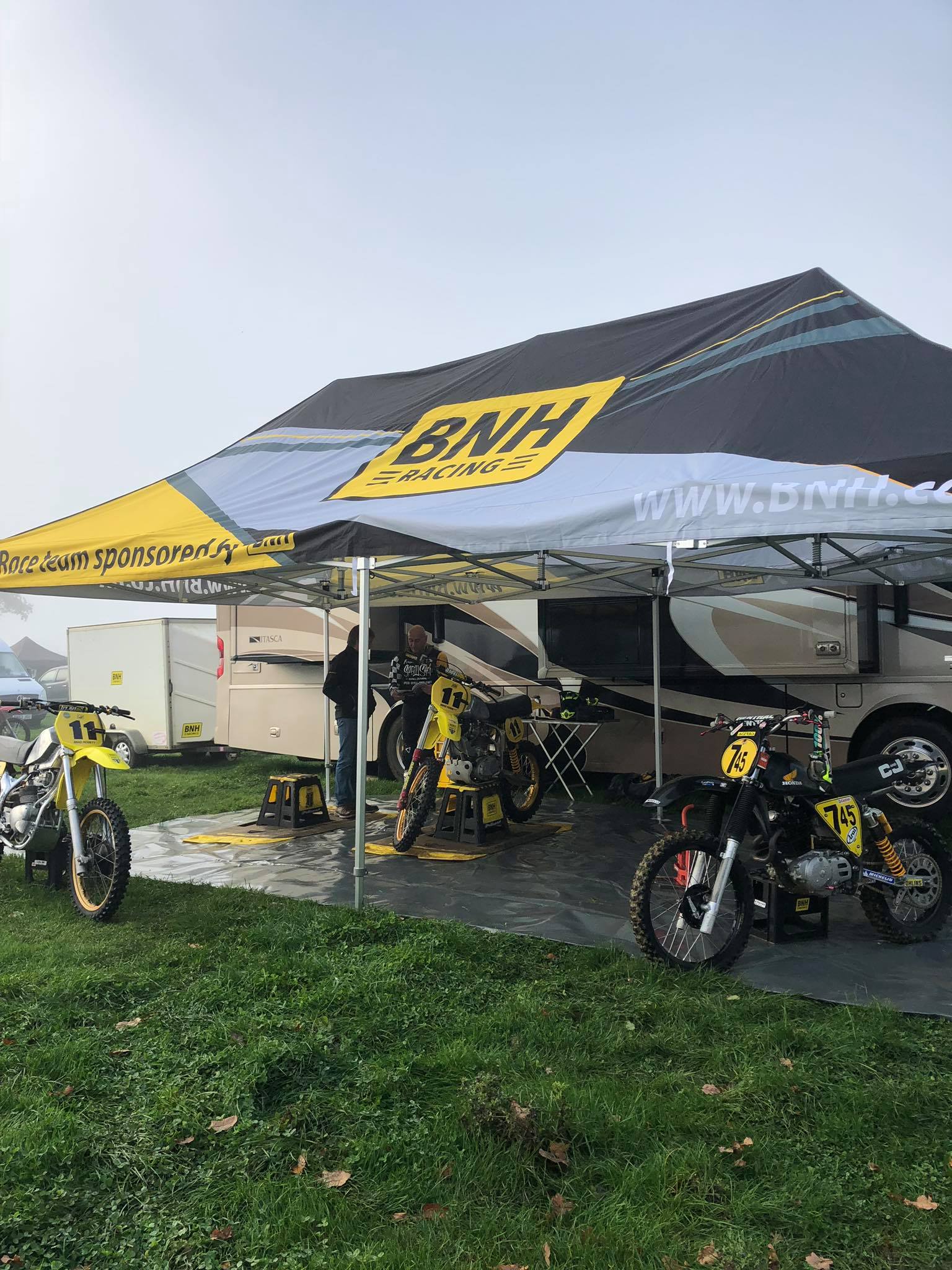
Go heavy-duty, not a supermarket gazebo — MX fields, wind and constant pitching on rough ground will finish a cheap frame inside a season. Our motorcycle race tents and pop up race tents are built for exactly this: quick to pitch after an early start, and tough enough to take the weather and the abuse.
The Motocross Pit Essentials
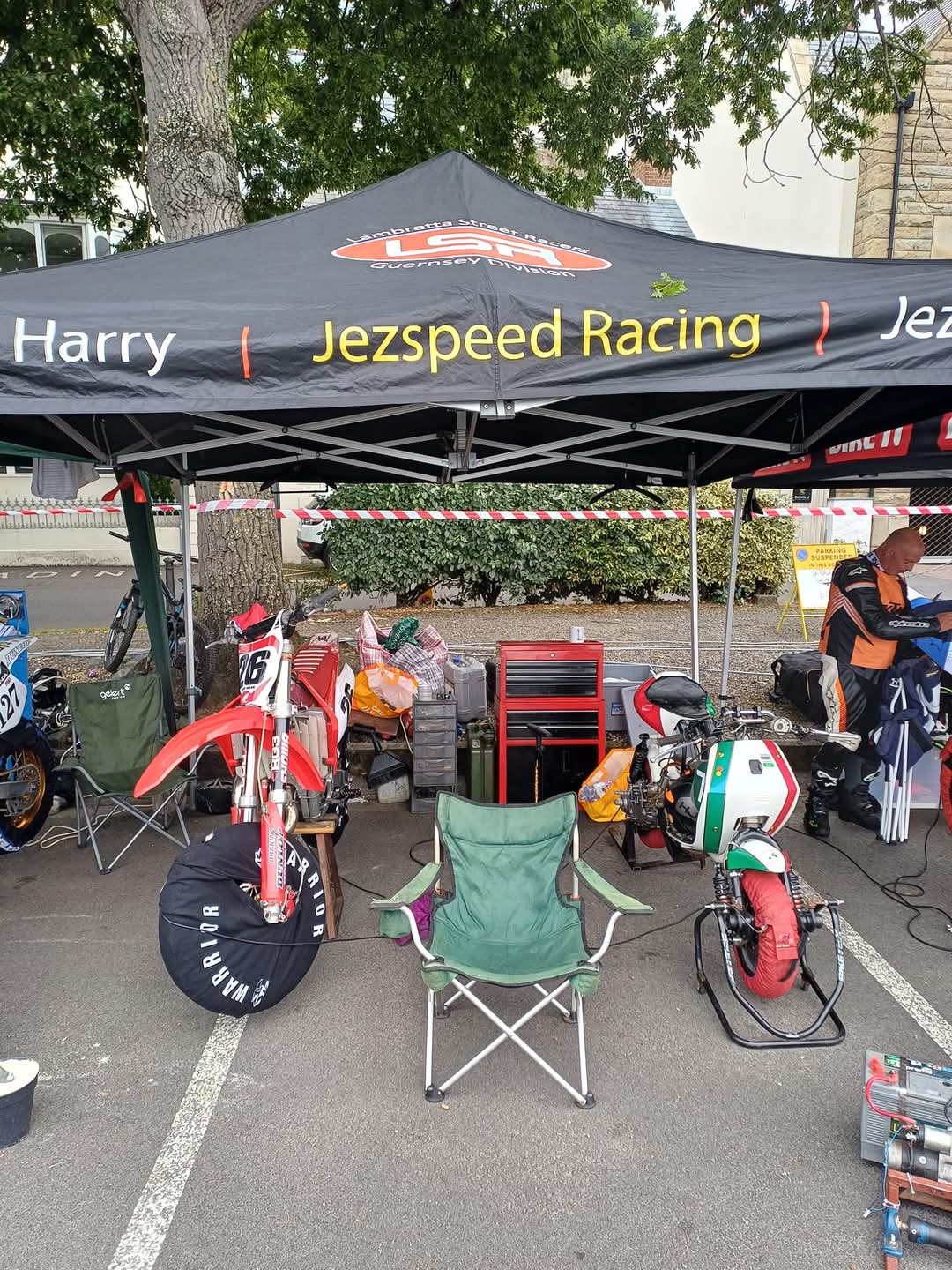
Under that gazebo, a well-drilled MX pit has a fairly standard kit list. Get it packed once and you will never turn up short:
- A bike stand or lift to get the bike up for cleaning, chain and general work.
- A pit mat under the bike — an environmental spill mat that catches fuel, oil and coolant. Many tracks require one under ACU and FIM rules, so it is not optional.
- Tools, spares and fluids — levers, grips, cables, a tyre pump, fuel, two-stroke oil and coolant. Things break and wear fast on an MX bike.
- A generator if you need power, since most tracks have none.
- Chairs, water, food and warm, dry kit for a long day outdoors with the family.
Mud, Dirt and Jet-Washing
This is the bit that defines an MX pit. Bikes come back filthy, so a pressure washer and a water supply — a jet-wash and a full water butt or barrels — are standard kit, not a luxury. Set your wash area to one side, downwind and away from your clean working space, so you are not spraying mud back over your tools and the family.
Keep two zones in your pit: a mucky end for washing and the dirty bike, and a clean, dry end for tools, kit and sitting down. Ground matting or boards inside the gazebo keep you up out of the churn. It sounds fussy, but the riders who stay on top of the mess are the ones still working comfortably when everyone else is ankle-deep in it.
Anchoring on a Grass Field
MX tracks are open grass fields, which means two things for your gazebo: soft ground, and nothing to stop the wind. Long, heavy-duty pegs and guy ropes are your first line, but pegs pull straight out of wet, churned ground, so back them up with weight on every leg. Proper marquee and gazebo weights are the difference between a pit that stays put and a gazebo cartwheeling across the paddock into someone's bike.
Pitch on the firmest, best-draining spot you can find, and think about where the water runs when it rains — you do not want it running through your working area. On an exposed field, over-anchor every time.
Getting Started in Motocross
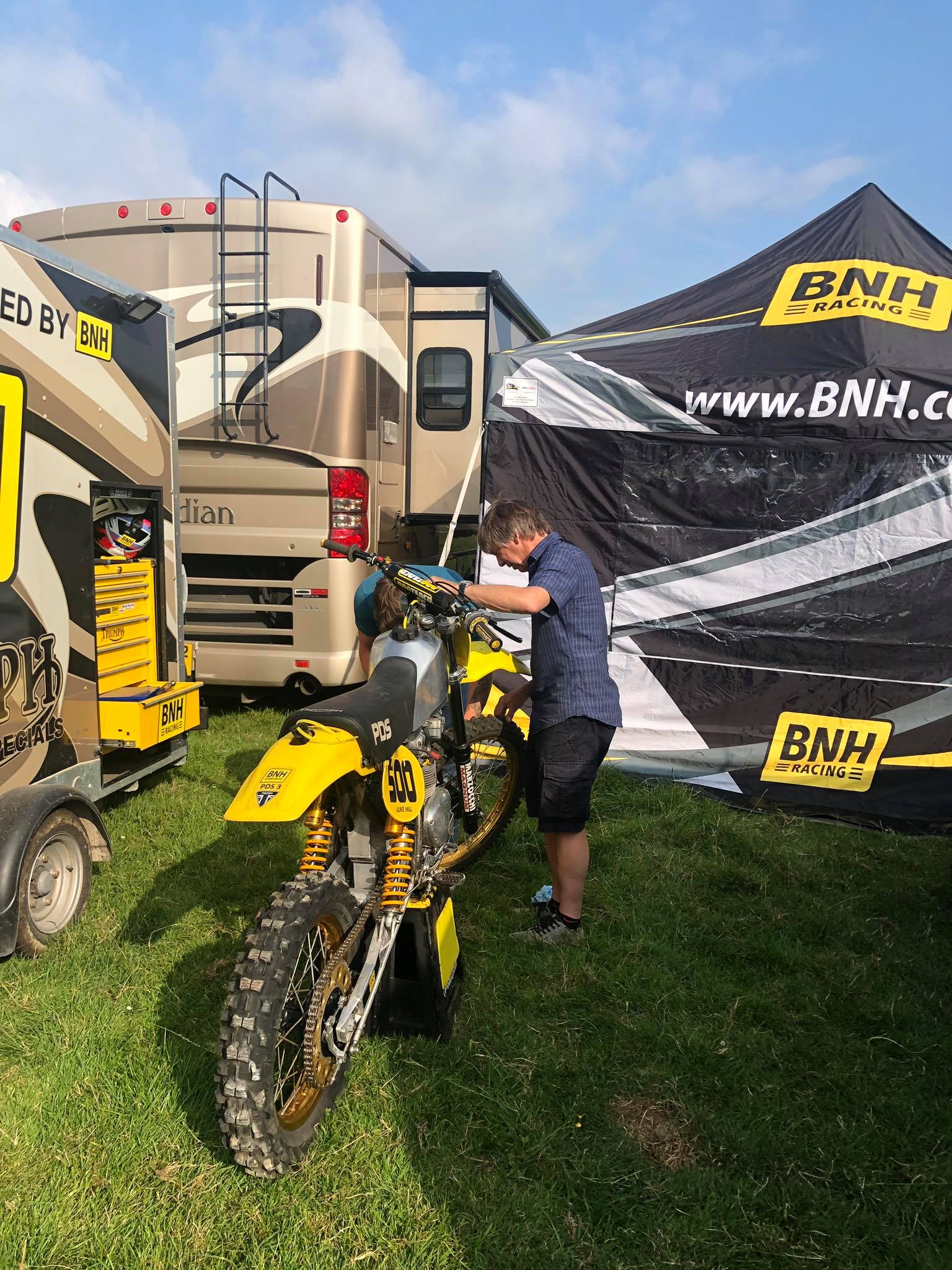
Motocross is one of the most family-friendly ways into motorsport, with classes running from tiny automatics for young children right up through 65cc, 85cc and the adult ranks. The usual route in is to join a club, get an ACU membership and licence, and start at practice days before entering club meetings.
The best first step is simply to turn up to a local track on a practice day, watch how the paddock works and talk to the families there — the MX community is famously welcoming. Our get into motorsport guides cover the wider picture, and the racing licence guide explains how competition licensing works.
Kitting Out Your Motocross Pit
Gala Performance builds motorsport structures in Britain, and we race ourselves, so the range is built for exactly this kind of muddy, all-weather, all-day pit.
- Motorcycle race tents — sized and built for bike pits, with room for the bike, stand and kit.
- Pop up race tents — quick to pitch after an early start, tough enough for a grass field. 3m x 3m and 3m x 4.5m.
- Marquee and gazebo weights — essential backup for pegs on soft, churned ground.
- Branded motorsport tents — fly your and your sponsors' colours at the track.
Not sure what suits your setup? Request a callback and we will talk it through.
What do you need for a motocross pit?
What size gazebo do you need for motocross?
Do you need a pit mat for motocross?
Do you need a licence for motocross?
How do you anchor a gazebo on a motocross track?
Is motocross family-friendly?