Castle Combe Circuit Guide: England's Fastest Circuit
Castle Combe is a 1.85-mile circuit near Chippenham in Wiltshire, and it is widely regarded as England's fastest circuit. Laid out on the perimeter of a former WWII airfield — flat, fast and famously demanding — it has been a West Country motorsport institution since 1950 and a launchpad for talent from Stirling Moss to Jenson Button. Here is the layout, the history, the racing, and what its garage-free, hard-standing paddock means for setting up your team.
Where Is Castle Combe Circuit?
Castle Combe sits in the Wiltshire countryside about five miles west of Chippenham, half a mile from the pretty village that gives it its name. It is easy to reach off junctions 17 and 18 of the M4, roughly half an hour from Bristol, which makes it the natural home of motorsport for the South West and the wider West Country.
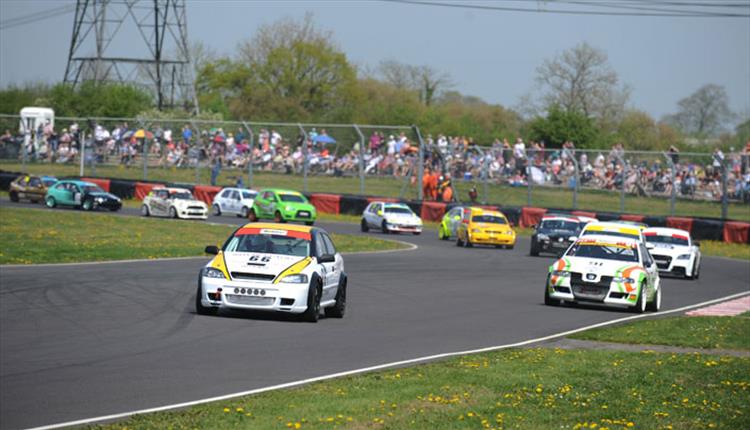
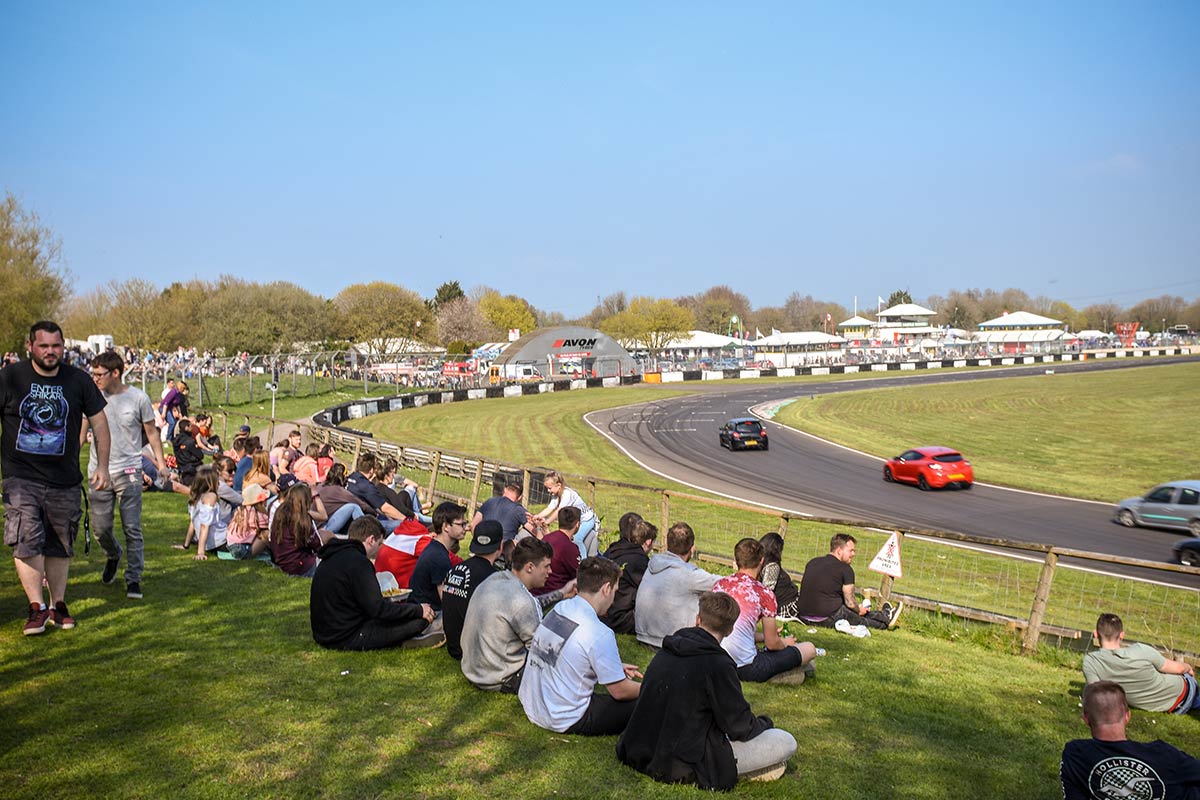
The circuit is laid out flat across a former airfield, and the spectator access is superb — you can watch from almost the entire outside of the track. Two things worth planning for: noise restrictions limit how many race days the circuit can run, so the calendar is tighter than at some venues, and the oceanic West Country climate means it can turn wet quickly, so come prepared for weather.

A Short History of Castle Combe
Castle Combe began life as RAF Castle Combe, an airfield opened in 1941 that served as a wartime pilot training ground before being decommissioned in 1948. Like several British circuits, its racing life began when the perimeter roads of the old airfield were repurposed for the track, and the first race was held in July 1950.
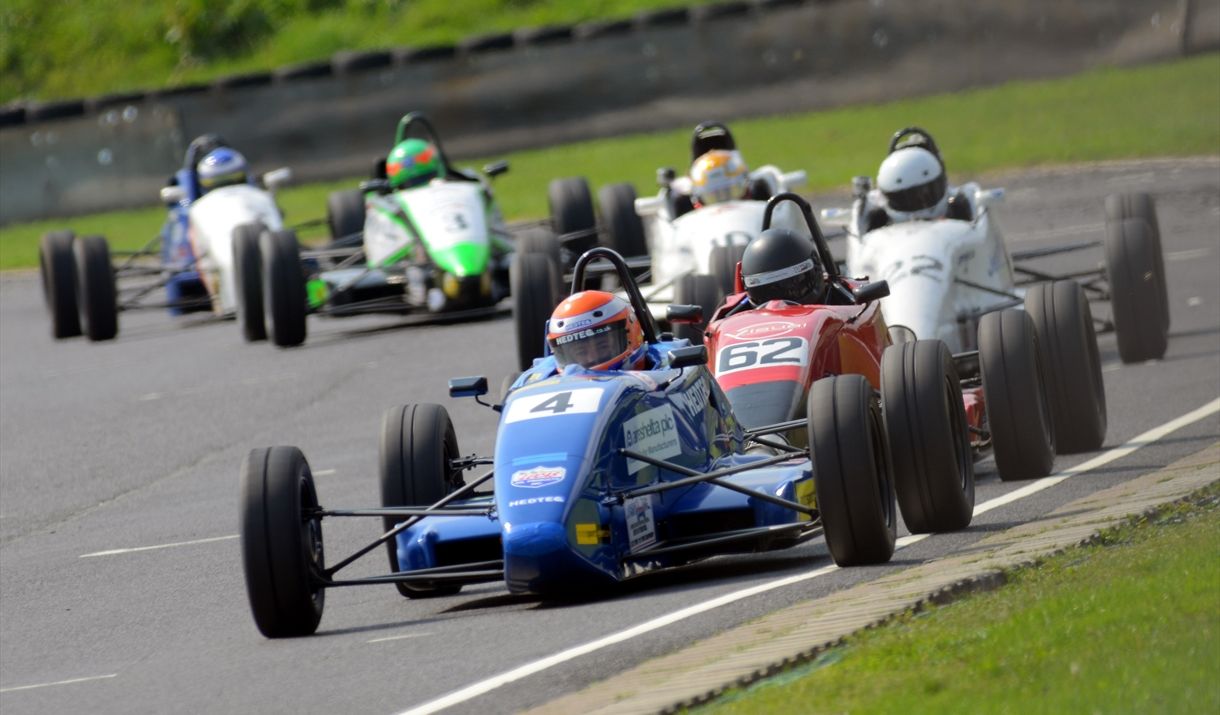
It quickly became a fixture of West Country motorsport, with Stirling Moss among the stars who raced there in the early years. Over the decades it built a reputation as a grassroots launchpad, where future Formula 1 drivers David Coulthard and Jenson Button cut their teeth in Formula Ford. The circuit was famously fast in its original form, and in 1999 two chicanes were added to rein the speeds in — though it remains one of the quickest tracks in the country to this day.
The Circuit Layout
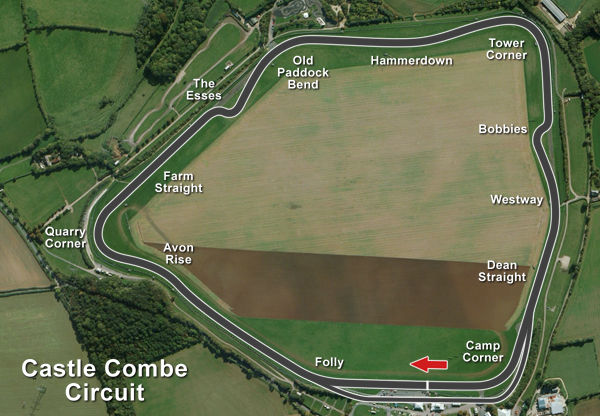
Castle Combe runs clockwise, measures 2.98 km / 1.85 miles over 12 turns in its current chicane-equipped form, and is semi-triangular in shape, tracing the perimeter of the old airfield. It is one of the fastest circuits in Britain.
A lap starts flat out through Folly, the quick opening sweeper, then over the bumpy, fast rise of Avon Rise and hard on the brakes for Quarry Corner, scrubbing off huge speed. Down the Farm Straight to The Esses chicane, on through Old Paddock Bend, Hammer Down and Tower, then the second chicane at Bobbies, before Westway, the Dean Straight and Camp Corner bring you back to Folly. The two chicanes, added in 1999, are all that keep the lap speeds in check.
What makes Castle Combe hard is simply how fast it is. Long flat-out sections leave few places to breathe, the surface is famously bumpy through the quick corners, and the Avon Rise to Quarry stretch is rated one of the most challenging in the country. It rewards commitment and punishes anyone who hesitates.
Quarry Corner and the Need for Speed
If Knockhill has Duffus Dip and Cadwell the Mountain, Castle Combe's signature is its sheer speed — and the corner that defines it is Quarry. It is the heavy-braking right-hander at the end of the flat-out run from Folly through Avon Rise, where cars arrive at well over 130 mph and have to scrub off more than half of it in a heartbeat.
But Quarry is really the punctuation mark on a lap that is all about carrying speed. The Avon Rise to Quarry sequence is widely rated one of the most challenging stretches of track in the country — bumpy, fast and committing, with no margin for error. Get the fast stuff right and Castle Combe is one of the most exhilarating laps in Britain; get it wrong and it will bite.
Racing at Castle Combe
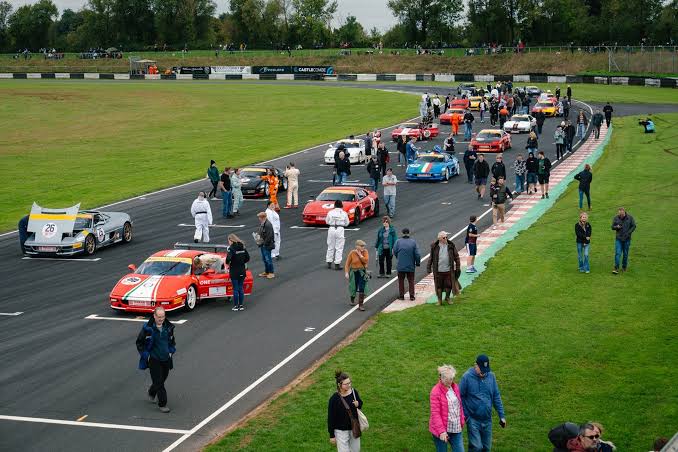
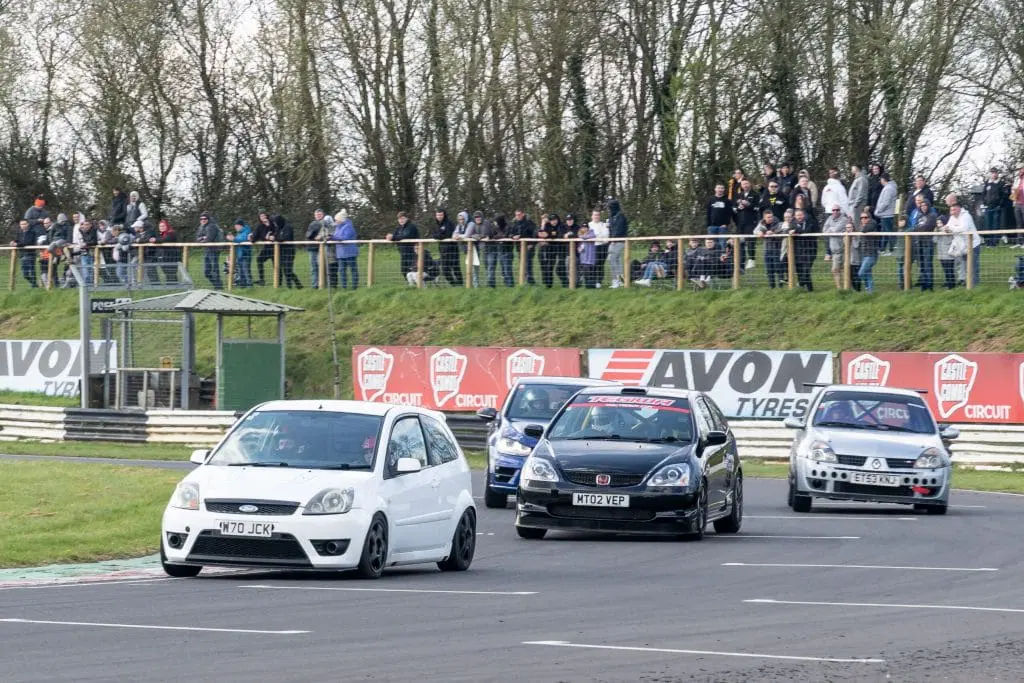
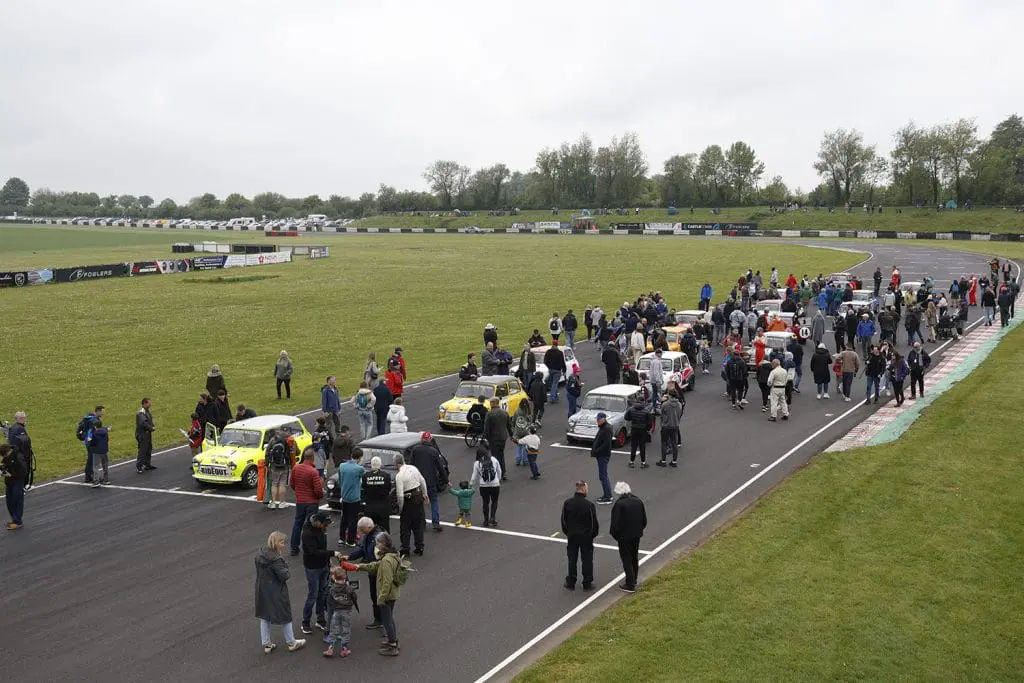
Castle Combe is one of the busiest grassroots circuits in the country, and its heartbeat is club racing. Formula Ford is the name most associated with the place — the junior single-seater category that launched the careers of David Coulthard and Jenson Button — but the calendar is packed with saloon, sports car, historic and motorcycle club racing across the season.
It has hosted rounds of the British GT and British Formula 3 championships in the past, though noise restrictions now cap the number of race days it can run. Alongside the racing, Castle Combe runs regular car and bike track days. If it is your first visit, our first track day guide covers what to bring and how the day runs.
Why Castle Combe Is Harder on Paddock Setups Than Most Circuits
Here is the part the circuit guides skip. Castle Combe is a former airfield, so it is flat and open — but the thing that really shapes your setup is what it does not have.
- There are no garages. Castle Combe has no permanent pit garages, so teams work out in the open on the paddock. That means your awning or race tent is not just shelter — it is your entire workshop for the weekend. It has to be big enough, weatherproof enough and organised enough to strip and work on the car in whatever weather arrives.
- The hard standing is your friend. The paddock is largely hard standing, which is good news: weights sit and grip properly, so you can anchor a big structure securely and lay out a proper working bay. Load every leg.
- It is a busy club paddock. Castle Combe runs one of the fullest grassroots calendars in the country, so pitches fill and space is tight. A quick-to-pitch, compact, tidy setup earns you room and goodwill.
With no garages to fall back on and West Country weather that can turn wet fast, your paddock structure does all the work here — so make it a proper one.

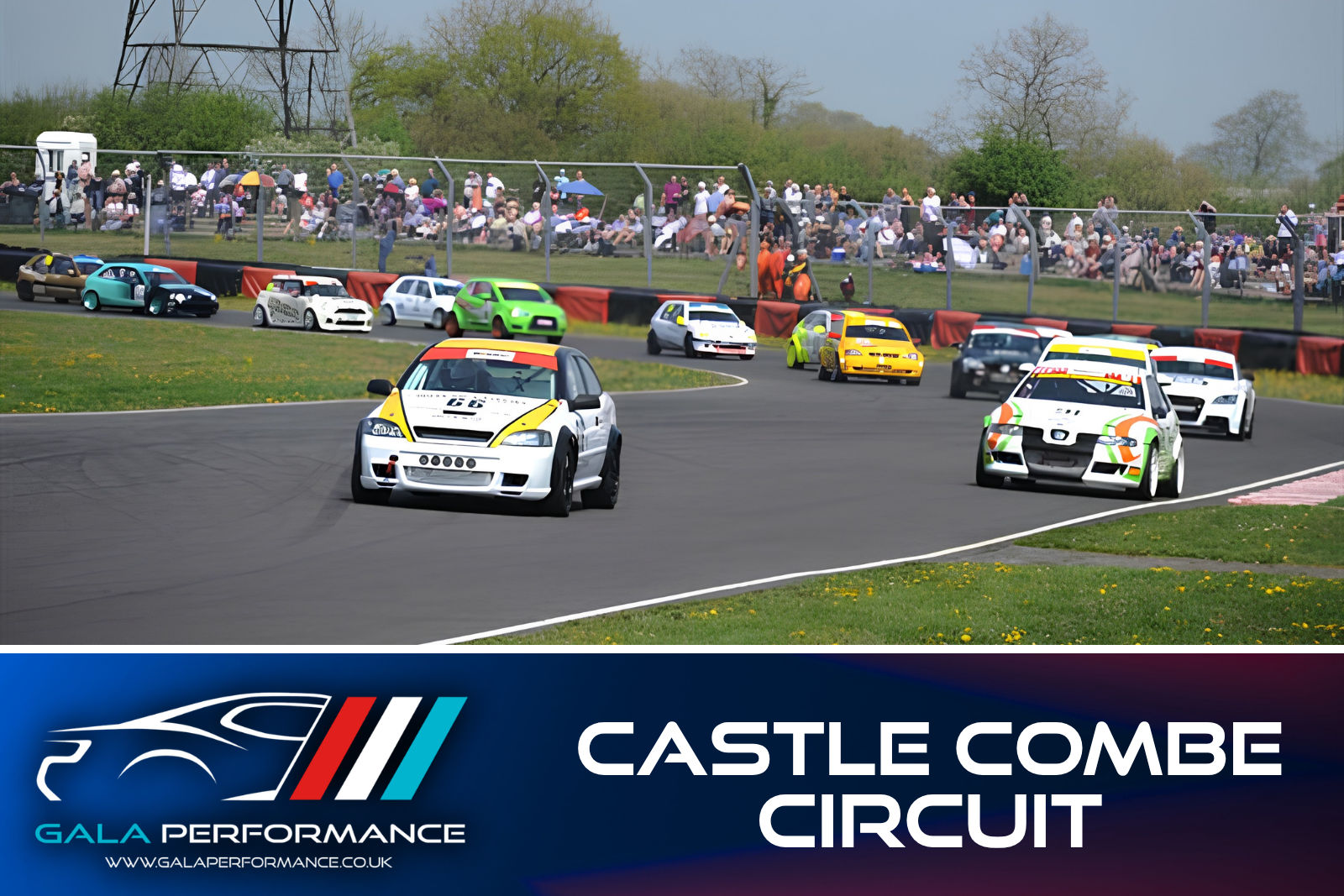
Setting Up Your Paddock at Castle Combe
Gala Performance builds motorsport structures in Britain, and we race ourselves, so the range is designed around paddocks like this one — where there is no garage to work in and the weather does the damage.
- Heavy-duty awnings — with no garages on site, this is your workshop: clear-span, weatherproof, and room to strip the car in the dry.
- Pop up race tents — quick to pitch in a busy club paddock, and easy to pack down. 3m x 3m and 3m x 4.5m for tighter pitches.
- Marquee and gazebo weights — the generous hard standing takes them perfectly. Anchor every leg.
- Branded motorsport tents — stand out and look the part in a packed grassroots paddock.
Not sure what suits your setup? Request a callback and we will talk it through.
How long is Castle Combe Circuit?
Where is Castle Combe Circuit?
Why is Castle Combe famous?
What is the biggest event at Castle Combe?
What is Castle Combe's most famous corner?
Can you do a track day at Castle Combe?