Castle Combe Circuit Guide: Layout, History & Paddock
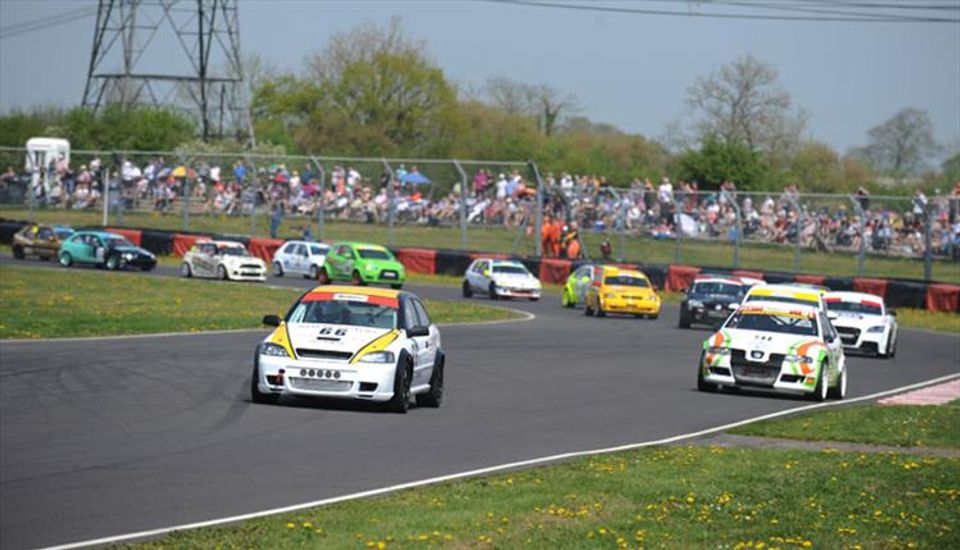
Castle Combe Circuit is a 1.85-mile (2.98 km) track on a former RAF airfield near Chippenham in Wiltshire, run by Castle Combe Circuit Limited. It has one car layout with 12 corners and two chicanes, it is one of the fastest circuits in the UK, and it has no pit garages, so every team works from the paddock.
This guide covers the layout, the circuit's history, what races there, the paddock rules and facilities, and the kit to bring for a race weekend or track day. Racing at Castle Combe next season? Talk to the team about your paddock setup.
Castle Combe Circuit Facts
| Item | Detail |
|---|---|
| Location | Castle Combe, Chippenham, Wiltshire, SN14 7EY. On the B4039, about 4 miles west of Chippenham |
| Operator | Castle Combe Circuit Limited, founded by Howard Strawford, who took the circuit on in 1976 |
| Layout | 1.85 miles (2.98 km) with 12 corners, including two chicanes added for 1999 |
| Headline events | Howard's Race Day, the Autumn Classic, historic festivals and the summer motorcycle meeting |
| Club racing | Castle Combe Racing Club championships, plus visiting clubs such as the CSCC, HSCC, Monoposto and NG Road Racing |
| Paddock surface | Tarmac. Pegs, screws and bolts must not go into the surface, so every leg needs a weight |
| Pit garages | None. Teams work from awnings and race tents in the paddock |
| Noise | A 2005 noise nuisance order limits the race calendar. Recent club meetings set a 108dBA static limit for cars |
What Is the Castle Combe Circuit Layout?
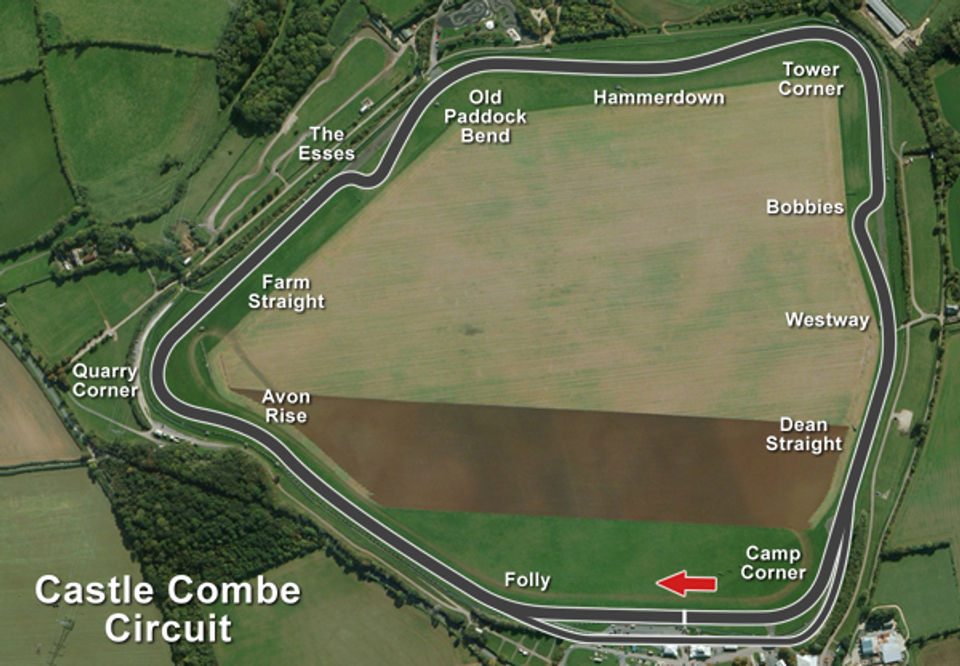
Castle Combe has one car layout: a 1.85-mile (2.98 km) lap with 12 corners around the perimeter of the old airfield. The current lap dates from the winter of 1998 to 1999, when two chicanes were added to slow the cars.
Castle Combe Circuit
1.85 miles (2.98 km) with 12 corners. A fast, mostly flat lap with long full-throttle sections, a bumpy surface through the quick corners and heavy braking for Quarry and Camp. Used for all racing and track days.
Corners and sections to know
- Folly, the flat-out right-hand kink after the start-finish straight, with the pit exit joining just before it.
- Avon Rise, a shallow left over a crest where the braking for Quarry has to be planned around the rise.
- Quarry, a long right-hander after a braking zone on the rise, where the car can go light. The bumpy exit kerb catches people out.
- The Esses and Bobbies, the two chicanes. Overshoot either and you continue slowly through the run-off and rejoin when it is safe.
- Howard's Way and Gooch's, renamed in February 2026 from Hammerdown and Tower in memory of Howard Strawford and Rodney Gooch.
- Camp, the final corner and the most important on the lap, because it leads onto the long full-throttle run to the line.
What Is the History of Castle Combe Circuit?
Castle Combe began as RAF Castle Combe, a Second World War training airfield, and has held motor racing on its perimeter track since 1950. The Strawford family has run it since 1976.
- 1941: RAF Castle Combe opened as a wartime training airfield.
- 1948: the airfield closed and the land returned to the Gorst family.
- 1950: the first race meeting, organised with the Bristol Motorcycle and Light Car Club.
- 1955: Harry Schell won the Avon Trophy in a Vanwall. Car racing then paused until spectator banks were funded, and resumed in 1962.
- 1976: Howard Strawford took over and formed Castle Combe Circuit Limited.
- Winter 1998 to 1999: two chicanes were added and the spectator areas were reworked after a fatal accident in 1998.
- 2001 to 2005: British F3 and British GT visited, until a 2005 noise nuisance order ended their rounds.
- 2026: Hammerdown became Howard's Way and Tower became Gooch's.
What Races at Castle Combe?
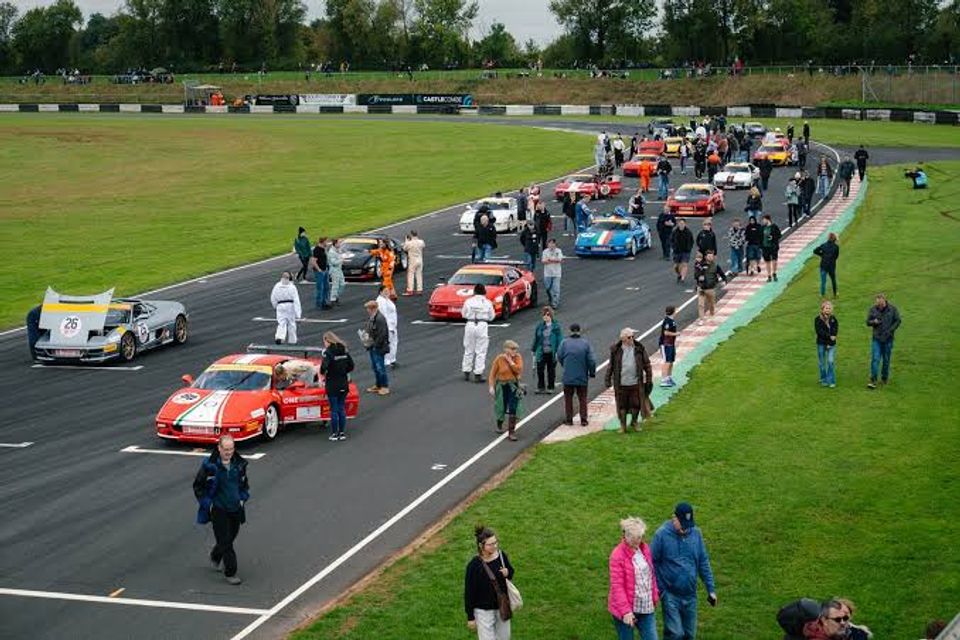
Castle Combe is a club racing circuit, built around the Castle Combe Racing Club championships and visiting club meetings, plus car and bike track days. The noise order limits how many race days it can run, so check the circuit calendar early.
Headline meetings
- Howard's Race Day, the season opener.
- The Autumn Classic race weekend, the circuit's biggest historic meeting.
- Historic festivals, including the HSCC summer meeting in 2026.
- The annual summer motorcycle meeting, run with NG Road Racing in 2026.
Club championships you can enter
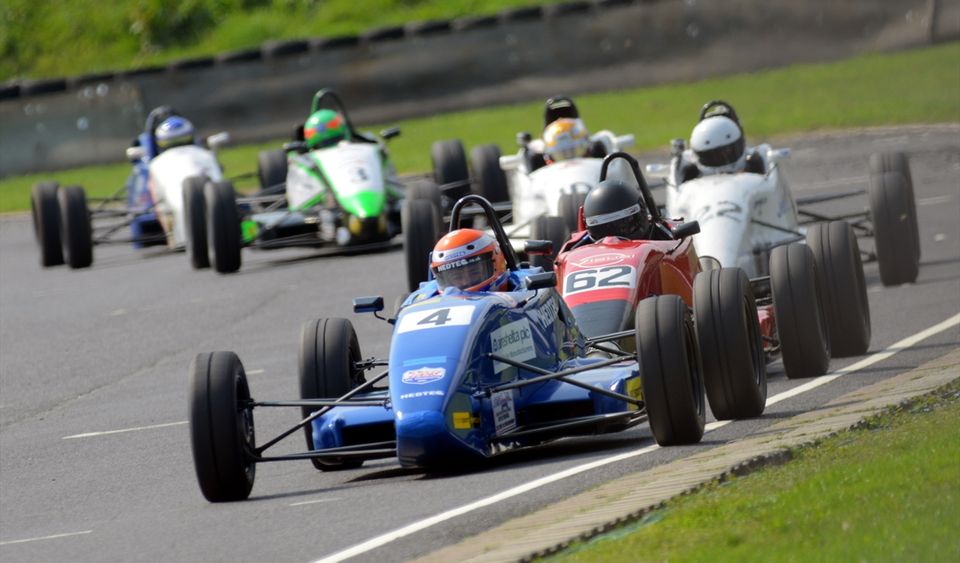
- Castle Combe Formula Ford 1600. The CCRC FF1600 Championship, the category most closely tied to the circuit.
- Castle Combe Saloon Car Championship. The CCRC saloon series for modified and production-based cars.
- Castle Combe GT Championship. The CCRC GT series for sports and GT cars.
- Castle Combe Hot Hatch Championship. The CCRC series for front-wheel-drive hot hatches.
- CSCC. The Classic Sports Car Club runs a Modern and Retro meeting at Castle Combe.
- NG Road Racing. Club motorcycle racing, with a Castle Combe round in July 2026.
Monoposto and Mighty Minis have also raced at Castle Combe in recent seasons. If you are choosing a series, the club calendars show which rounds come here.
What Do You Need to Know About the Castle Combe Paddock?
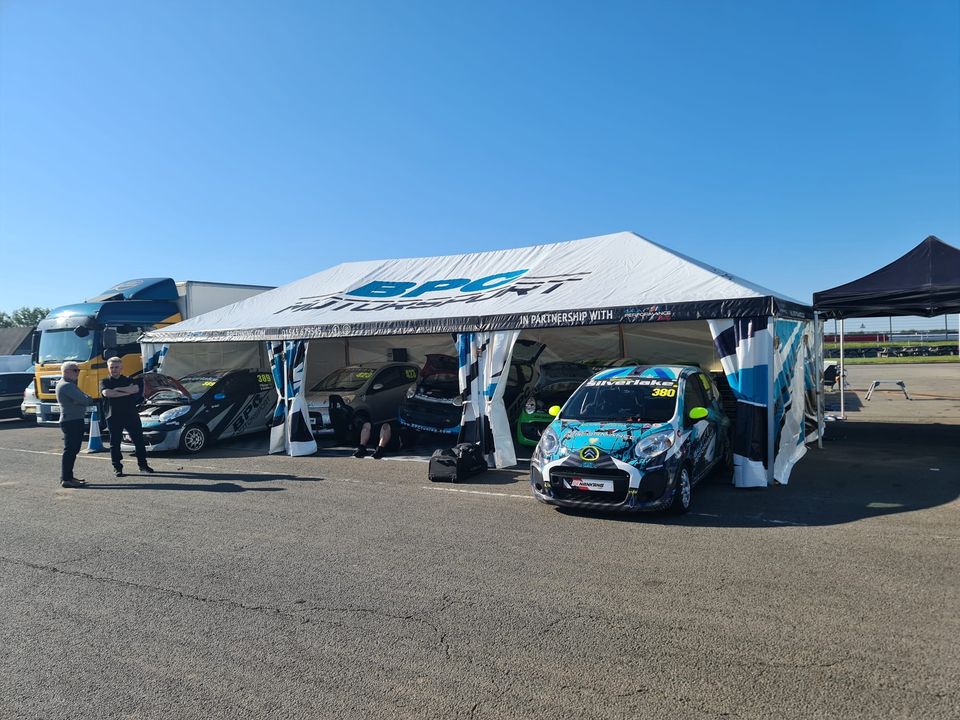
Castle Combe has no pit garages, so your awning or race tent is your workshop for the whole weekend. The paddock is tarmac and nothing may be driven into it, so every leg needs a weight. Space is tight and pitches are allocated, so a compact, quick setup works best.
Paddock rules to plan around
- No pegs, screws or bolts into the tarmac or any solid surface, and no markings on the paddock.
- Leave trailers on blocks, because of weight limits on the paddock surface.
- Park neatly in your allocated area. Only vehicles with a paddock pass are allowed into the paddock.
- Race engines must not run before 08:15 to 08:30 or after 18:30, depending on the meeting.
- Generators and paddock noise go off overnight, from 22:30 or 23:00 depending on the meeting.
- No animals at the venue, and no electric scooters.
- Refuelling during races is not allowed.
Facilities
- No pit garages. Teams work from the paddock.
- Paddock access is usually from the day before the meeting, with times in the Final Instructions.
- Circuit restaurant, café and bar, open on some evenings before race day.
- Toilets on site.
- Race administration in the Strawford Centre.
- Castle Combe Racing School on site.
These rules come from recent Castle Combe Racing Club, CSCC and NG Road Racing Final Instructions. Each meeting publishes its own Final Instructions with access times and a paddock plan, so read them before you travel.
What Paddock Kit Should You Take to Castle Combe?
Take a weatherproof awning or race tent big enough to work on the car, because there are no garages to fall back on. Bring weights for every leg, side walls for wind and rain, and a ground covering for the tarmac.
- An MQ-65 heavy duty awning as your workshop for the weekend, with room to strip the car out of the weather.
- A pop up race tent for smaller teams or tighter pitches. The size guide shows what fits under each size.
- Race tent weights on every leg, because nothing may be driven into the paddock surface.
- Side walls to close off the weather side, fitted after the legs are weighted.
- Modular flooring to give the crew a clean, dry working floor over the tarmac.
- Inflatable structures for teams who want a big, fast-pitching base.
How Do You Get to Castle Combe Circuit?
Castle Combe Circuit is on the B4039 about 4 miles west of Chippenham, roughly 10 minutes from the M4. Leave the M4 at junction 17 or 18 and follow the brown tourist signs.
- Address: Castle Combe Circuit, Castle Combe, Chippenham, Wiltshire, SN14 7EY.
- From London and the east: M4 to junction 17, then follow the brown signs.
- From Bristol and the west: M4 to junction 18, then follow the brown signs.
- Competitors use the main competitor entrance on the B4039 Chippenham to Chipping Sodbury road.
- By train: Chippenham station on the London Paddington to Bristol line, then a taxi.
- Circuit phone: 01249 782417.

Castle Combe Circuit FAQs
Where is Castle Combe Circuit?
How long is Castle Combe Circuit?
Does Castle Combe have pit garages?
Can you use tent pegs at Castle Combe?
What races at Castle Combe?
Can I do a track day at Castle Combe?
UK Circuit Guides
Every guide covers the layouts, history, what races there and how to set up in the paddock. Compare all UK circuits, or see the full UK motorsport guide.