Drift League GB: Classes, Costs & How to Compete
Drift League GB is a UK drift championship with two classes, run over five rounds at venues in England, Scotland and Wales. Class 2 is the grassroots class on road-legal rear tyres, and Class 1 is the top class. Driver entry was £250 per round in 2025, and the rules accept any car, any year and any engine.
This guide covers the car rules, how a round works and how the judges score it, the latest calendar, what it costs, how to get started and the paddock kit a drift team needs. Thinking about a drift season? Talk to the team about your paddock setup.
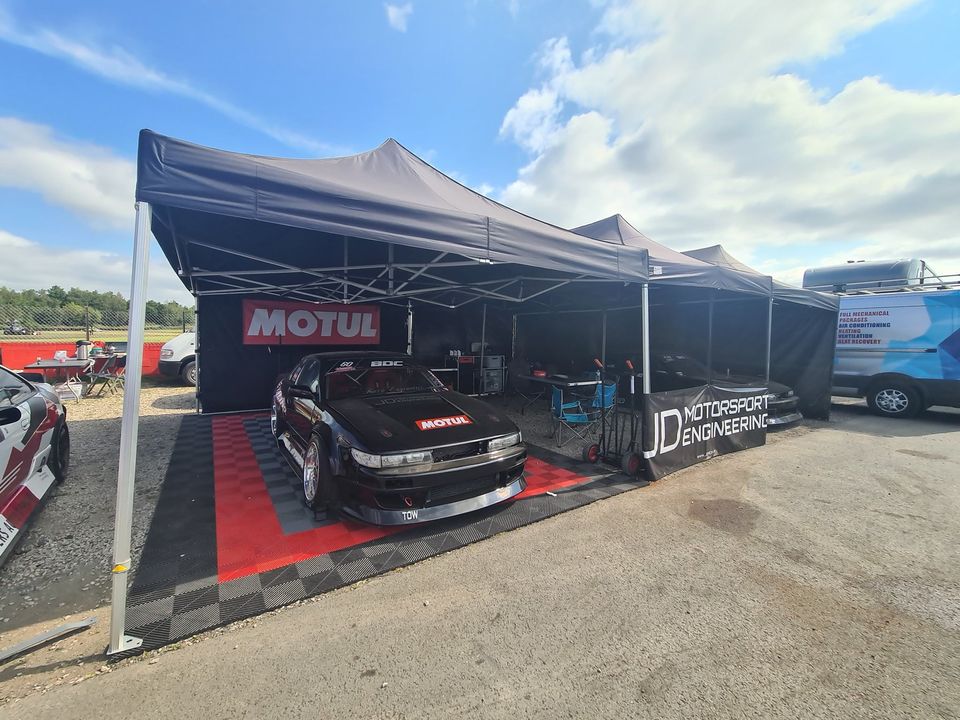
Drift League GB Facts
| Item | Detail |
|---|---|
| Organiser | Drift League GB, owned by Gtec Event Ltd |
| Classes | Class 2 (grassroots, road tyres on the rear) and Class 1 (top class) |
| Car | Any car, any year, any engine, with a 6-point cage, FIA seat and plumbed extinguisher |
| Format | Practice, two judged qualifying runs, then top 32 tandem battles |
| 2026 season | Five rounds at Three Sisters, Driftland, Teesside Autodrome (twice) and Pembrey |
| Driver entry | £250 per round in 2025, the organiser's ticket price |
| Noise limit | 100dB, strictly enforced |
| Licence | None listed in the published rules. Confirm with the organiser before you enter |
What Is Drift League GB?
Drift League GB is a judged drift championship where grassroots and top-class drivers compete at the same event. Class 2 runs on the Saturday and Class 1 on the Sunday, and the best Class 2 drivers move up.
- Two classes. Class 2 is the entry point, on E-marked road tyres at the rear. Class 1 rear tyres only have to meet the treadwear and width limits.
- A clear ladder. The organiser says the top four in the Class 2 championship move up to Class 1.
- Open car rules. Any car, any year and any engine, and the series welcomes front-wheel drive to rear-wheel drive conversions and one-off builds.
- Judged battles. Qualifying runs are scored, then the top 32 go head to head in tandem battles.
- Points for battle results only. No championship points are awarded for qualifying position.
Who Drift League GB Suits
Drift League GB suits drivers who already drift at practice days and want a judged championship with a clear step up. Class 2 keeps tyre costs down on road rubber, and the open car rules mean most well-built grassroots drift cars can enter once they meet the safety rules.

What Car Do You Need for Drift League GB?
You can enter any car of any age with any engine, as long as it meets the safety rules. That means a 6-point roll cage, an FIA approved seat, a harness, a plumbed fire extinguisher system and an FIA cut-off switch.
| Spec | Detail |
|---|---|
| Car | Any car, any year, any engine. Front-wheel drive to rear-wheel drive conversions are welcome |
| Roll cage | Minimum 6-point with a single door bar, bolt-in or welded. Main hoop 45mm x 2.5mm or 50mm x 2.0mm. Dash dodger cages not permitted |
| Seat and harness | FIA approved racing seat. Minimum 4-point harness mounted to the body or the cage |
| Fire safety | 1-litre hand-held extinguisher plus a plumbed 2.25-litre system with two nozzles |
| Electrics | FIA cut-off within the driver's reach, plus an outside pull |
| Class 2 rear tyres | E-marked road tyres only, minimum 200 treadwear, maximum 265 width. No semi-slicks or cut slicks |
| Class 1 rear tyres | Minimum 200 treadwear, maximum 265 width |
| Front tyres | Open choice in both classes |
| Noise | 100dB limit. Anti-lag and pop-and-bang maps are banned |
| Driver kit | Fire-retardant suit, gloves and boots on track, with an approved helmet such as FIA 8859-2015 or Snell SA2015 |
Every car needs a prop loop and must pass a technical inspection before it goes on track. These are the rules on driftleague.co.uk at the time of writing; check the current version before you build.
How Does a Drift League GB Round Work?
Each class gets its own day: practice and qualifying in the morning, then the top 32 qualifiers battle in the afternoon. Class 2 runs on the Saturday and Class 1 on the Sunday.
- Drivers start the day with a briefing from the judges.
- Each driver gets two qualifying runs, each scored out of 100. Judges mark clipping zones, speed and control.
- The top 32 qualifiers go into tandem battles. Each battle has two runs, and the winner goes through.
- Championship points run from 50 for the winner down to 6 for 24th to 32nd. Qualifying earns no points.
- Round X closes the year as a relaxed end-of-season event with the classes mixed together.
2026 calendar
| Date | Circuit | Races |
|---|---|---|
| 2 to 3 May | Three Sisters, Wigan | Round 1. Class 2 Saturday, Class 1 Sunday |
| 6 to 7 June | Driftland, Fife | Round 2. Class 2 Saturday, Class 1 Sunday |
| 11 to 12 July | Teesside Autodrome, Middlesbrough | Round 3. Class 2 Saturday, Class 1 Sunday |
| 15 to 16 August | Pembrey, Carmarthenshire | Round 4. Class 2 Saturday, Class 1 Sunday |
| 12 to 13 September | Teesside Autodrome, Middlesbrough | Round 5, season final. Class 2 Saturday, Class 1 Sunday |
| 3 to 4 October | Three Sisters, Wigan | Round X, end-of-season event with mixed classes |
This is the 2026 season from the Drift League GB round pages. The 2027 calendar had not been published at the time of writing. Check driftleague.co.uk before you plan your season.
How Can You Get Into Drift League GB?
There are three ways in: build your own drift car, buy a ready-built one, or share a car. New drivers enter Class 2, and drift practice days are the place to learn first.
Build your own
Turn a road car into a drift car that meets the cage, seat and fire safety rules.
- Any car, any year, any engine.
- Front-wheel drive to rear-wheel drive conversions are welcome.
- Build to the current rules before you buy parts.
Buy a built car
Buy a drift car already caged and set up for competition.
- Check the cage design. Dash dodger cages are not permitted.
- Check the seat is FIA approved and the extinguisher system is plumbed.
- Get it on track at a practice day before your first round.
Share a car
Split a car with another driver to share the build and running costs.
- The 2025 terms allow car sharing.
- The primary competitor's number goes on the car at scrutineering.
- Ask the organiser how shared entries work for the current season.
How Much Does Drift League GB Cost?
Driver entry was £250 per round in 2025, for either class, from the organiser's own ticket listing. A practice day before the 2025 Driftland round cost £150. Entry fees for 2026 and 2027 were not published at the time of writing.
| Item | Cost |
|---|---|
| Driver entry, Class 1 or Class 2, 2025 | £250 per round |
| Practice day at Driftland, 2025 | £150 |
| Driver entry, 2026 and 2027 | Not published. Ask Drift League GB |
| Tyre disposal fine | £250 if you leave used tyres behind |
| Spectator ticket, 2026 | £20 per adult per day at Three Sisters and Driftland |
What an entry covers
- Practice, qualifying and battles on your class day
- Judging and championship points
- Technical inspection before you go on track
Costs to add
- The car build: cage, FIA seat, harness, plumbed extinguisher and cut-off
- Rear tyres. Drift days use a lot of them
- Race kit: helmet, fire-retardant suit, gloves and boots
- A 6kg extinguisher and spill mats for your pit area
- Fuel, travel, a trailer and accommodation
- A paddock setup for you and your crew
Costs move every season. Check driftleague.co.uk and the organiser's ticket shop for current figures before you commit to a season.
How Do You Start in Drift League GB?
Get seat time at drift practice days, build or buy a car to the Drift League GB safety rules, then enter Class 2. Ask the organiser what licence or membership it needs before your first round.
- Learn at drift practice days. Venues such as Driftland and Teesside Autodrome run them.
- Build or buy a car that meets the cage, seat, harness and fire safety rules.
- Buy your race kit: an approved helmet, fire-retardant suit, gloves and boots.
- Contact Drift League GB to confirm entry requirements and fees for the season.
- Enter Class 2. A top-four Class 2 championship finish moves you up to Class 1.
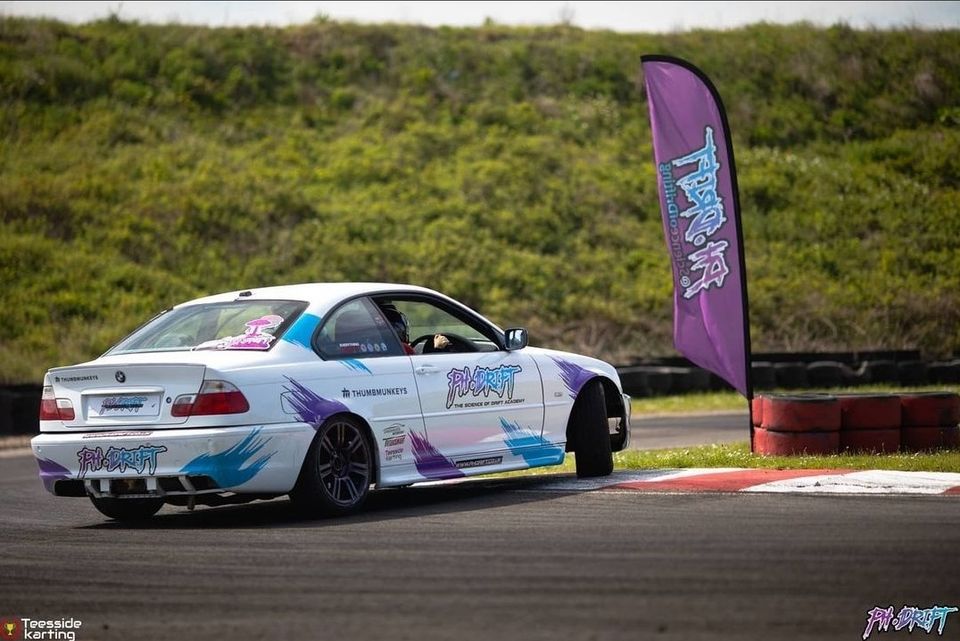
What Paddock Kit Do You Need for Drift League GB?
A Drift League GB driver needs a covered base for tyres, tools and the car, held down with weights, plus the pit safety kit the rules demand. Drift paddocks are busy and open, and spectators walk them on track invasions, so presentation counts.
- Read the drifting paddock guide for tyre storage, layout and the practice day to competition step.
- A pop up race tent for a solo driver, or an MQ-65 awning for a team with spare tyres and wheels to store. Size it with the size guide.
- Race tent weights on every leg. Venues such as Driftland, Teesside and Pembrey are open and exposed.
- Side walls to keep wind, rain and tyre smoke out of your workspace.
- A 6kg fire extinguisher in plain view and spill mats under the car. The rules require both in your pit area.
- Branded tents and walls for the crowd and your sponsors. See how to get sponsored.
Drift League GB FAQs
How much does it cost to enter Drift League GB?
What car can you use in Drift League GB?
Do you need a licence for Drift League GB?
What is the difference between Class 1 and Class 2?
How is Drift League GB judged?
Where does Drift League GB run?
Before Your First Drift League GB Round
Layouts, paddock rules, facilities and directions for each circuit on the calendar.