Race Trailer Awnings: Your Options for Paddock Cover
Searching for a ‘race trailer awning’? It is worth knowing the phrase means two very different things — an awning that mounts to the side of your trailer or transporter and winds out, or a freestanding awning you pitch alongside it to create a proper covered paddock bay. They solve the problem in different ways, and for most race teams the freestanding option does far more. Here is the difference, and how to set up cover alongside your trailer.
Two Kinds of ‘Trailer Awning’
Before you buy anything, it helps to know which of these you are actually after, because they are quite different bits of kit:
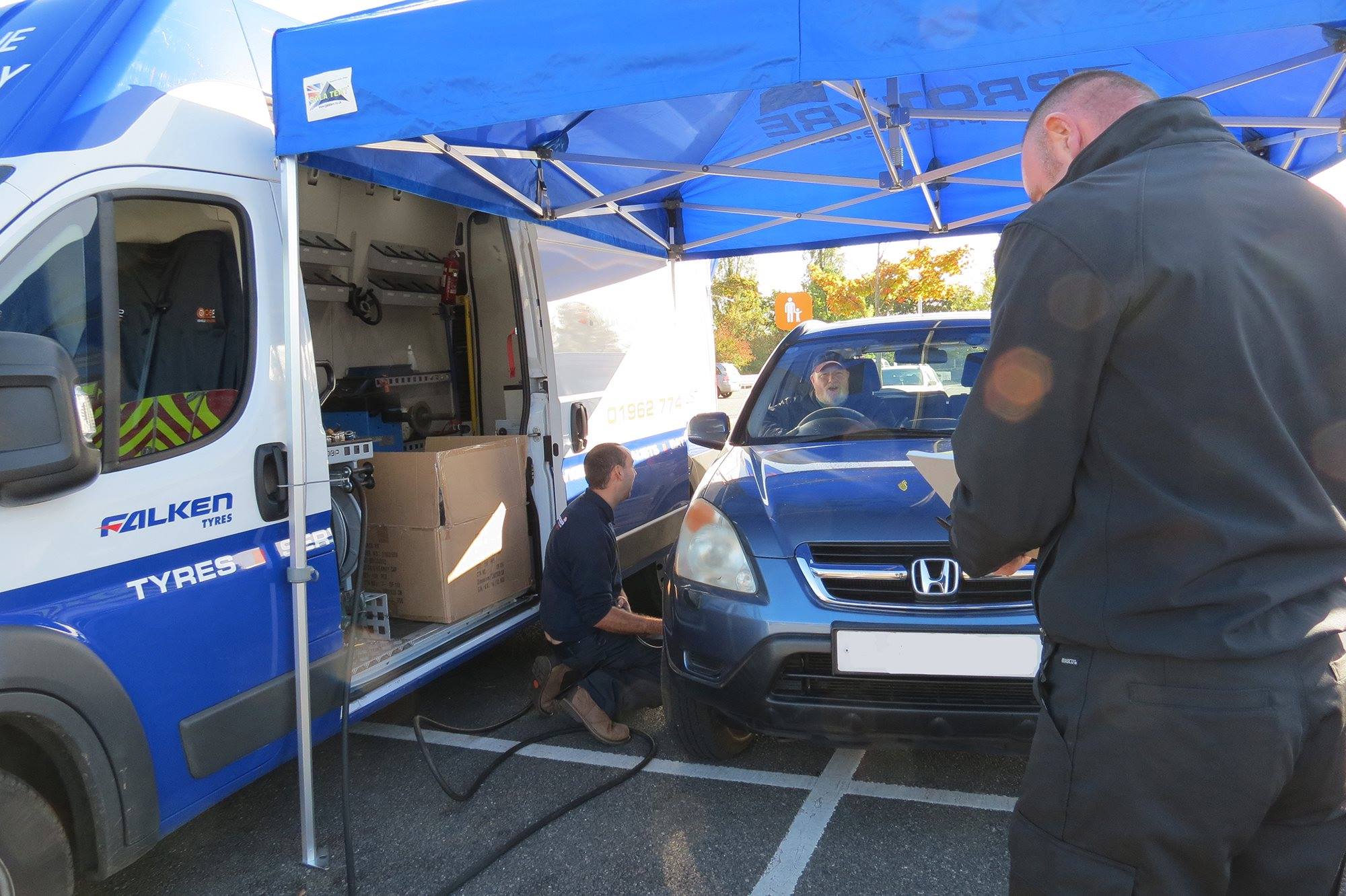
- Trailer or truck-mounted awnings. These bolt to the side of a race transporter or trailer and wind or roll out, much like the awnings you see on motorhomes and commercial vans. They are quick and tidy, but they are fixed to the vehicle: limited in size, dependent on where and how the truck is parked, and they only give you a strip of cover down one side. Gala Performance does not make this vehicle-mounted type.
- Freestanding paddock awnings. A separate structure you pitch next to, or behind, your trailer to create a full, enclosed working bay. This is what Gala Performance builds — and for most teams it is the more useful setup by a distance.
If it is the wind-out, bolt-to-the-truck type you are after, a motorhome or commercial-vehicle awning specialist is your best bet. If you want a proper covered workspace in the paddock, read on.
Why Freestanding Works Better in the Paddock
A vehicle-mounted awning gives you a strip of shade down one side of the truck. A freestanding awning gives you a workshop. For race teams, that difference matters:
- Far more space — a proper bay for the car or bike, tools, tyres and crew, not just a metre of cover along the trailer.
- A weatherproof workshop — solid sides, a full roof and somewhere genuinely dry to work, rather than an open strip.
- Not tied to the trailer — pitch it wherever the paddock space allows, whatever the parking or the shape of your pitch.
- It scales — one car or a whole team, and you can link two awnings together with a gutter kit to build a bigger compound.
- It works without a trailer too — travelling in a van this weekend? You are still covered.
Setting Up Alongside Your Transporter
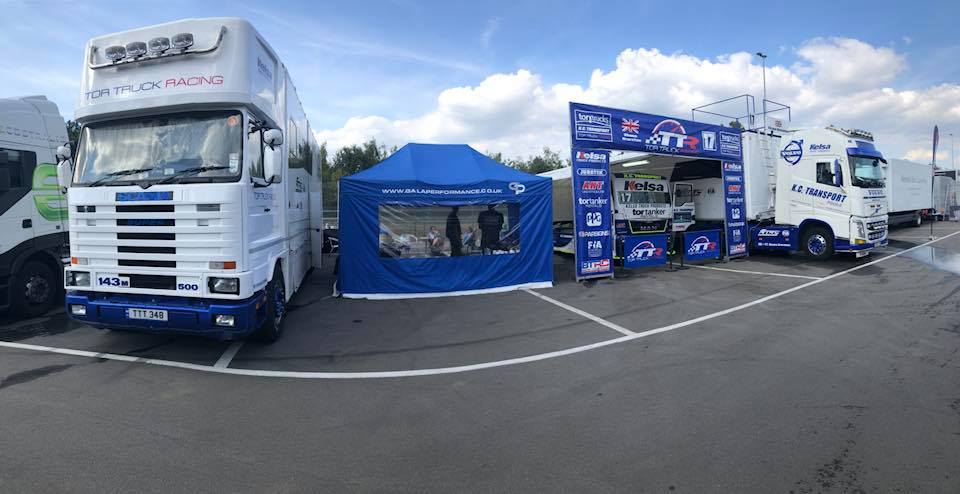
The trick is to use the trailer and the awning together. Pitch the awning off the side or the rear of the trailer so the two create a sheltered run between them — you step straight from the transporter into a covered, dry working bay, with the trailer acting as one solid wall against the wind.
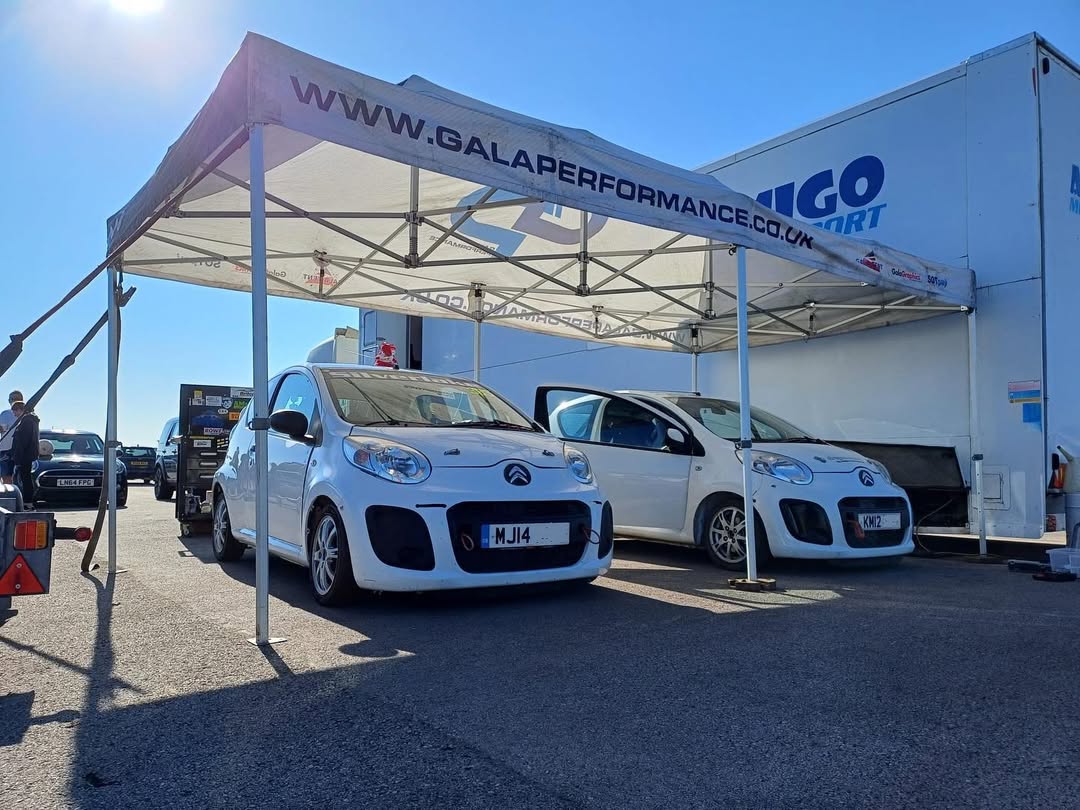
For a single car run from a trailer, a 3m x 4.5m or 3m x 6m pop up awning alongside gives you room to work with the car out of the weather. For a team, a heavy-duty freestanding awning — sizes up to 6m x 12m — turns the space next to your transporter into a full race compound. Whatever you pitch, anchor for the surface and weight every leg; paddocks funnel wind and a trailer alongside can channel it further.
Choosing the Right Awning
Which structure suits you comes down to how much you run and how permanent you need it:
- Pop-up race tents — quick to pitch after a long drive, easy to pack down, and ideal alongside a trailer for one car or bike. 3m x 4.5m and 3m x 6m are the popular sizes.
- Heavy-duty freestanding awnings — a sturdier, clear-span base for teams and semi-permanent setups, with no internal legs to work around and sizes up to 6m x 12m.
- Branded options — add your team and sponsor livery so your transporter and awning present as one professional unit.
Our race tent size guide helps you match the footprint to your vehicle and crew.
Awnings to Pair with Your Trailer
Gala Performance builds freestanding motorsport awnings in Britain, designed to work alongside a trailer or transporter as a proper covered paddock base.
- Heavy-duty awnings — clear-span freestanding cover, the team's choice for a compound beside the transporter.
- Pop up race tents — quick-pitch 3m x 4.5m and 3m x 6m awnings, ideal alongside a single-car trailer.
- Marquee and gazebo weights — anchor every leg, especially where a trailer channels the wind.
- Branded motorsport tents — match your awning to your transporter livery.
Not sure what suits your rig? Request a callback and we will talk it through.
What is a race trailer awning?
Can you get an awning that attaches to a race trailer?
What size awning do you need alongside a trailer?
Freestanding or trailer-mounted — which is better?
How do you set up an awning next to a trailer?