
How to Make a Workshop Floor Safer
Make a workshop floor safer by getting water and fluids off the walking surface, giving feet and tyres grip, removing trip edges and keeping the floor easy to clean. A self-draining, interlocking tile floor over sound concrete does all four. Ribtrax Pro suits hard-working pit garages and workshops, and Smoothtrax adds a smooth top where trolley jacks and rolling tools move.
What Makes a Workshop Floor Unsafe, and What Fixes It?
Most workshop floor accidents come from a short list of hazards. This table matches each one to the fix.
| Hazard | Why it matters | What fixes it |
|---|---|---|
| Slips on a wet floor | Wet tyres, washdown water and rain off the car leave a film on smooth concrete, and that is where most slips start. | An open rib tile such as Ribtrax Pro lets water drop below the surface, so the top stays grippy. |
| Oil, fuel and fluid spills | A dropped drain pan spreads across bare concrete, soaks in and stays slippery. | Ribtrax Pro and Smoothtrax resist oil, fuel, Skydrol and alkalis, so a spill is a wipe-up job. |
| Standing water | Puddles after washing, wet weather or snow and road salt take hours to dry on a flat slab. | Self-draining channels carry water below the tile, and air moving underneath helps dry the slab. |
| Trip edges | The raised edge of any floor covering at a doorway or walkway catches toes and trolley wheels. | Ramped edges on every exposed side, with corner pieces where two ramped sides meet. |
| Trolley jacks and rolling kit | Wheels that snag on a rough or broken surface make heavy kit harder to control. | Smoothtrax has a smooth top that jacks, creepers and tool chests roll across. |
| Point loads from axle stands | An axle stand puts the weight of a car onto a small footprint. | Ribtrax Pro and Smoothtrax carry a consistent weight rating of over twenty tonnes. Many workshops add a spreader plate under each stand. |
| Fatigue | Long shifts standing on hard concrete wear down legs, backs and concentration. | A tile floor is more comfortable underfoot than bare concrete. |
| Dirt, dust and clutter | Grit, dust and loose parts underfoot cause slips and make spills harder to spot. | Dust drops below the tile surface, and colour borders mark out walkways, bays and tool zones. |
Product figures from the Ribtrax Pro, Smoothtrax and Ribtrax Home product pages.
How Do You Make a Workshop Floor Safer, Step by Step?
Six steps take a bare concrete workshop to a safer floor. Most of the work is in the planning.
Walk the floor
Note where water lands, where fluids drip, where kit rolls and where people walk. That map decides the layout.
Sort the slab first
Tiles lay over sound, level concrete, asphalt or sealed screed. Repair major cracks and dips before you floor over them.
Choose tiles by zone
Ribtrax Pro for wet, hard-working bays. Smoothtrax where jacks and trolleys roll. Ribtrax Home for home garages and lighter use.
Mark out zones in colour
Use contrasting borders for walkways, vehicle bays and tool storage so everyone knows where kit lives.
Finish every edge
Fit ramped edges on every exposed side and corner pieces where two meet, so there is no lip to trip on.
Keep it clean
Sweep, vacuum, mop or squeegee as you go, and lift a tile or two to clean the slab underneath when needed.
Plan the layout, colours and edging in the floor designer, or send us your bay sizes and we will spec it.
Why Is a Bare Concrete Workshop Floor a Problem?
Concrete is strong. In a busy workshop, though, a bare slab gets slippery, stained and worn. Tyres, tools, fluids, water and constant foot traffic all work on it every day.
Slippery when wet.
Oil, coolant and water sit on top of a smooth slab.Cracks and uneven patches.
Heavy vehicle traffic, tyre wear and tool impacts break the surface down over time.Stains that soak in.
Chemical spills and moisture mark the slab and are hard to shift.Hard underfoot.
Mechanics and detailers stand on it all day.
Standing water.
Washing cars, wet tyres and rain blown in through the door leave puddles.Dirt and debris.
Grit and dust build up and spread across the whole workshop.No visual order.
Without marked zones, tools and parts end up across walkways.Wear in high-traffic areas.
Doorways and the main bay take the most punishment.
A modular tile floor sits over the concrete as a protective layer, which reduces wear and helps extend the life of the slab underneath. Combine it with good housekeeping, clear zones and the right kit, and the floor stops being one of the hazards in the room.
How Do You Stop Slips on a Workshop Floor?
Stop slips by keeping liquid off the surface you stand on. A ventilated, open rib tile drains water and fluids below the top of the floor, so feet and tyres stay on a grippy surface even when the bay is wet.
Open rib for wet bays.
Ribtrax Pro has an open rib profile that drains standing water away from the surface, which matters when wet tyres roll in off the pit lane.Smooth top that still drains.
Smoothtrax has built-in self-draining channels below a smoother surface, for areas where rolling kit matters most.Fewer slips, trips and falls.
Better grip also helps stop toolboxes and equipment shifting and reduces wheel spin when cars move in and out.
Where grip matters most
Vehicle workshops.
Service bays, ramps and lift areas.Wash bays and detailing bays.
Water on the floor all day.Tyre fitting areas.
Wet and dirty tyres come straight in.Pit garages and paddocks.
Wet race weekends and outdoor working.
How Do You Deal With Standing Water and Fluid Spills?
Let water drain through the floor and choose a tile that resists workshop fluids. Swisstrax tiles use open-flow channels, so water and debris drain beneath the surface and away from your feet.
Water drops below the tile.
After washing a car, in wet weather or when snow and road salt come in on tyres, water drains beneath the surface.Faster drying.
On Ribtrax Pro, air moves underneath the tile to help dry the slab.Fluid resistant.
Ribtrax Pro and Smoothtrax resist oil, fuel, Skydrol and alkalis.Cold to hot.
Ribtrax Pro is rated from -30 to +120°C, so it stays stable through a winter build and a summer race weekend.
Ribtrax Home drains too: dirt and liquids drop through the open ribbed surface into a 3mm channelling system. It is made for home garages, detailing studios, showrooms and lighter use, so for a busy workshop choose Ribtrax Pro or Smoothtrax.
Water exposure is constant in detailing studios and paddocks, so drainage is the first thing to get right there. See detailing studio flooring for that setup.
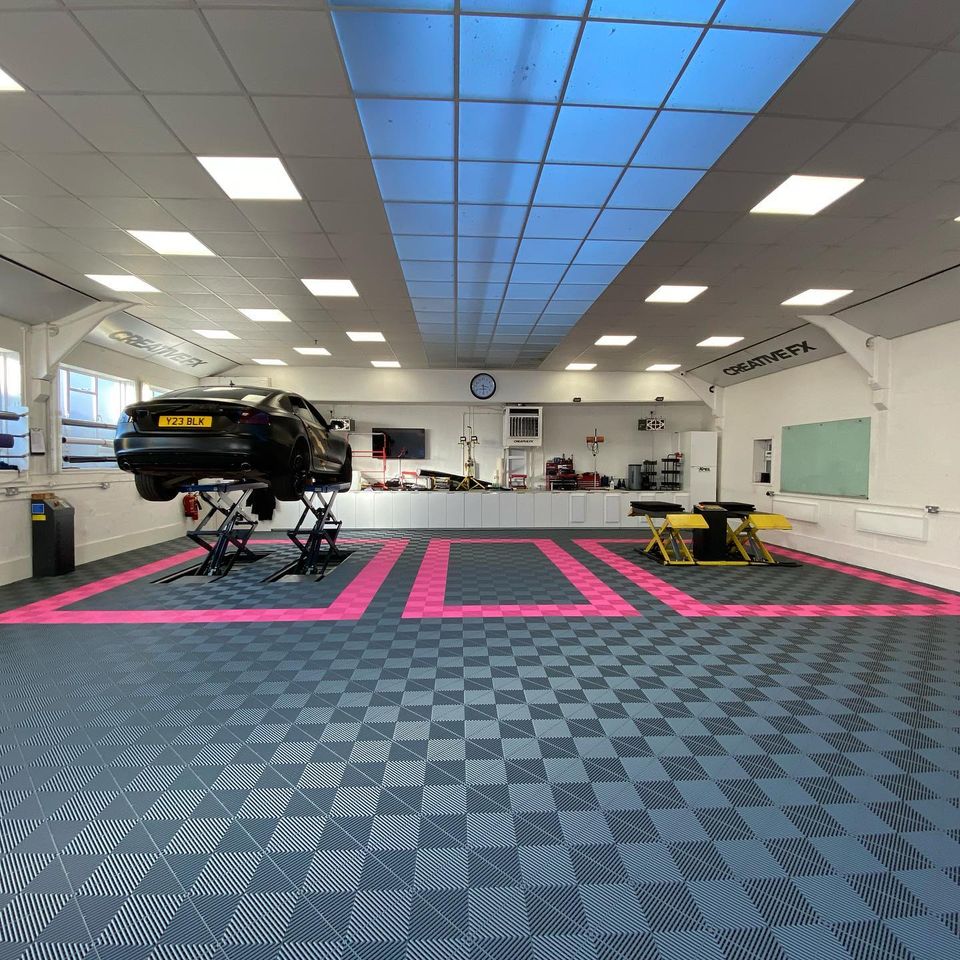
Does a Better Floor Reduce Fatigue for Mechanics?
Yes. Workshop safety includes comfort, because tired people make mistakes. A modular tile floor is more comfortable underfoot than bare concrete, which helps anyone on their feet all day.
Less strain.
Long hours on hard concrete contribute to leg fatigue, back discomfort and joint strain.Better concentration.
Tired legs and a sore back cost focus late in a shift.Steadier work.
A comfortable floor helps keep productivity up over a long day.
How Do You Remove Trip Hazards and Mark Out Zones?
Ramp every exposed edge and use colour to mark where people walk and where kit lives. A cleaner, organised workspace is usually a safer one.
Ramped edges.
Click-on ramped edges and corners finish doorways and walkways, so there is no raised lip.Clear walkways.
A contrasting border keeps walkways visible and clear of tools.Defined zones.
Lay out vehicle bays, tool storage, detailing sections, hospitality and viewing areas in different colours.Reconfigurable.
Tiles lift and move, so the layout can change as the workshop does.
Ribtrax Pro comes in nine UK colours and Smoothtrax in five, so you can run team colours, chequers and safety borders in one interlocking floor. Every Swisstrax tile shares the same 400mm footprint and clip system.
A well-laid floor also makes a stronger impression on customers, sponsors and visitors. For a display-led space, see how to turn your garage into a car showroom.
How Do You Keep a Workshop Floor Clean and Protect the Concrete?
Clean the top of a tile floor like any hard floor, and lift tiles when the slab needs attention. The tiles take the wear, so the concrete underneath stays protected.
Day to day.
Sweep, vacuum, mop or squeegee. The smooth top of Smoothtrax makes light work of dust and polish residue.Deeper cleans.
Lift a section to reach the slab, clean underneath, then click it back together.Spills.
On Ribtrax Pro and Smoothtrax, oil and fuel wipe up from the surface.
Protects the slab.
The tiles sit above the concrete and take tyre wear, tool impacts and spills.Lower repair costs.
Protecting the original floor helps reduce long-term maintenance.No adhesive.
Tiles are mallet-fit and trimmed with a fine-tooth blade, so there is no glue or coating on the slab.
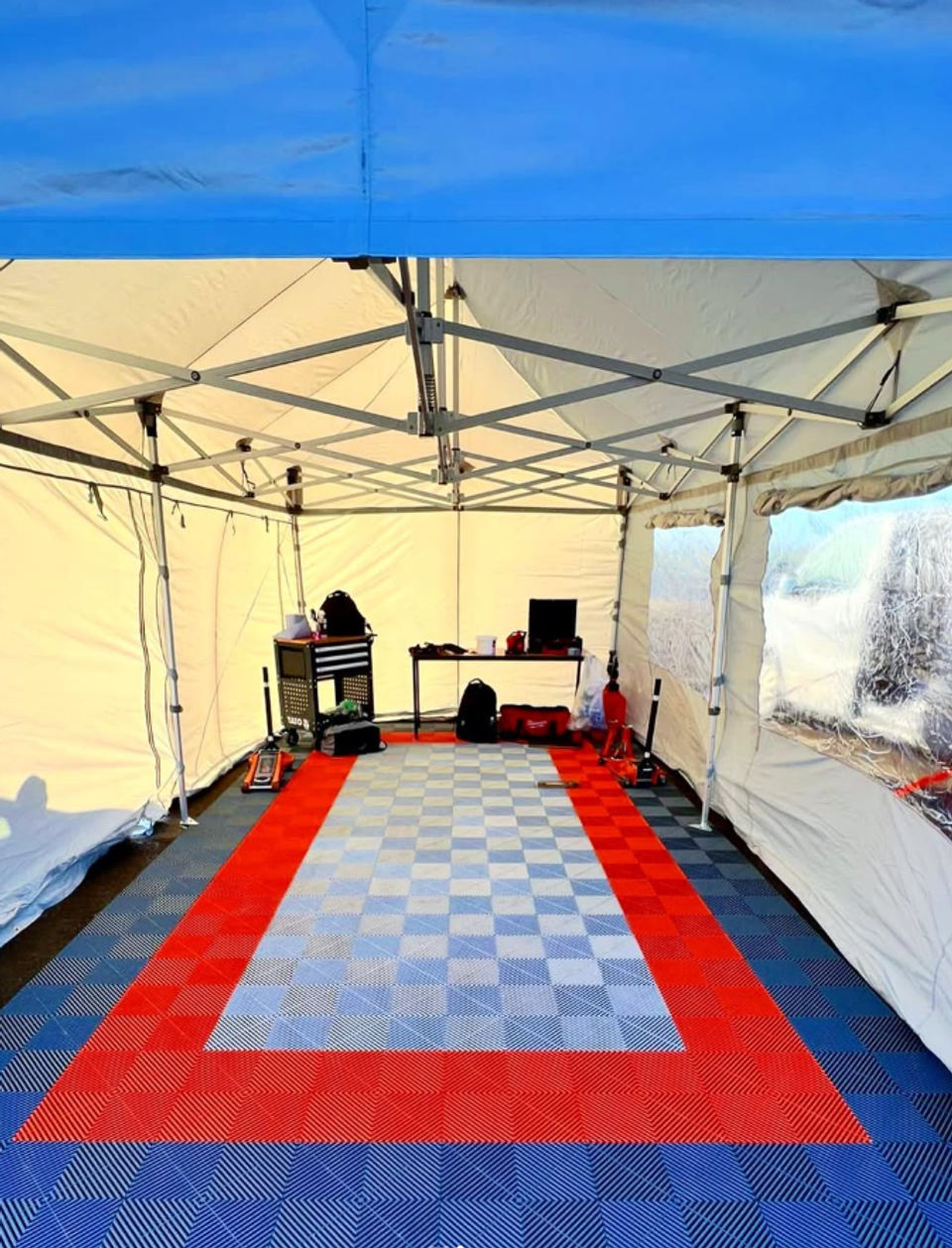
How Do You Make a Pit Garage or Paddock Floor Safer?
Race teams work in wet paddocks, temporary pit garages and outdoor setups under time pressure. A tile floor laid under the awning or in the garage gives the crew drainage, grip and a clean, organised space at every round.
Drainage on wet weekends.
Rain and wet tyres drain below the tile surface.Fast to lay and pack.
Tiles click together and lift again, so the floor travels with the team.Organised pit setup.
Mark out the car bay, tyre area and tool zone in team colours.Sponsor-ready.
A clean floor looks right in photos and for hospitality guests.
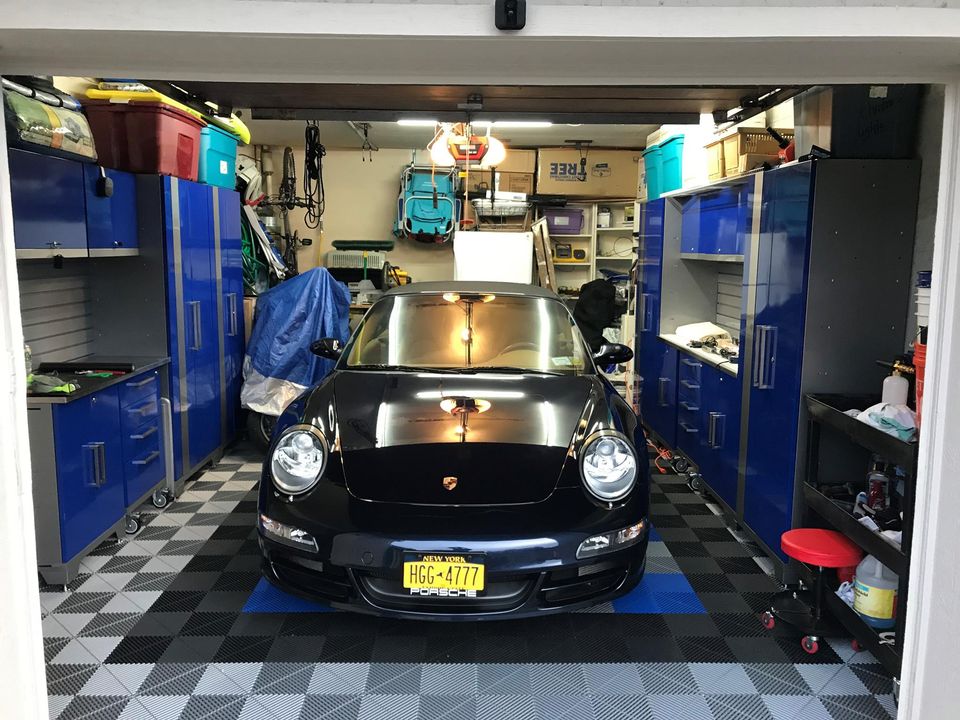
Printed race set-ups
Flooring finishes a team setup alongside branded tents and awnings.

Under the awning
Lay tiles under a race tent for a dry, level working floor.

Car gazebos
Gazebos for valeting, detailing and car meets.
Which Swisstrax Tile Is Safest for a Workshop?
For a hard-working workshop or pit garage, choose Ribtrax Pro or Smoothtrax. Both are rated to a consistent weight of over twenty tonnes, resist oil, fuel, Skydrol and alkalis, and carry a 15-year warranty. Ribtrax Home is for lighter use.
Ribtrax Pro
- Pit garages, race workshops, service bays and paddock floors.
- 18mm open rib tile that drains water, dust and fluids below the surface.
- Best grip where wet tyres and washdown water hit the floor.
- Nine UK colours for team colours and safety borders.
Smoothtrax
- Everything Ribtrax Pro does, with the same load rating and warranty.
- 16mm smooth top with built-in self-draining channels.
- Trolley jacks, creepers, engine cranes and tool chests roll easily.
- Lay it where kit rolls and Ribtrax where cars park or wash.
Ribtrax Home
- Home garages, detailing studios, car showrooms, dealerships and exhibition use.
- 18mm open ribbed tile rated 20T/m² rollover for domestic vehicle traffic.
- A genuine Swisstrax tile, built as the lower-cost answer to cheap copycat tiles.
- Indoor or outdoor, with a 5-year warranty.
Want the full side-by-side? The tile comparison covers thickness, load, drainage, colours and warranty.
How Do You Plan a Safer Workshop Floor?
Measure the space, pick tiles by zone and count edges. Each tile is 400 x 400mm, so a square metre takes 6.25 tiles.
Measure
Measure wall to wall, including door swings and where ramps will sit.
Zone it
Ribtrax Pro for wet working bays, Smoothtrax where kit rolls, colour borders for walkways.
Count tiles
6.25 tiles per square metre. Round up to whole tiles and add a few spares for cuts around posts and doorways.
Add edges
Ramped edges on every exposed side and corners where two ramped sides meet. The calculator on each tile page counts them for you.
Stocked colours and models go out on next-day delivery. Other Swisstrax colours can be special ordered, and we will confirm the lead time before you commit.
Frequently Asked Questions
Is modular garage flooring slippery?
What is the best flooring for a workshop?
Does garage floor tiling help with drainage?
Can modular floor tiles take the weight of cars and axle stands?
How do you clean a modular workshop floor?
Does modular flooring protect a concrete floor?
Is modular flooring suitable for a detailing bay?
Want a Safer Workshop Floor?
Send us your bay sizes and how the space is used, and we will spec the right mix of Ribtrax Pro, Smoothtrax and edging for you.